My littlest daughter is madly in love with fruit, especially melons. She begged me for years grow watermelon or cantaloupe, and I resisted. Melons are cucurbits that generally grow on long thick vines, and need a lot of space. In my raised bed square foot garden, I had never really thought it was possible.
After watching my middle school students choose watermelon seeds over every other option during my Garden Lunch Bunch, and how quickly a watermelon seed turns into a giant plant that kids LOVE, I decided that I should definitely try them out at home. I attempted watermelon twice before this season without much success, although one year we did get one tiny little melon! It was about 3 inches in diameter when a wind storm plucked it off the vine. Admittedly, my watermelon attempts were half-hearted at best, thrown into an extra outdoor pot with a whatever happens, happens, attitude.
Last summer my littlest daughter was with me on a Lowe’s run when we inevitably found ourselves next to the seed racks, and she helped me pick out “Minnesota Midget”, a dwarf cantaloupe whose shorter, bushier vine would hopefully train up nicely in my square foot garden, and give us some yummy melons!
I started two of the plants in my basement greenhouse, but after hardening off, they never really grew after transplanting. One died completely and the other was stunted for a very long time. I went ahead and directly sowed a few seeds after my transplants failed to thrive, but it was too late in the season to make much progress. We got one melon by the end of the summer, but didn’t get to enjoy it because the “Dirty Eater” got to it first.
The “Dirty Eater” is the derogatory term my children applied to our property’s resident squirrel. In the squirrel’s defense, it was just doing what squirrels do, you know, “tryna get a nut”. Where a “nut” in this case was actually an egg. Or several. From the nest of some other backyard residents, the Sparrows. We watched through our upstairs windows as DJ Dirty E. climbed the tree, found the nest, and caused an all out airborne assault from the Sparrows and their extended family and friends. Tiny birdie bullets from several bird families dropping out of the sky and screaming straight into the boughs of the large evergreen. The ruckus was unbelievable as all involved screeched, chirped, squeaked, and squawked their way through the battle.
Sadly for the airborne assault team, Dirty Eater was the victor, and my children received a close-up lesson about the Circle of Life.
Shortly after the egg-cident, Dirty Eater cemented its name when it made off with the first of our baby melons. At only about 4 inches in diameter, the melon wasn’t ready for harvest, but we found it on the ground with suspicious little bite marks in the rind. By the next morning, the tiny melon had been broken open and was nothing but an empty rind, and Dirty Eater was spotted ranging on the fences nearby. There’s no other animal that could have gotten to the melon in the raised bed AND gotten it off of the vine. Plus the forensic analysis of the bite marks left little doubt.
This year, however, I really want to be successful with the cantaloupe, so I tried a couple in the green house that I transplanted after hardening off. I also directly sowed a couple of seeds in the same area so there’s still a solid chance if this years’ transplants didn’t make it, or were stunted again.
So far so good! Both the transplants AND the direct-sown plants are doing very well, and there are melons a-growin’! Our next job is to be craftier then Dirty E so it doesn’t eat them before we do. I’m eyeballing some carefully placed bird netting.
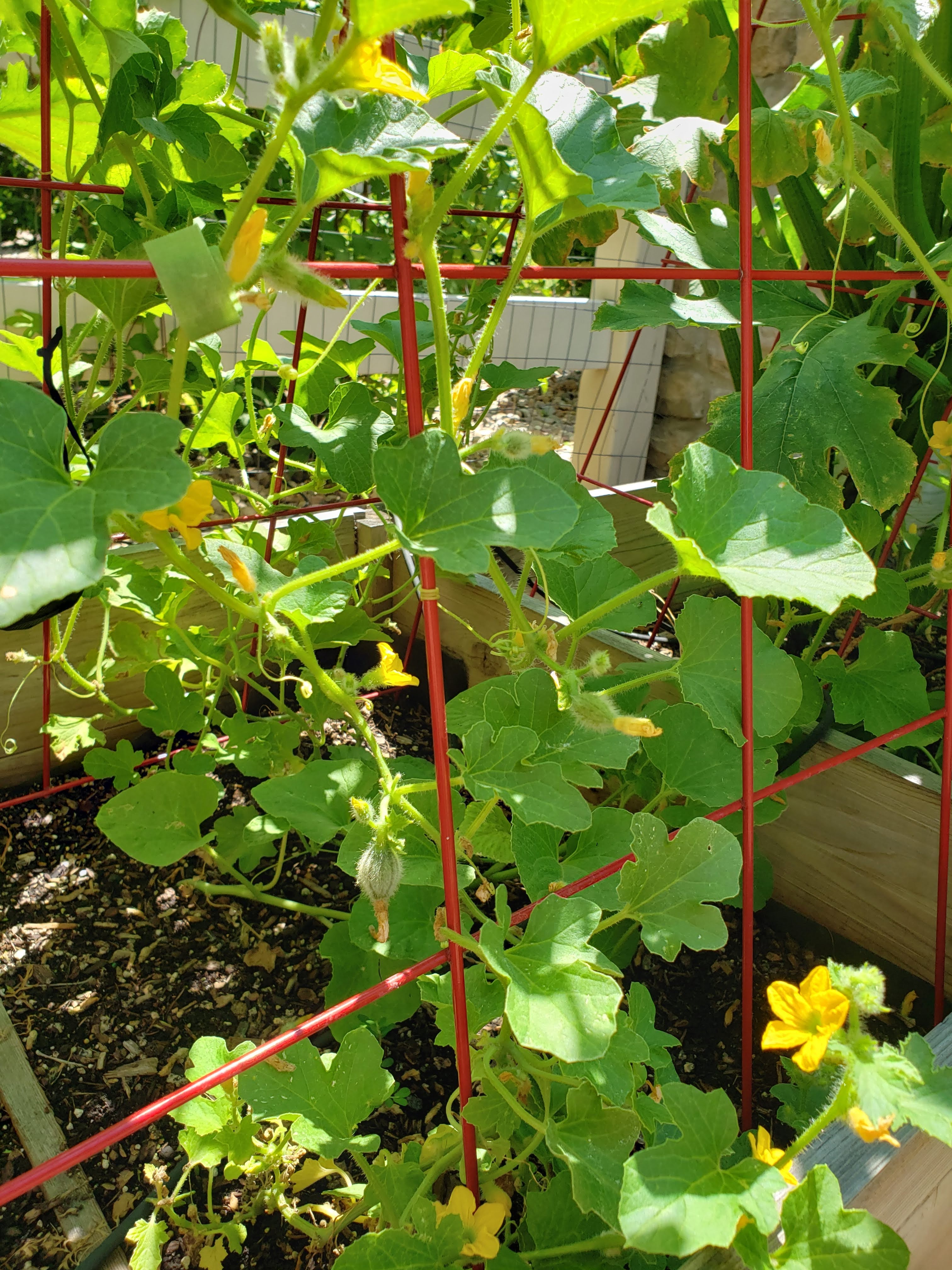
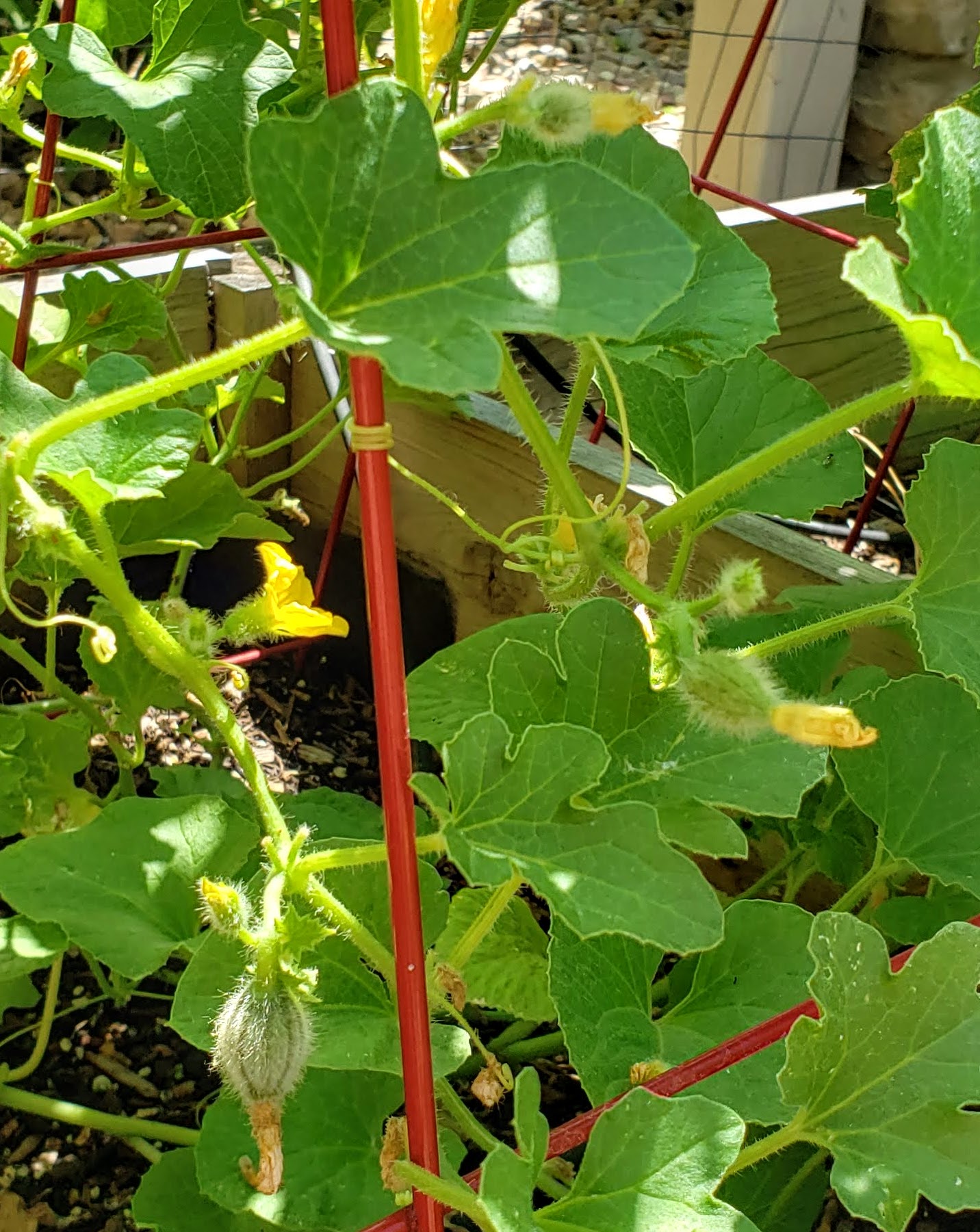
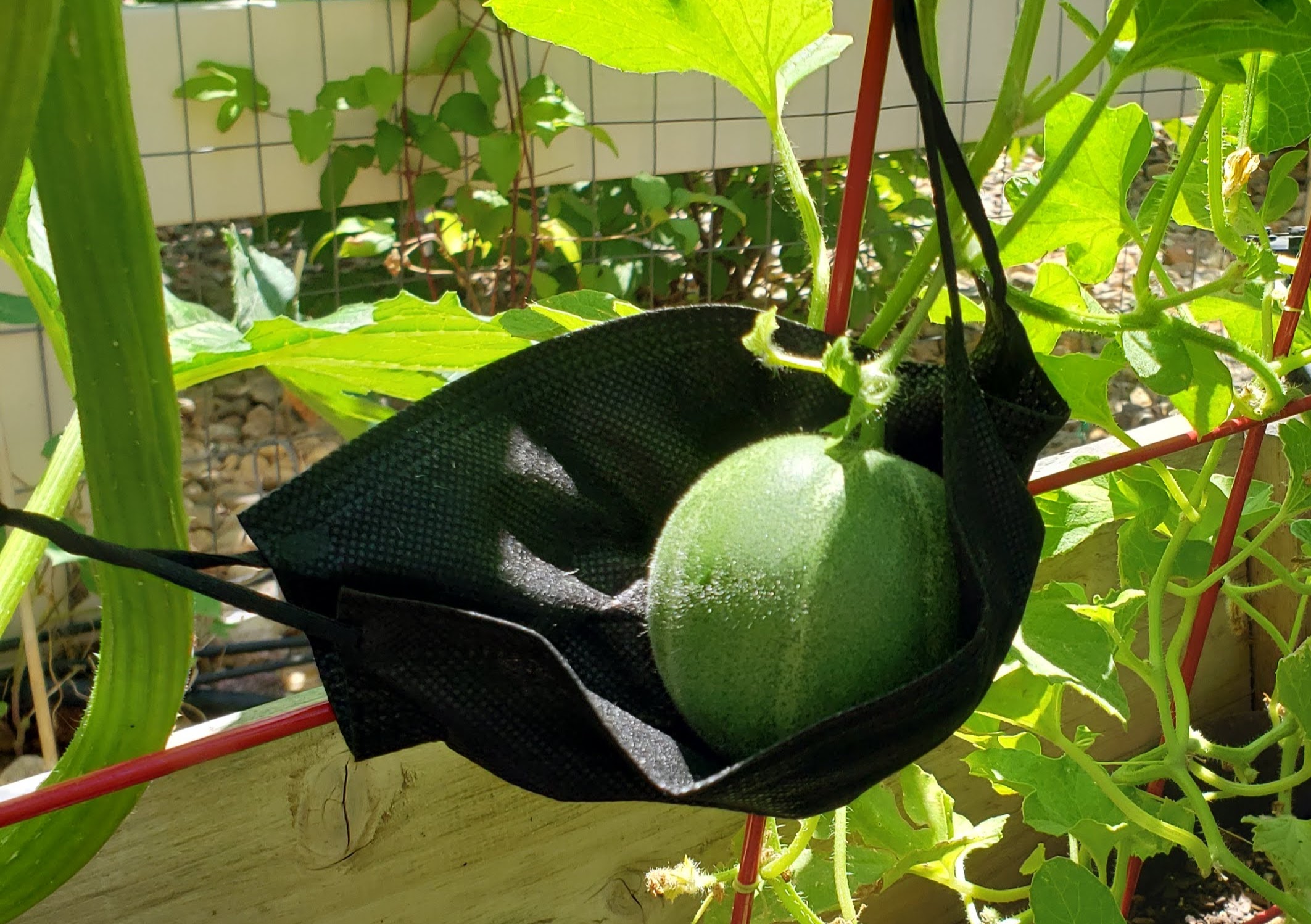
The other day I saw a cool picture of an upcycled mask as a melon hammock on a Reddit gardening board. What a brilliant idea that I had to try! I just tied the earloops onto the trellis under the little melon, and explained that the mask must remain over the nose. The traditional recommendation for a DIY melon hammock is a piece of nylon pantyhose.
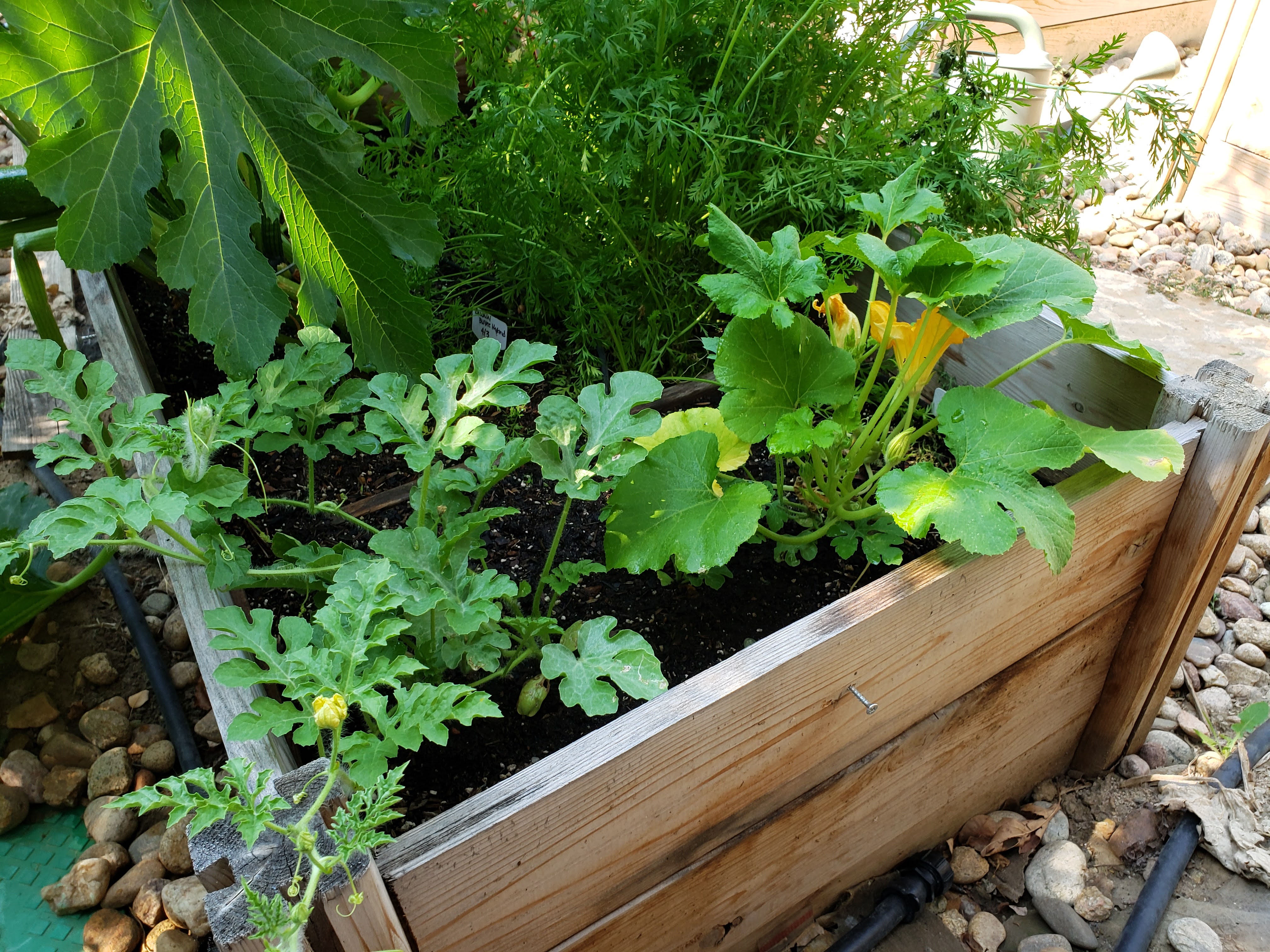
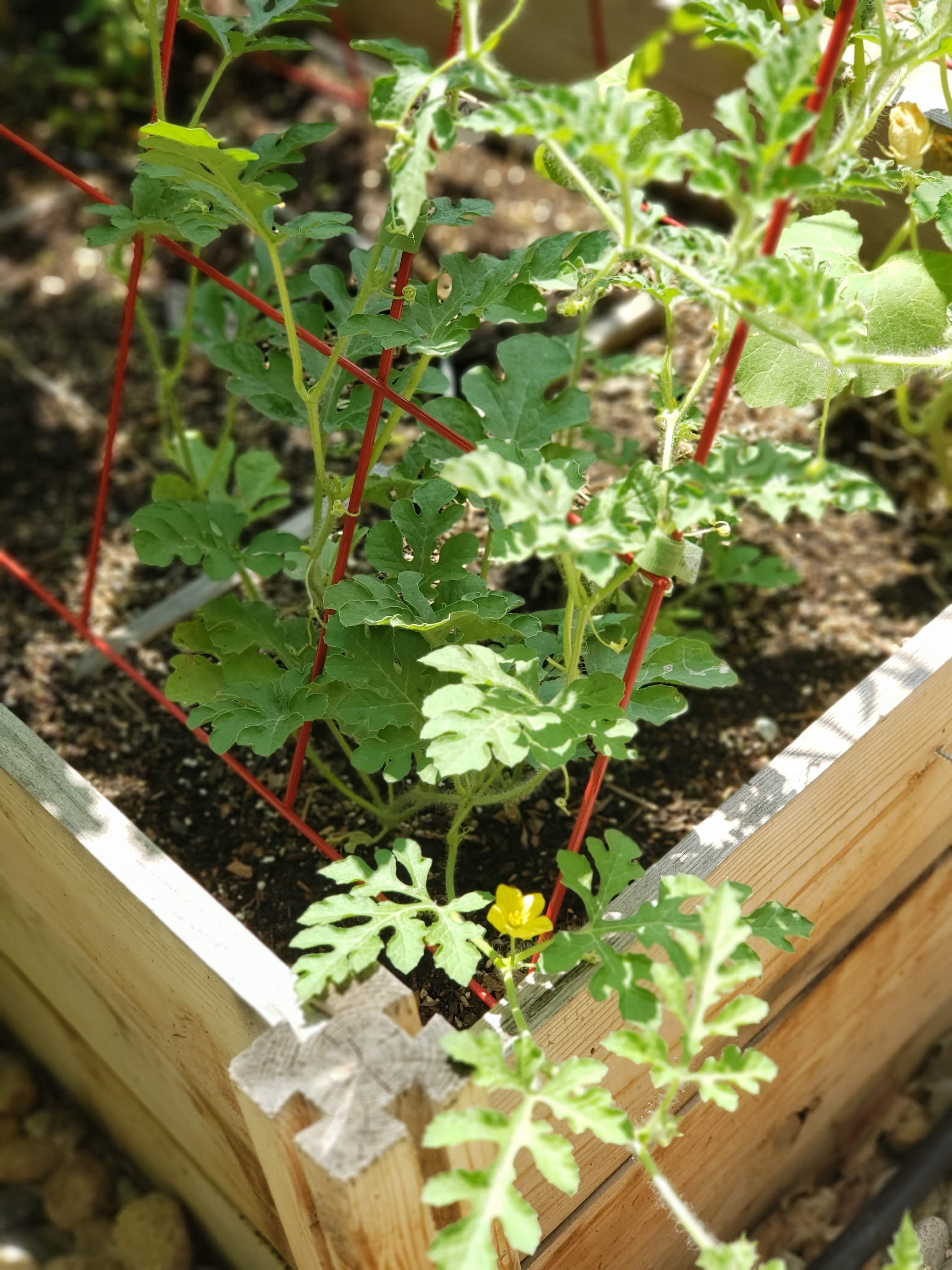
I did also plant a couple of watermelon seeds, but like the last few times I tried, they were more of an afterthought. The sprouts are doing well, though, and the vines are climbing their trellis. The two late freezes we had kept me from sowing outdoors until the end of May, so I don’t think there’s enough time to actually get any fruit. But we’re still hoping!
 The Pottymouth Gardener