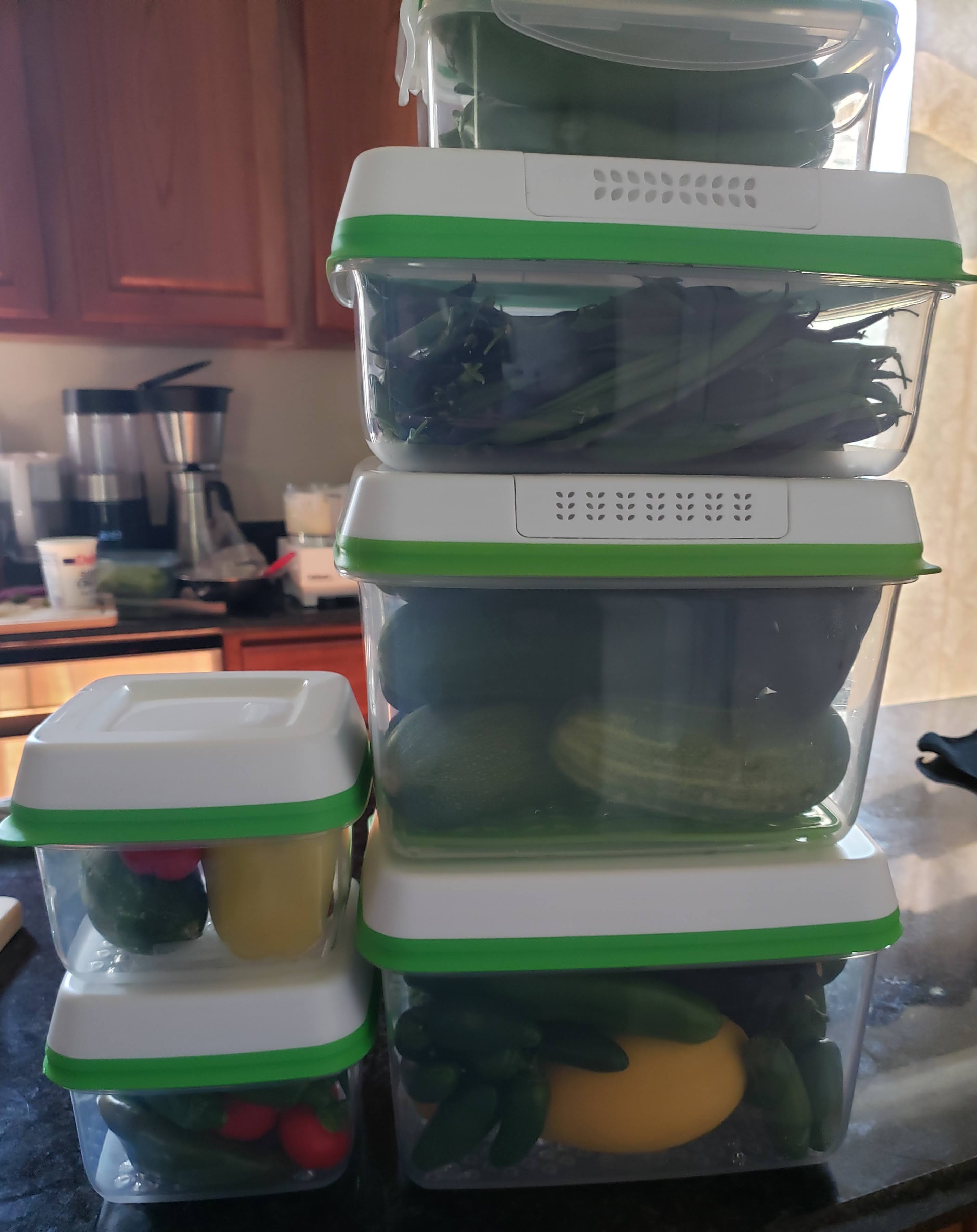
Going through pictures of my garden from previous years, I noticed that it’s been getting bigger and better every year. It’s become especially obvious this summer when I had to invest in more veggie-saver containers.
We try to eat most of what I grow when it’s fresh. From July to October we’re chowing green beans multiple times a week, from May to June we’re snarfing peas and lettuce and spinach. But the zucchini and squash are not favorites for the family, even though I love them, and so they hang out in the fridge a little longer than the others, and sometimes become yummy bread or a casserole.
The cucumbers and strawberries keep coming all summer, along with the tomatoes that usually start coming in July. The peppers start popping by the end of July and are continuous joy until frost.
But there’s only four of us at my house, so our veggies need to have a bit of a shelf life until we eat them, cook them, or freeze them. I like to grow the veggies, but for me, cooking is more a chore than a joy. Although my husband is a chef, he’s more of a meat guy than a veg guy, so it’s still up to me to find recipes and storage solutions for the garden bounty.
Lettuce and Spinach
I’ve found that the best way to keep lettuce and spinach crisp and fresh is to gently pack rinsed and dry leaves in a ziploc bag with a damp paper towel laying down one side of the bag. Blow into the bag to puff it up before sealing. This provides space that keeps the leaves from squishing and getting slimey, and moisture that seems to keep the leaves from wilting. I’ve kept lettuce and spinach tasty for nearly two weeks using this strategy.
Tomatoes
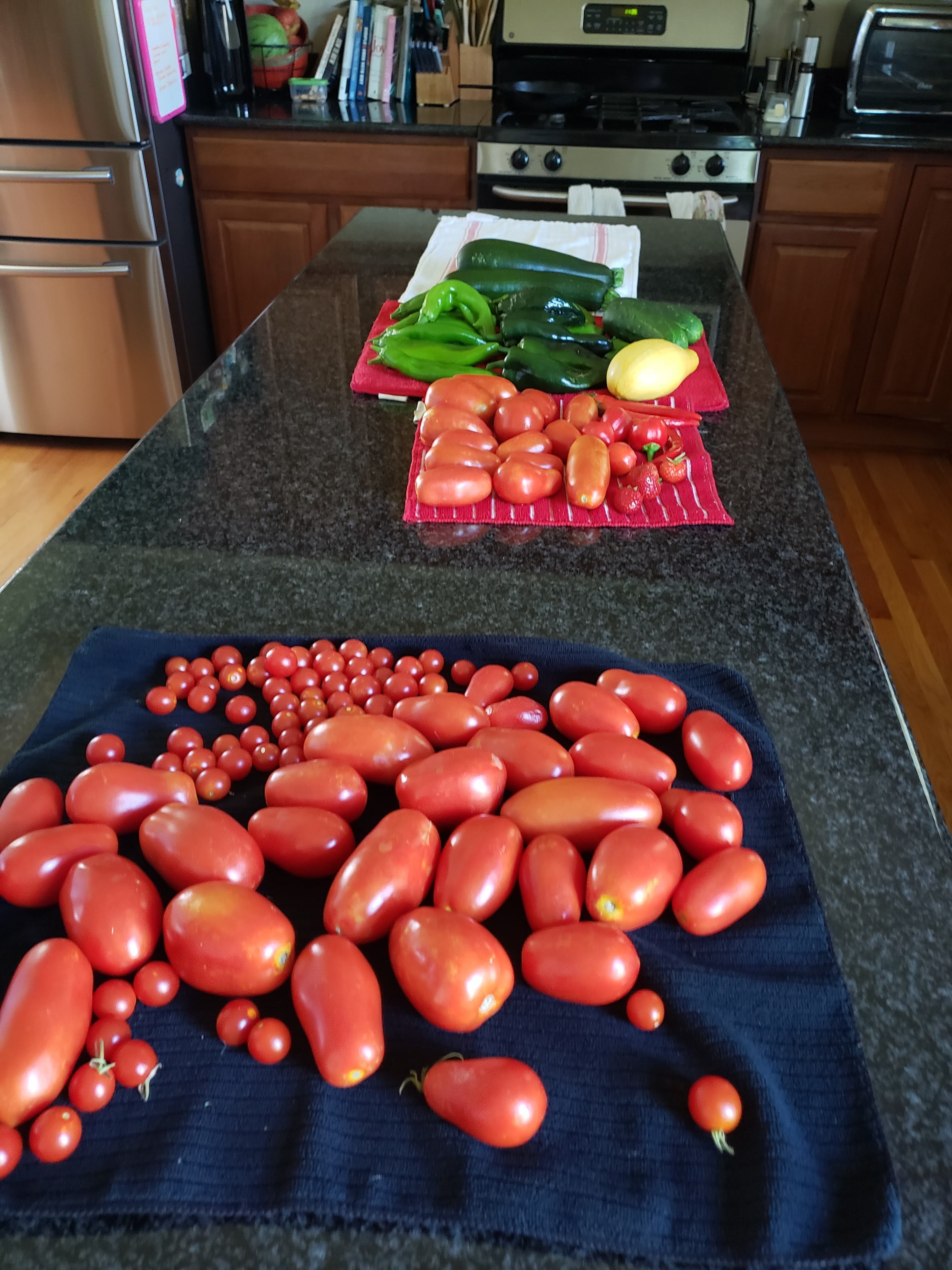
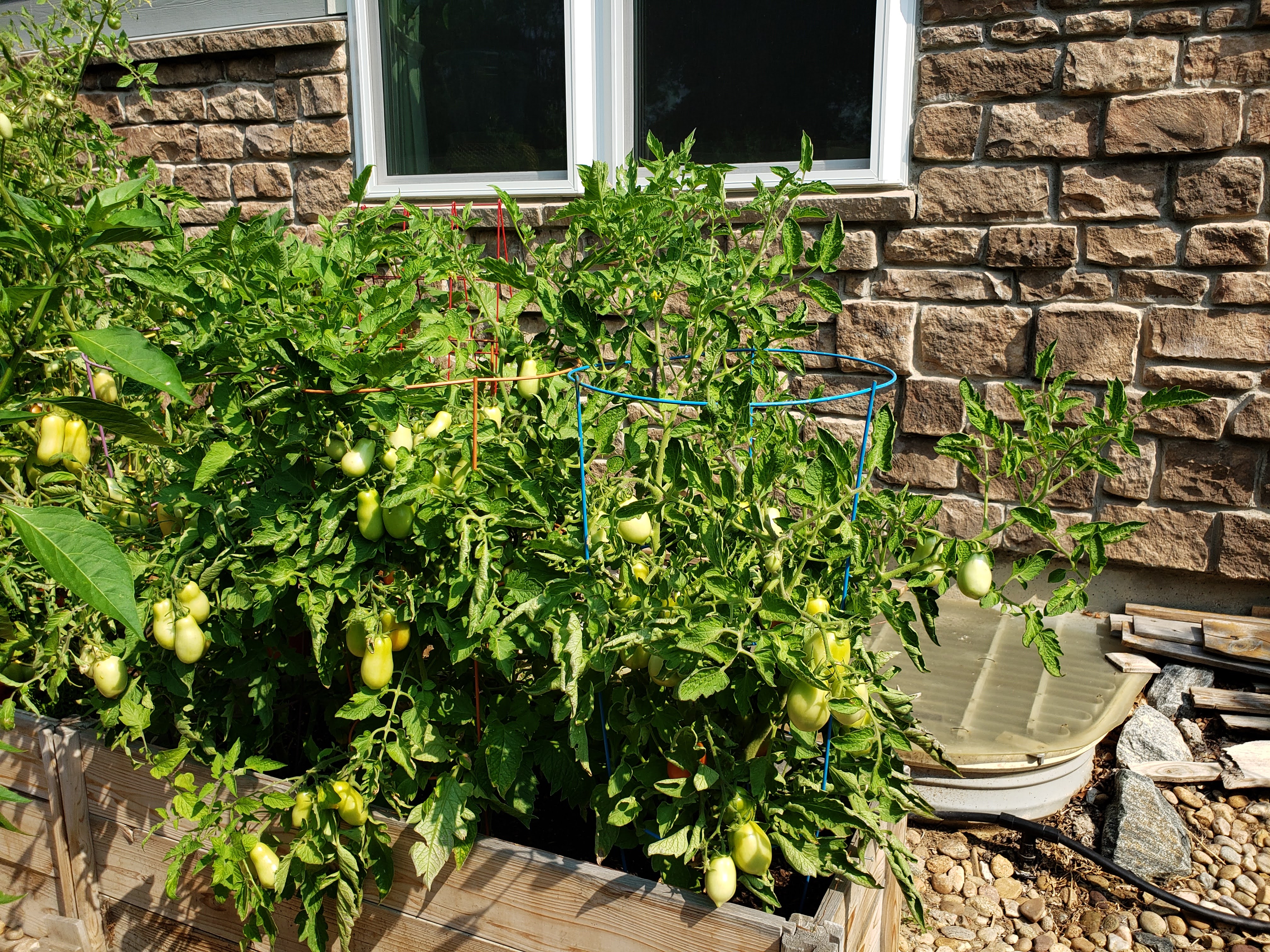
In my experience so far, the best way to keep tomatoes fresh is on the vine. Picking tomatoes at the peak of blood red perfection is the reason to grow them, of course! No store-bought ‘maters can ever develop that kind of flavor turning red on a shelf. Once the tomato treasure is so red you’ve no choice but to pick them or lose them, give them a quick water rinse and dry, and then let them vegetate on a towel in the open. Mine sit on a soft mat on the kitchen island. My youngest daughter will graze the Super Sweet 100s like candy; Nana, too. If we don’t eat them or use them fast enough, and they start to pucker, I will cook them into sauce or soup, or freeze them whole until needed.
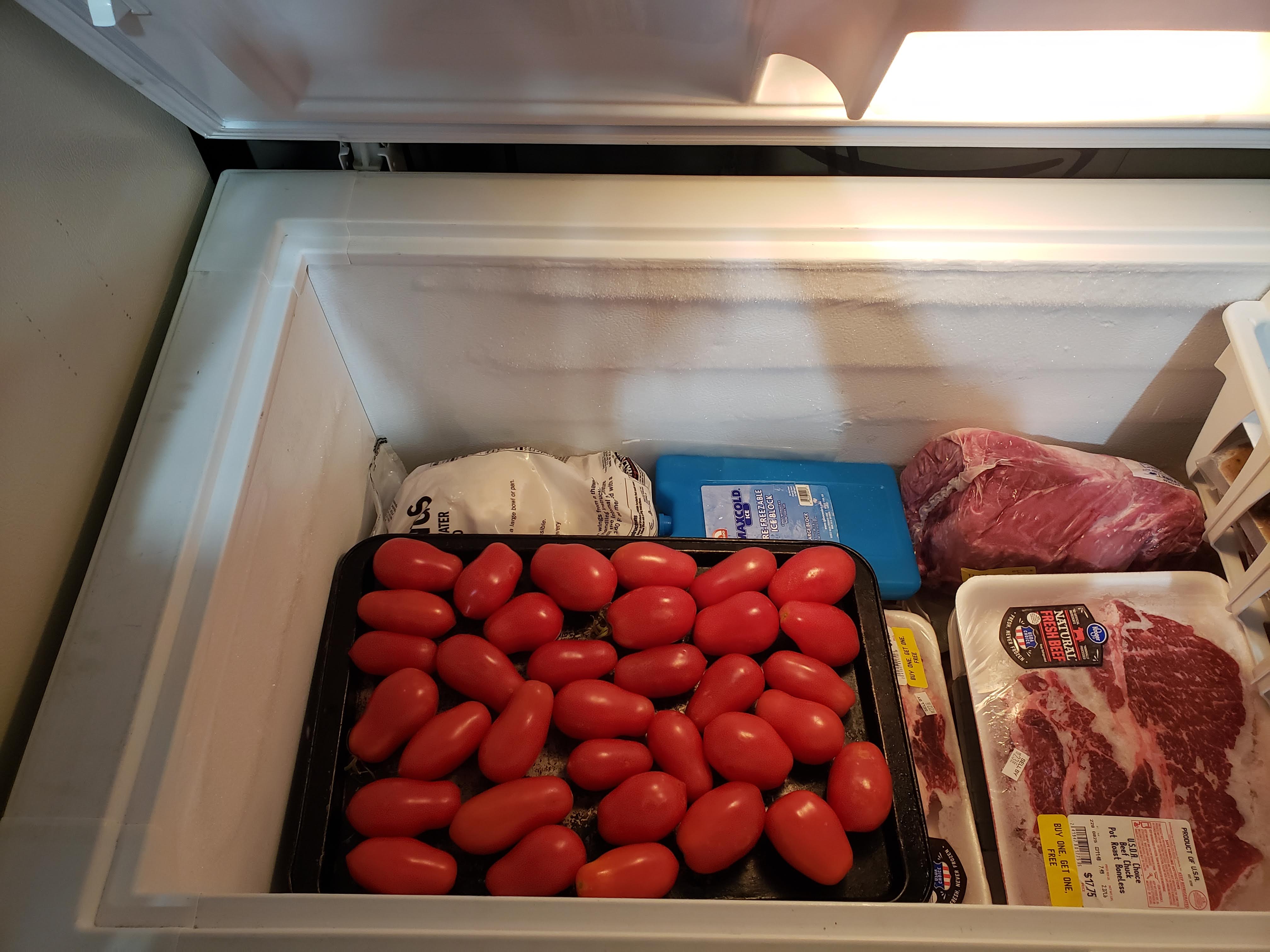
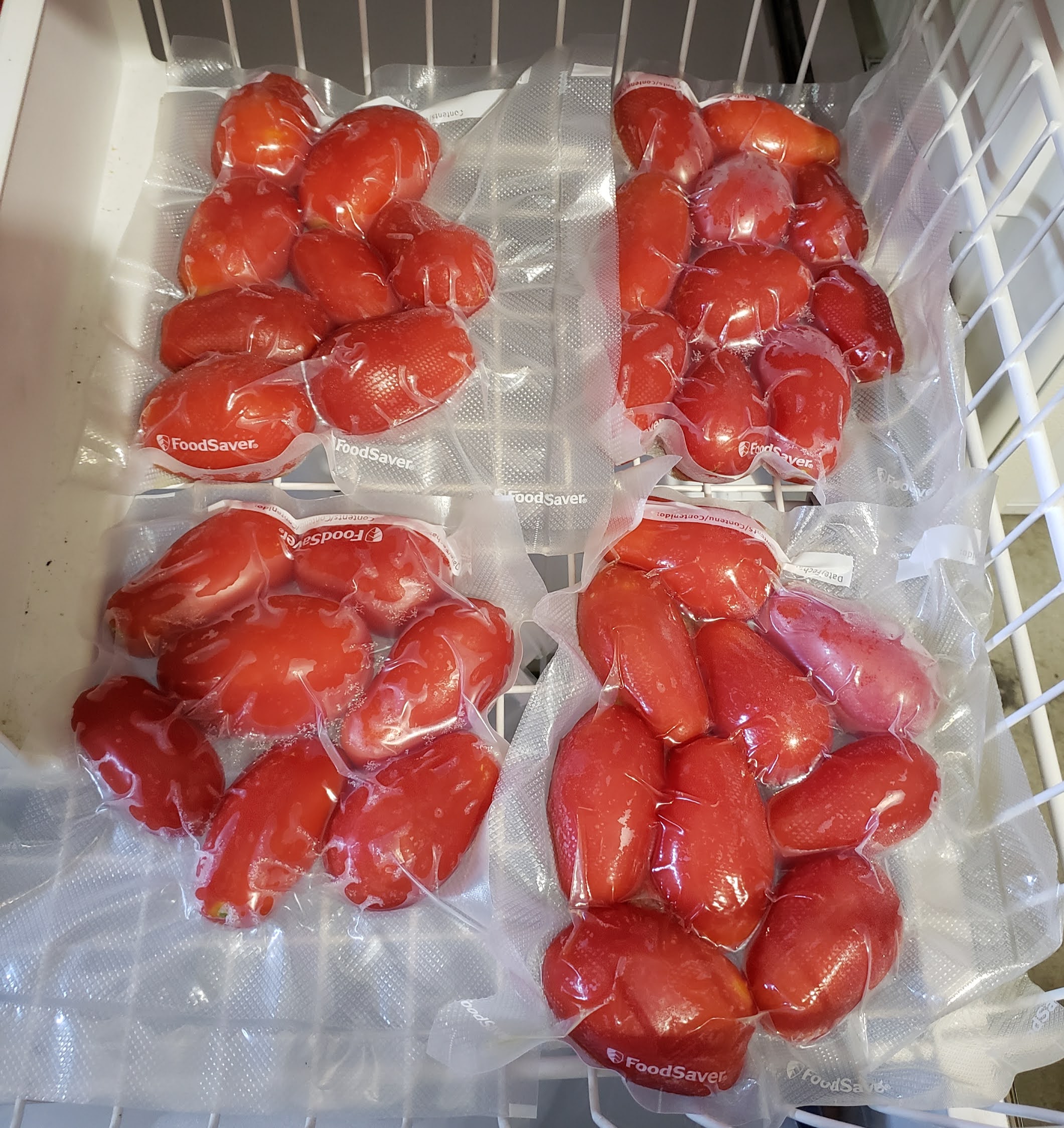
This summer I’m trying out a new strategy for the full-size tomatoes. Since cooking isn’t really my jam, the thought of spending several sweaty hours alternating over boiling and freezing water, covered to my elbows in seeds and slime and skins, and getting blisters from the coring utensil, all just to freeze ONE BATCH of tomatoes, almost makes the damn things not worth the effort. I can get decent sauce at the store for a couple of dollars and no clean up. So I found some innovative simple ideas online that are helping me maintain my love for my tomato bounty. I’m freezing them whole using this methodology:
Check out Homemade Food Junkie’s instructions here: https://www.homemadefoodjunkie.com/freezing-tomatoes-whole/
So far, I’m in love with this method because it’s so easy! You freeze them whole, then put them in a vacuum sealed bag or Ziploc, and you’re good for like a year! I cannot yet speak to how great the ‘maters are when defrosted, but Homemade Food Junkie can and does on her recipe page (link above). She also has recommendations for different varieties of tomatoes.
Since I plant Super Sweet 100s for my cherry tomatoes, we end up with zillions! I like to make a quick caprese salad by slicing them in half, throwing them in a bowl with mozzarella pearls, some ripped up basil leaves, and a drizzle of balsamic vinegar, and a dash of salt and pepper. Omigosh, yummy!!!
When we can’t use up our cherry tomatoes in salads and snacks, I use variations on a spectacularly easy recipe for sauce. Just last week I cooked up several cups of the “on the edge” cherries into a potential pizza sauce. The delicious result was far too sweet for pizza sauce, so I added some broth and onions and blended it, turning it into tomato soup, instead. The whole family loved it!! I can’t find the creator’s link anywhere, so I can’t share it, but simply Google “whole cherry tomato sauce recipes” or something similar, and you’ll get a zillion terrific options.
Carrots
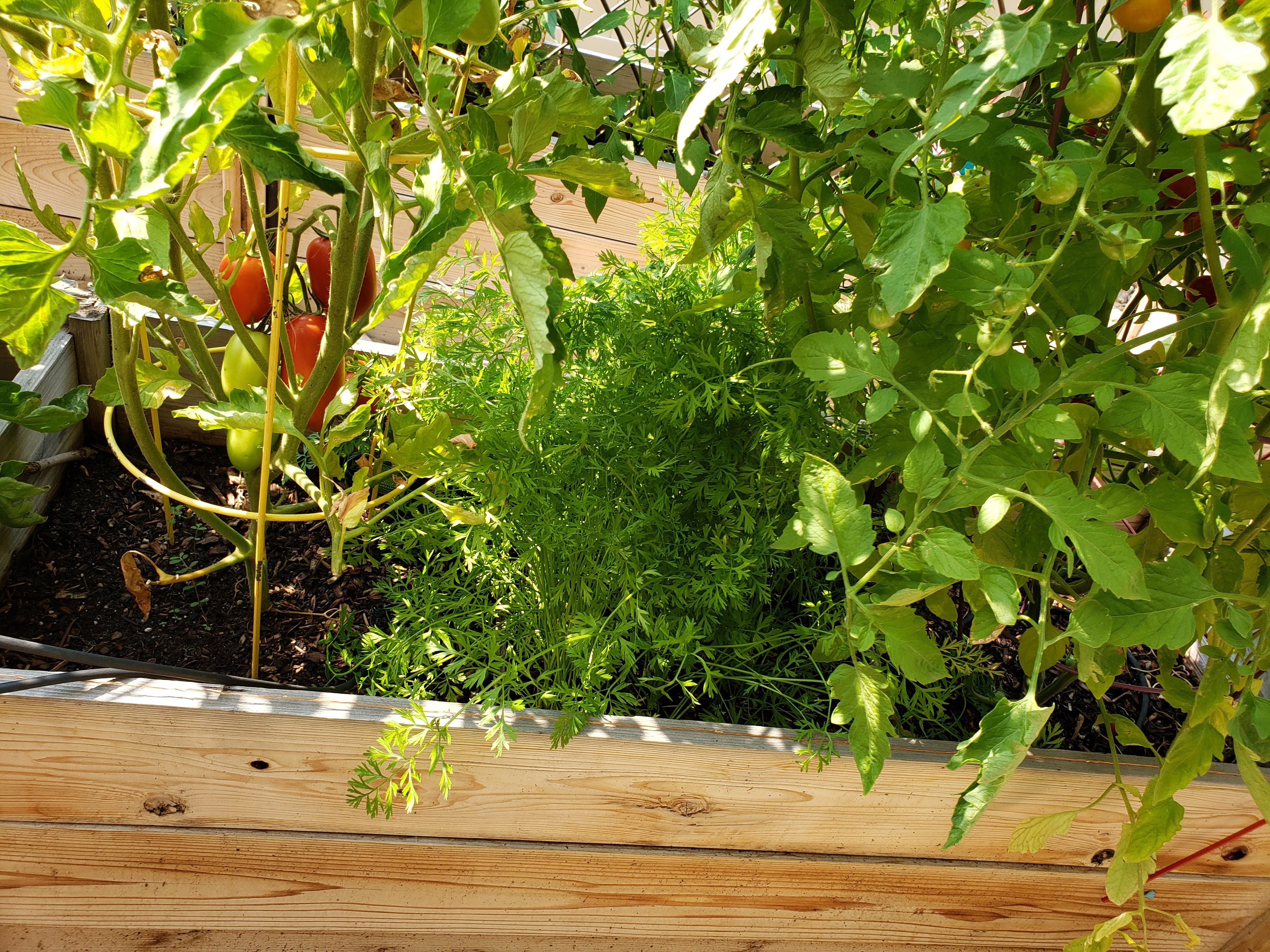
I don’t have much of a crop of carrots this year, mostly because I was very focused on my peppers and squash, but they’re so delicious and easy to grow. The best way to store them is to just leave them in ground. Carrots can last for ages after reaching maturity, even making it through frosts and light freezes. But once the time comes to pull them, I’ve found the best storage solution is to place them in a regular lidded plastic storage container and fill it with water. Change out the water occasionally to keep them fresh. This method will keep carrots crisp and fresh for weeks!
Storing Everything Else
For the rest of my harvest, after years of trial and error, I’ve settled on Rubbermaid FreshWorks containers as my go-to for produce storage.
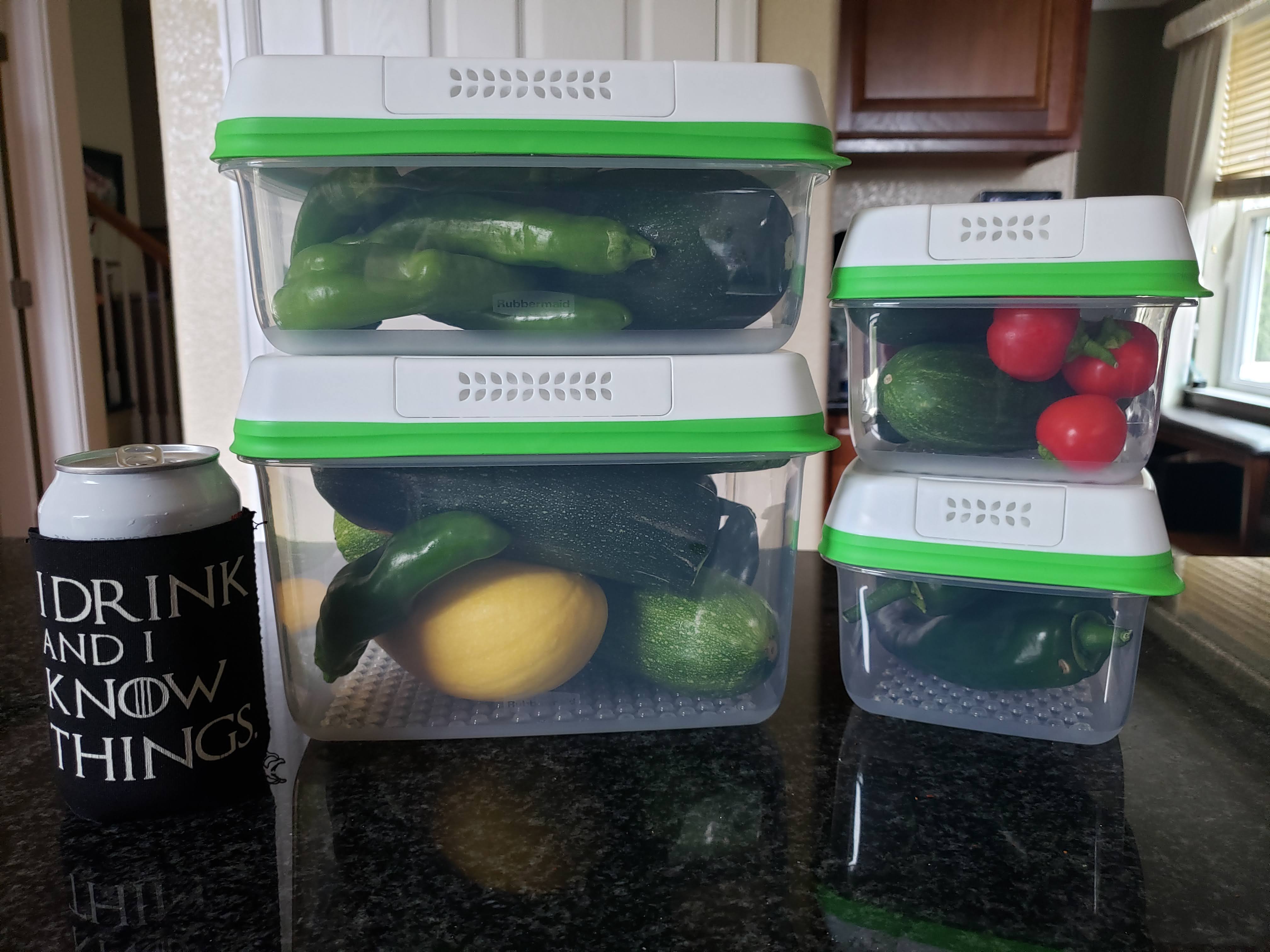
I have several other older models as well, the ones with the little green tray on the bottom, but they all perform spectacularly!! I can keep zukes and squash in these for weeks on end, and they’re equally as good for the green beans, peppers. They are even great for cucumbers and berries, although they just don’t last as long as the rest, regardless of storage container.
These containers are a little pricey compared to a standard storage container, but they are well worth it. I look for end-of-summer sales at my local grocery or big box store, and Amazon does specials sometimes, too.
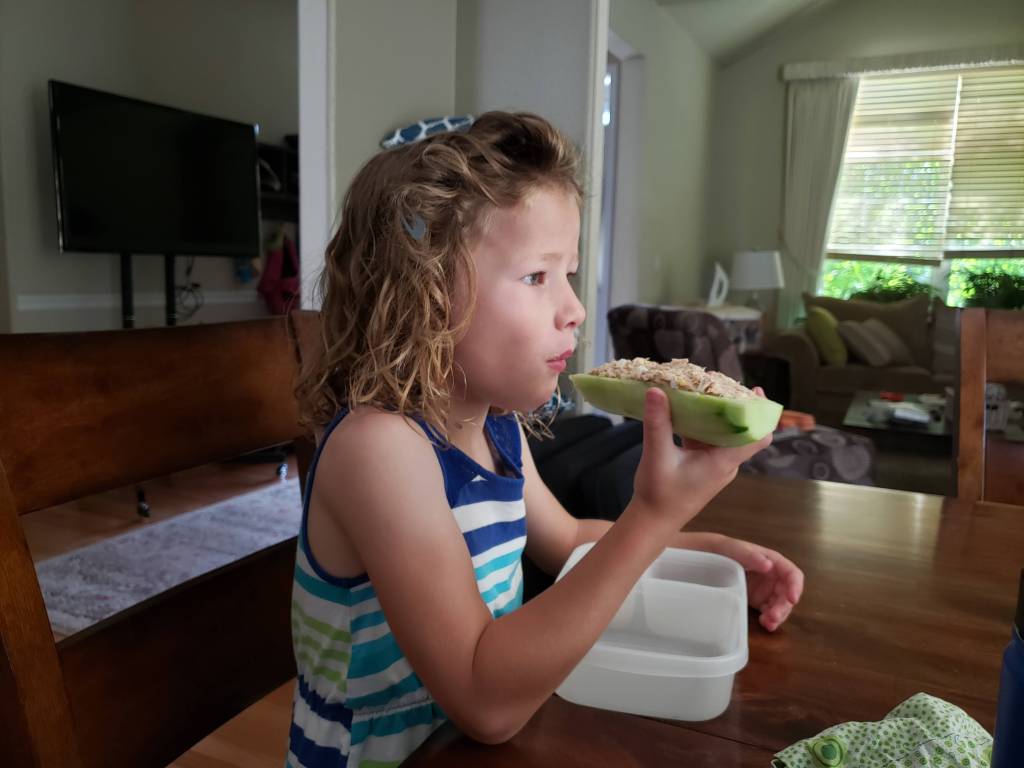
When I have too many cucumbers to save, another great trick to use them up is to make cucumber boats! My kids love tuna salad cucumber boats. I even send them in their school lunches! Simply skin and halve a cuke lengthwise, scoop out the seeds to make a cuke canoe, then whip up some easy tuna salad and load it into the boat! I’m certain this would work for all kinds of yummy fillings!

 The Pottymouth Gardener