Suburbia-land is a wonderful place for a plethora of reasons, but gardening is not one of them. Our backyard – like every other I know – does not have the space for a traditional in-ground row garden.
Additionally, here in the Denver metro area, we are in a semi-arid climate on the edge of both the plains and the mountains: the air and weather are super dry and our soil is either clay or sand. The weather doesn’t provide enough moisture: during the summer, we simply must water every day or the garden will be dried up dead in about 48 hours. Missing even one day of watering in July or August can fry a veggie plant so bad it won’t recover.
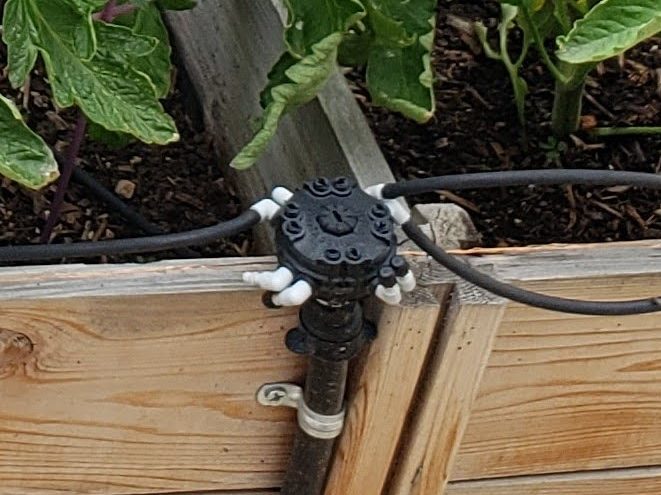
The way I make gardening happen here is through vertical Square Foot Gardening using raised beds and drip irrigation. My sweet hubs set me up with a drip irrigation system, but you don’t need a plumbing-inclined partner to do it. The local big box home improvement store has super easy drip systems for very affordable prices and easy-to-understand instructions.
The raised beds require a little more heavy lifting, but you can find affordable and super easy-to-build setups all over the place these days. Or you can use an old tire, or an old wheel barrow, or even grow your garden right in the bag of garden soil. Just lay the bag flat, cut out the top of the bag leaving the sides in tact, and plant your sprouts! Boom! Instant raised bed!
What is vertical gardening, you ask? It’s growing UP. Traditional gardens are rows of plants growing directly out of the ground, like a farm. The rows on the ground take up a lot of space, and so do a great many of the plants. But in vertical gardening you preserve ground space, and train the plants to grow and spread up – vertically – instead of horizontally.
It’s a perfect compliment to the other urban low-impact gardening technique I use: Square Foot gardening (SFG). The SFG method teaches you to make use of every inch of space around and under your plant. It turns out that most annual veggies have root systems considerably smaller than the part above ground, and SFG helps you maximize and optimize the use of every square inch of the soil under the plant, by breaking your garden into square feet, and then planting each square foot full, using knowledge about how much space a plant actually needs.
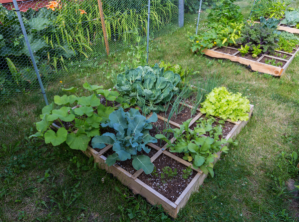
For instance, in one square foot, you can successfully grow one whole tomato or zucchini plant. In that same space you could instead grow 16 carrots, nine spinach, or four leaf lettuce plants.
(Image from https://squarefootgardening.org/2019/06/succession-planting-in-the-square-foot-garden/)
The above image is from the Square Foot Gardening website, and shows the classic recommended 4 x 4 foot raised bed with a square foot grid. My garden (below) only has one 4 x 4 square, the rest are 2 x 4, allowing for walkways and maintenance throughout and from both sides. In addition, over the years I stopped using the physical grids. I still draw or mark the spaces during planting and sowing, but I’m pretty comfortable with how much space everybody needs, even without markers.
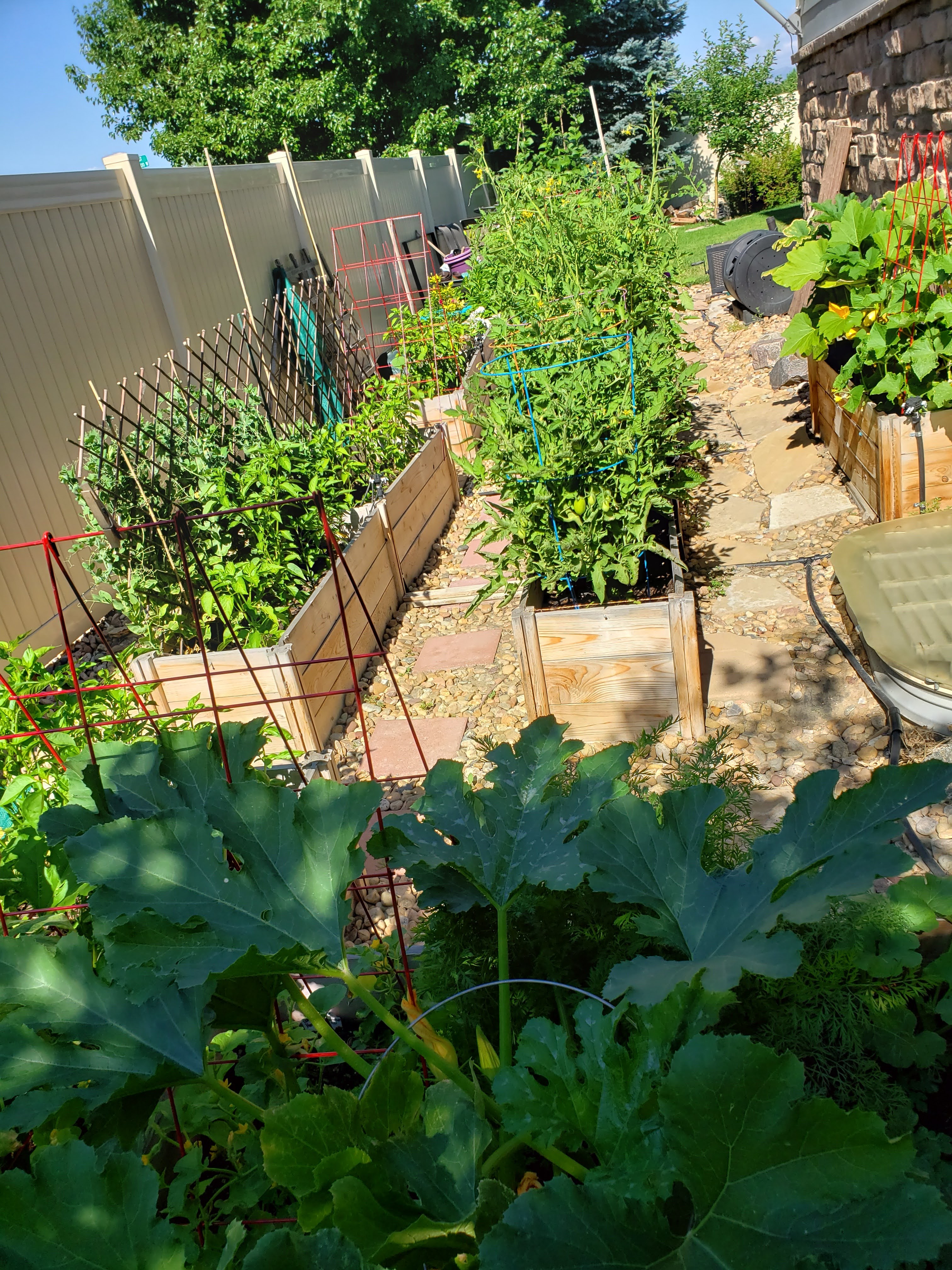
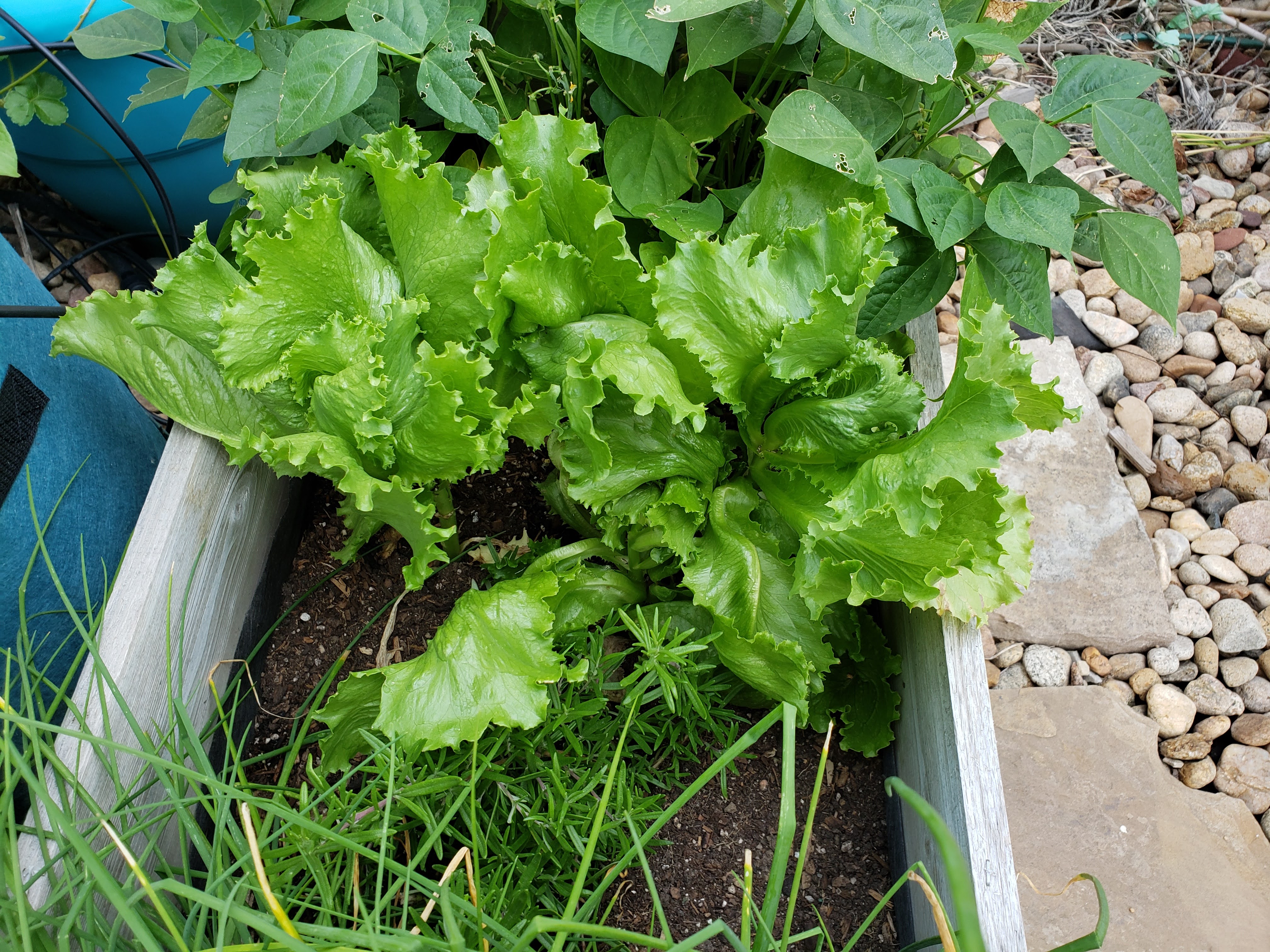
Top to bottom: bush beans, lettuce, rosemary, chives 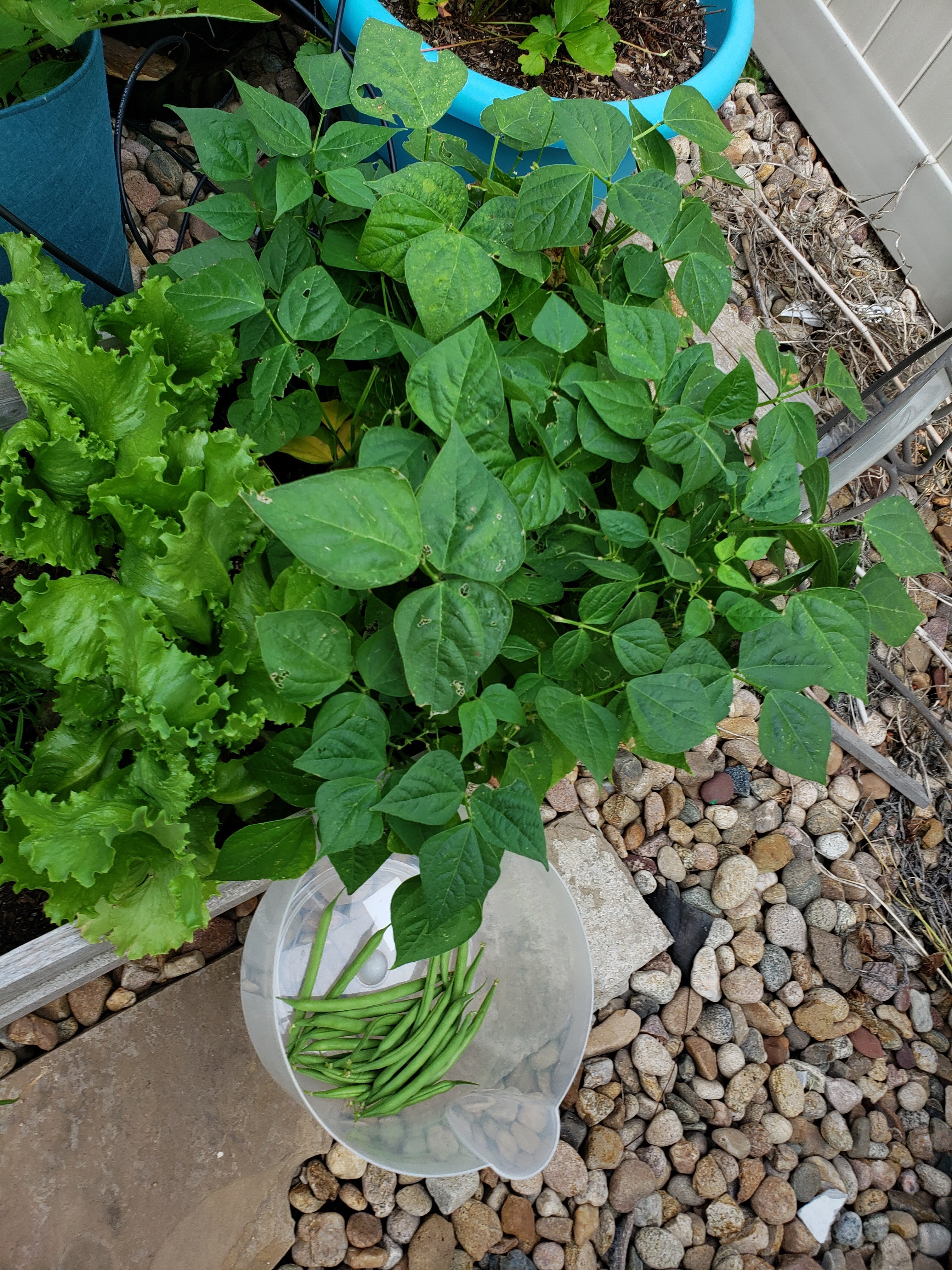
Bush beans and lettuce 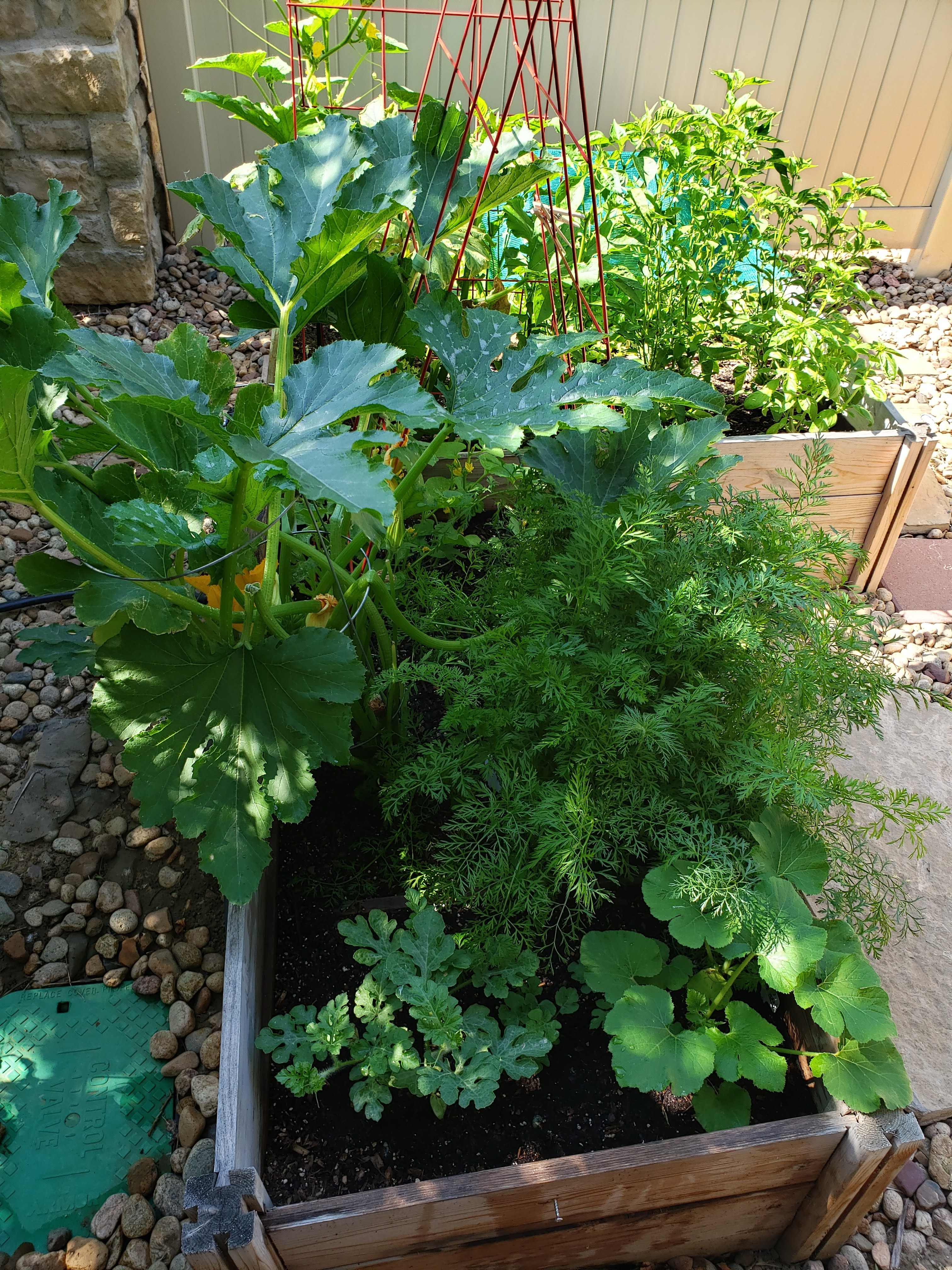
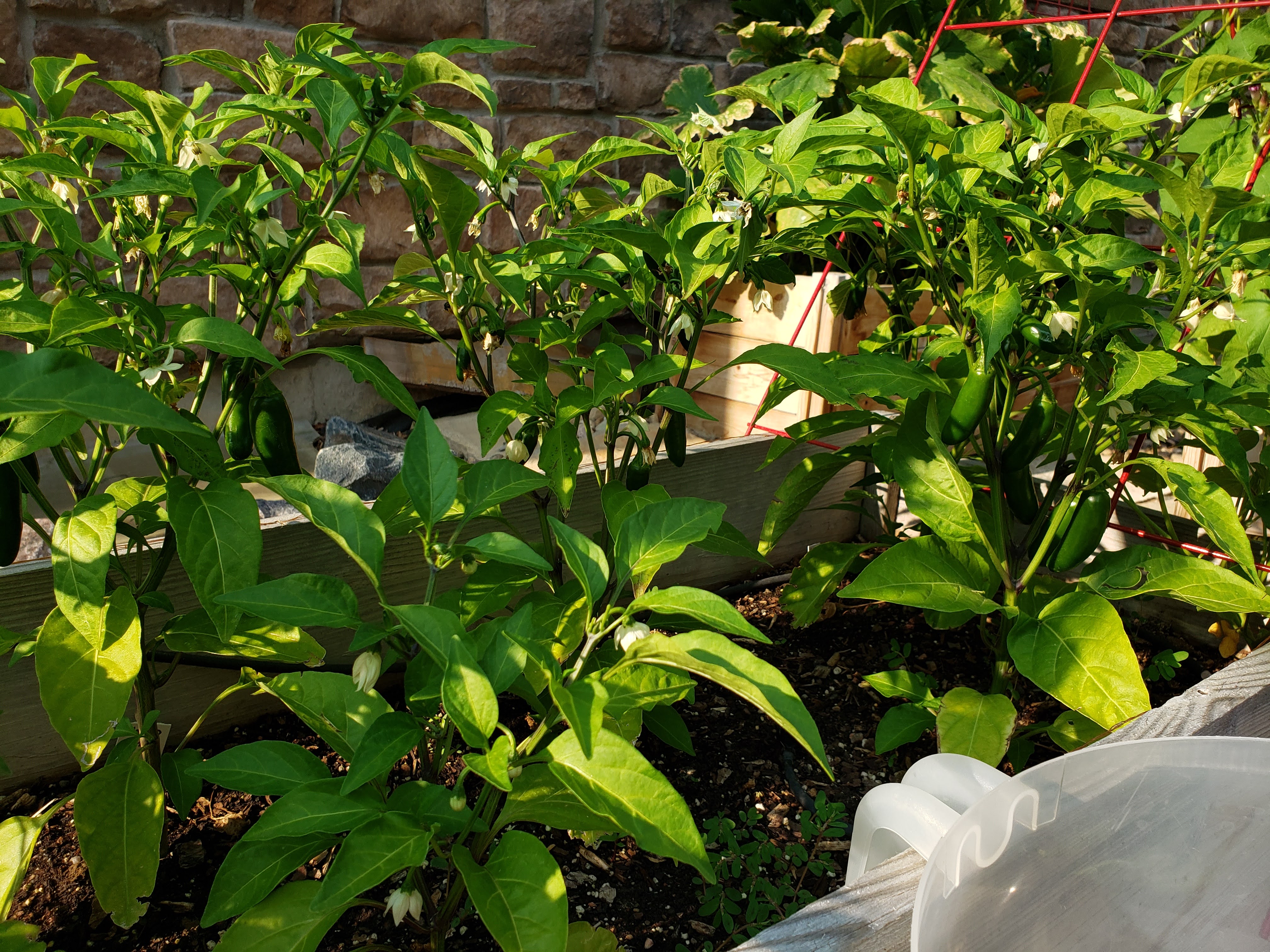
Jalapenos (staggered) 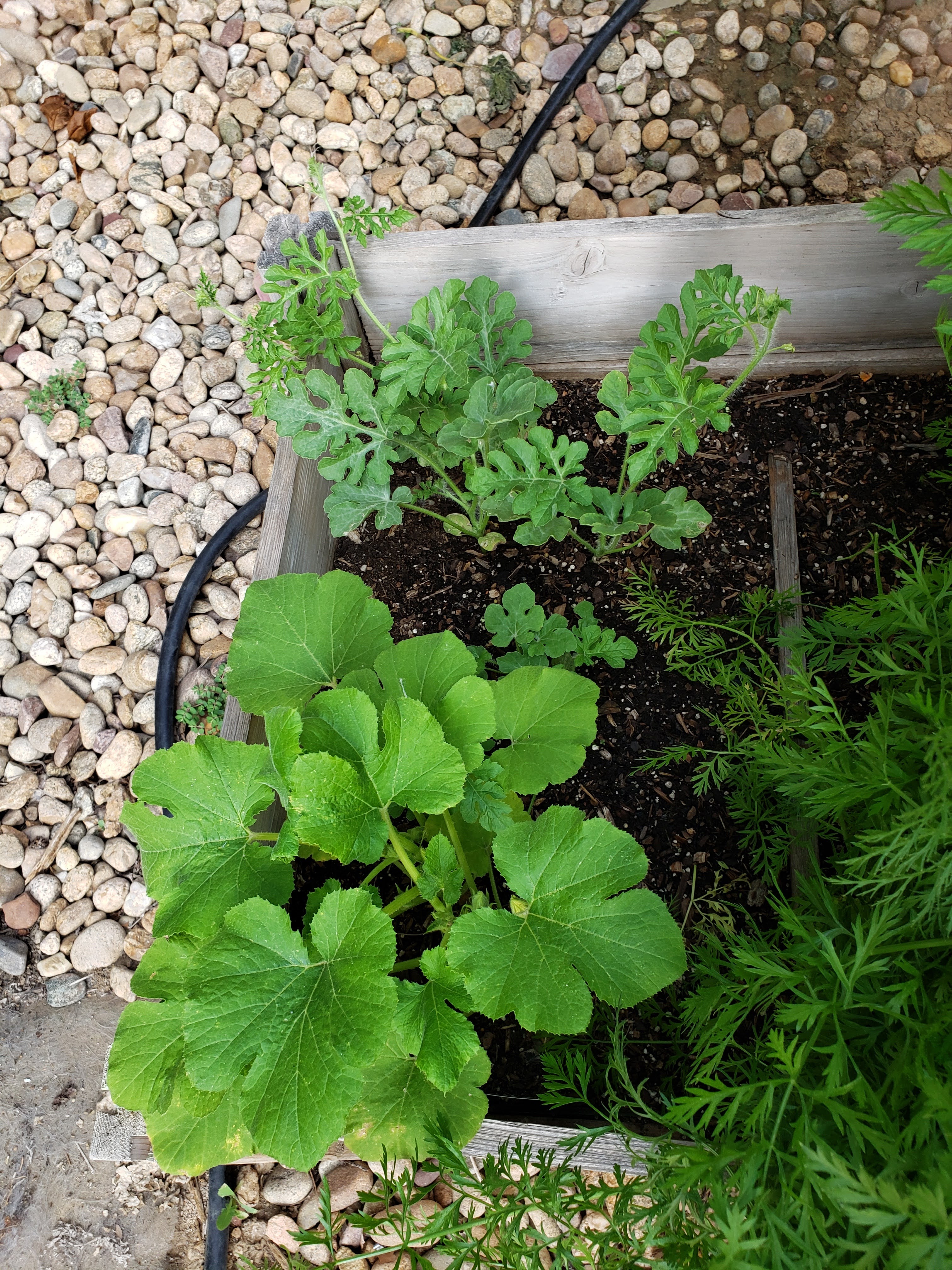
Baby watermelon (top) and yellow squash
Square Foot Gardening also depends on having the right soil blend to fill in a raised bed. In this way your garden soil is set up for success right from the start, even if you are brand new to gardening or live in partial desert like me. In addition, it’s a terrific way to start small and grow as you gain experience. It’s easy to add another raised bed. But I’ll leave it to Mel and company over at Square Foot Gardening to explain all that.
Sidebar (but in the middle): When I first got into gardening in any meaningful way it was because of Mel Bartholomew’s early book about Square Foot Gardening that was displayed next to the seed rack in my local Home Depot. I was investigating some flower seeds to try and sow in the postage stamp that we called a “courtyard” in the back space between my townhouse and garage, and I’d always wanted to try gardening in more than a random pot or an upside down green hanging basket that I saw on late night infomercials. Mel’s book was only a few dollars, and a cute pocket-size as well, so it was easy to throw it in the basket with the gladiolus bulbs. Reading it changed everything I ever thought I knew about gardening (which, for the record, wasn’t much at the time). Fast forward a decade or more, and I’ve adapted those techniques to work with vertical gardening in my extensive raised beds.
So back to vertical gardening. I am a researcher by nature and profession, so before I put any time into anything, I do a fuck-tonne of research to make sure I’m set up for success. And when I was ready to grow more than tomatoes in my raised beds, I had to figure out how to make room.
Cages
A ton of Googling got me lots of Pinterest pics, but mostly I had to figure it out for myself. So I started with traditional tomato cages, since I already had some. And that was a great place to start. Turns out, with a tomato cage and some soft Velcro garden tape, you can train up just about anything. To this day, I use tomato cages for all my tomatoes (duh) and most of my zucchini and summer squash. But last year I used one for blackberries and one for Morning Glories, and I’ve also used them for cucumbers. Oh yeah, and I sometimes use them for strawberries.
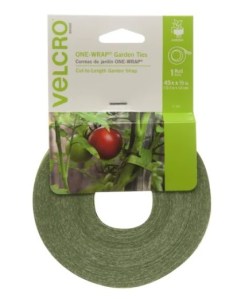
The Velcro garden tape makes it easy and gentle on the plants to tape them up a cage or trellis. And even better for the greenies out there, this stuff is reusable year after year. I collect it all into a roll when I break down the garden in the fall, and use it again in the spring/summer.
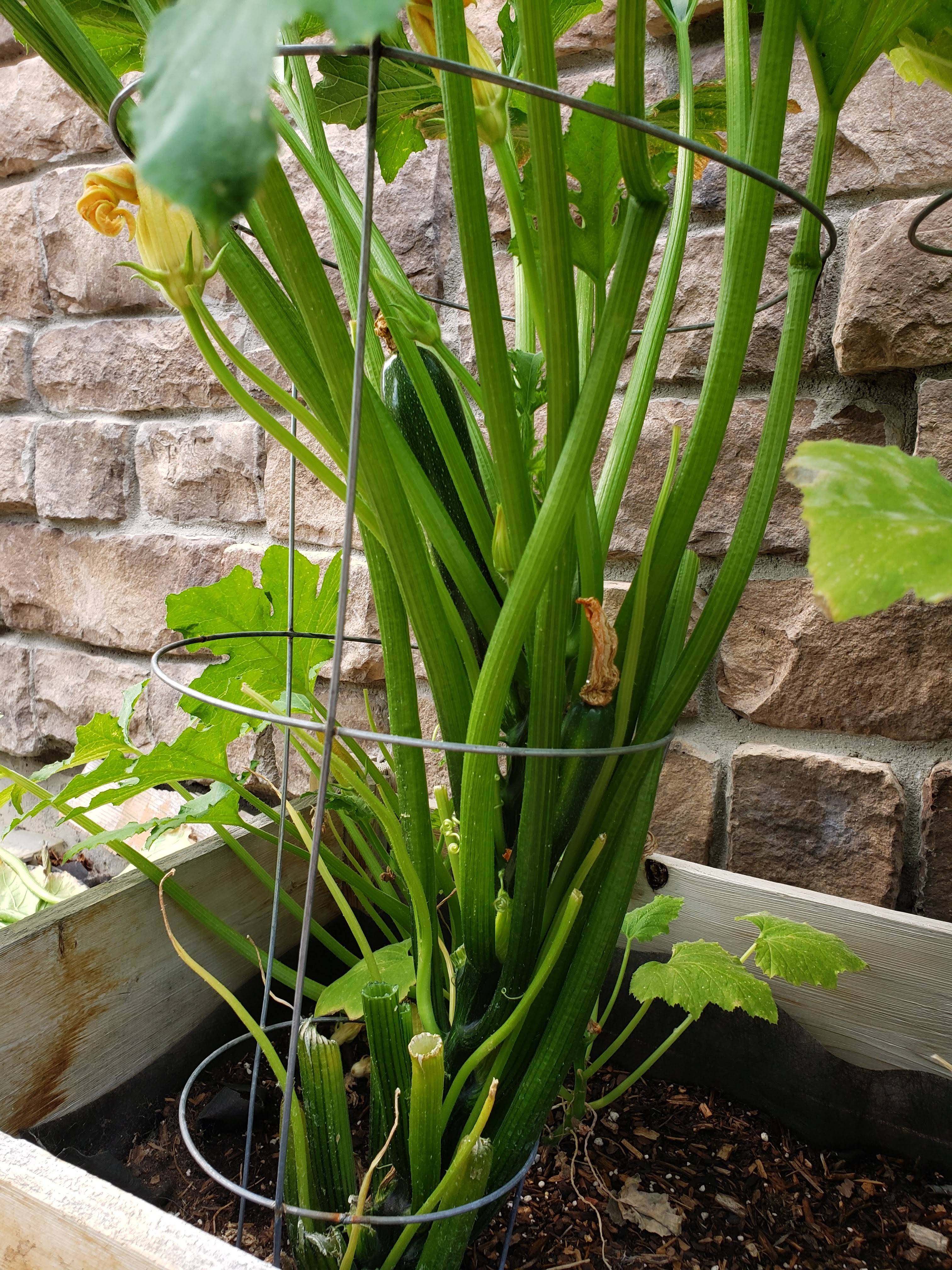
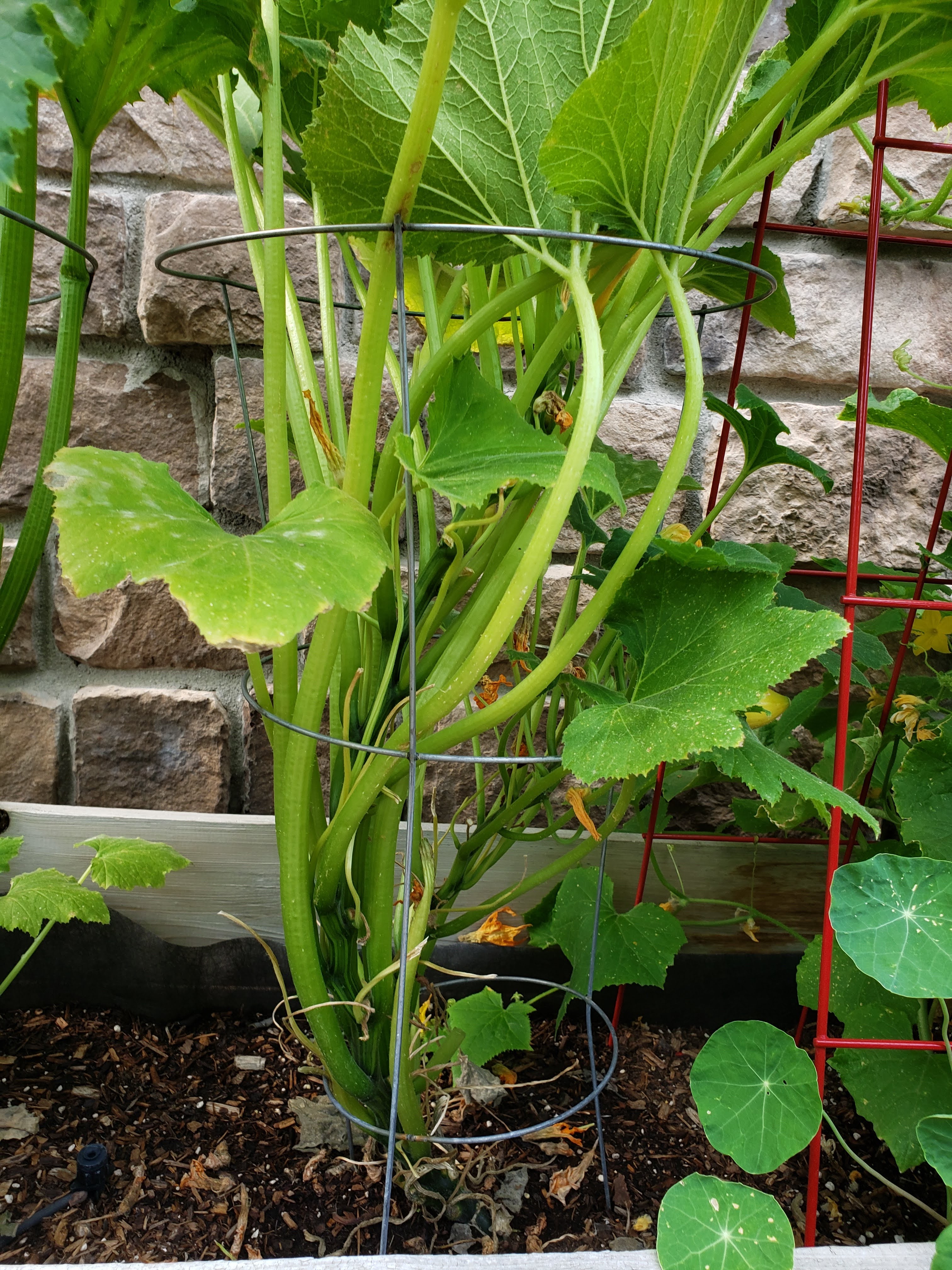
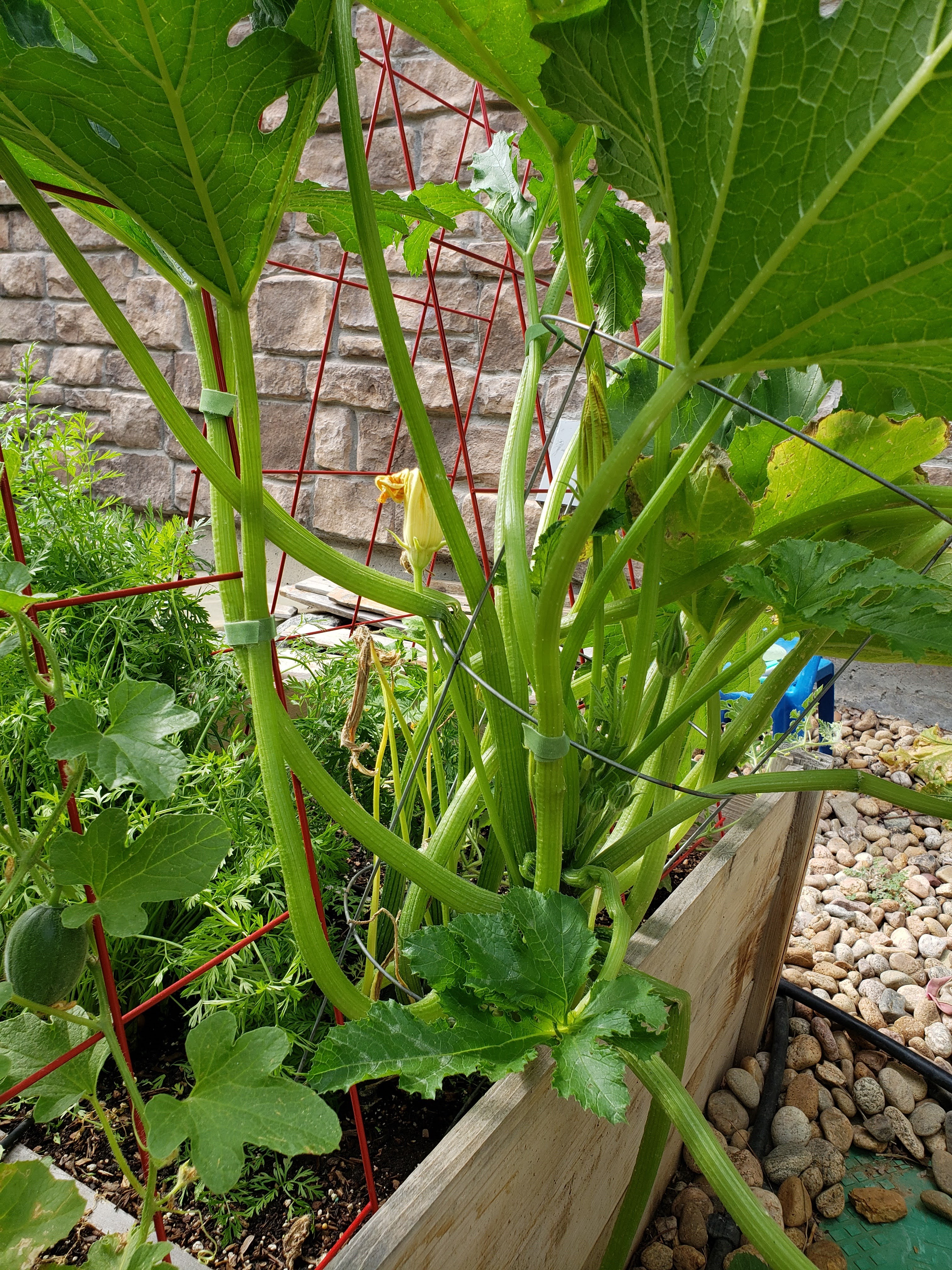
The above pics show two of my zucchini and one of my yellow squash plants trained up tomato cages. In the far right photo you can see the Velcro tape that I used to hold the leaf stalks to the cage. The zuke in that cage totally grew out of control while I wasn’t watching, and several of the leaves were too huge to get inside the cage by the time I noticed. But they’ll shade out and crowd out everything else nearby if I don’t force them up. So some of those leaves are trained up the outside of the cage. Yay Velcro!
Obviously, the better way to train them up the tomato cage is to monitor them daily, and as soon as the leaves are tall enough, simply tuck them under the cage rings. The hollow stalks of zuke and squash leaves break pretty easily, so getting them in and up when they’re young and skinny is the ticket. (I swear there’s something pervy about that last sentence, but I can’t quite put my finger on it). And the Velcro tape is your friend. You can cut it to any length, and, as long as it’s loose enough to allow for the stalk, vine, or leaf to grow in diameter a bit, you can attach them to anything. You can also remove and reattach as necessary.
Trellises
Another structure that’s great for vertical gardening is a trellis. There’s a lot of different kinds out there, and it’s taken me a while to find some I really like. I’m also always on a budget, so I like affordable garden accessories, and you can find some pretty affordable trellises with a little digging.
Combine your trellis with Velcro garden tape, and there’s nothing you can’t train up.
Winter squashes, melons, and cucumbers pretty much have to have a trellis to climb if you are growing them in a raised bed. Melons and squashes can have massive vines that are several feet long. That could take up an entire raised bed, even if the root system is only in the square foot or two where the stalk goes into the ground. Therefore, maximize your space. Grow up! Also, look for dwarf and bush-style varieties of your favorite vining veggie, they’re selectively bred to be smaller plants.
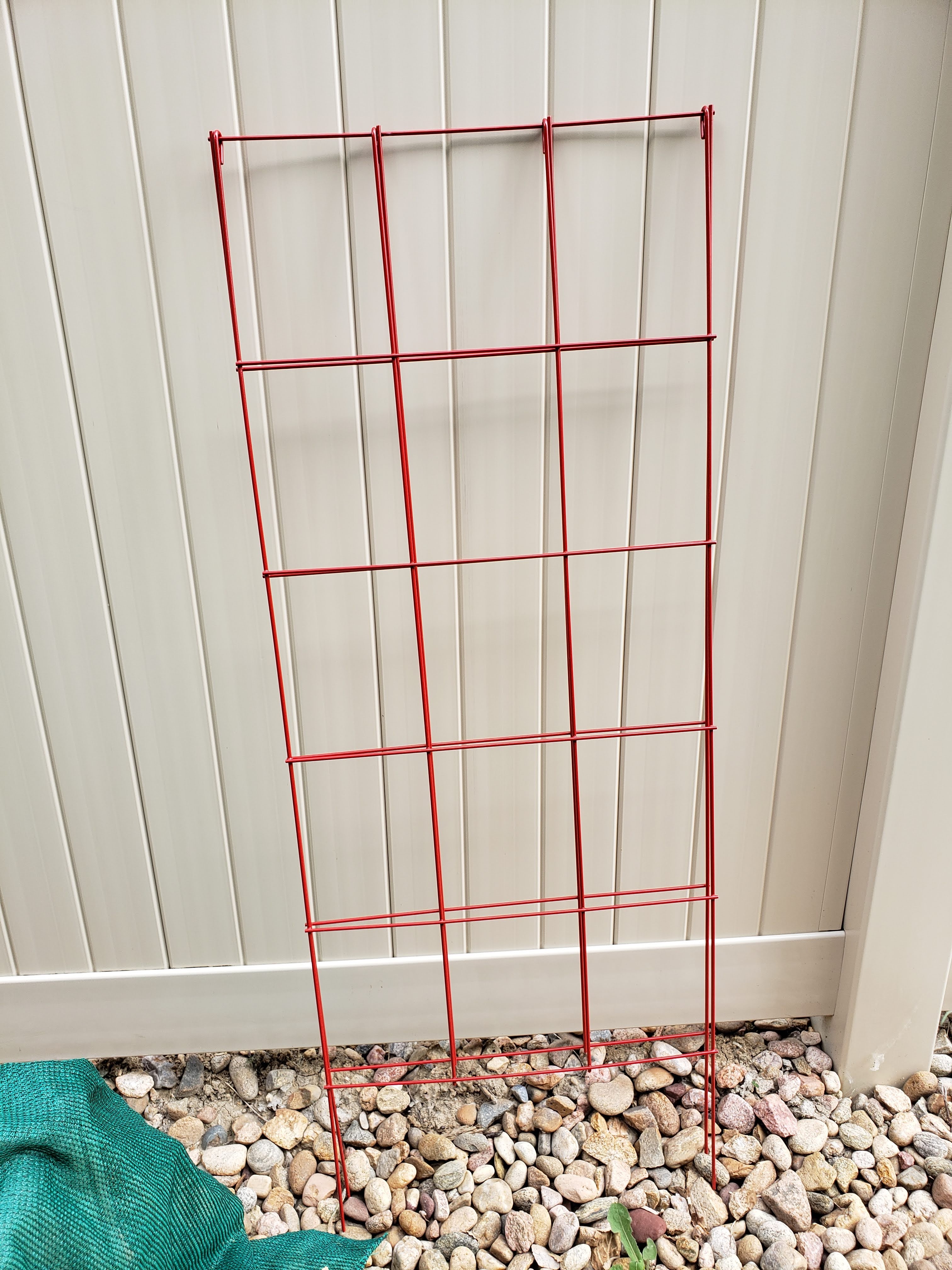
A-frame trellis 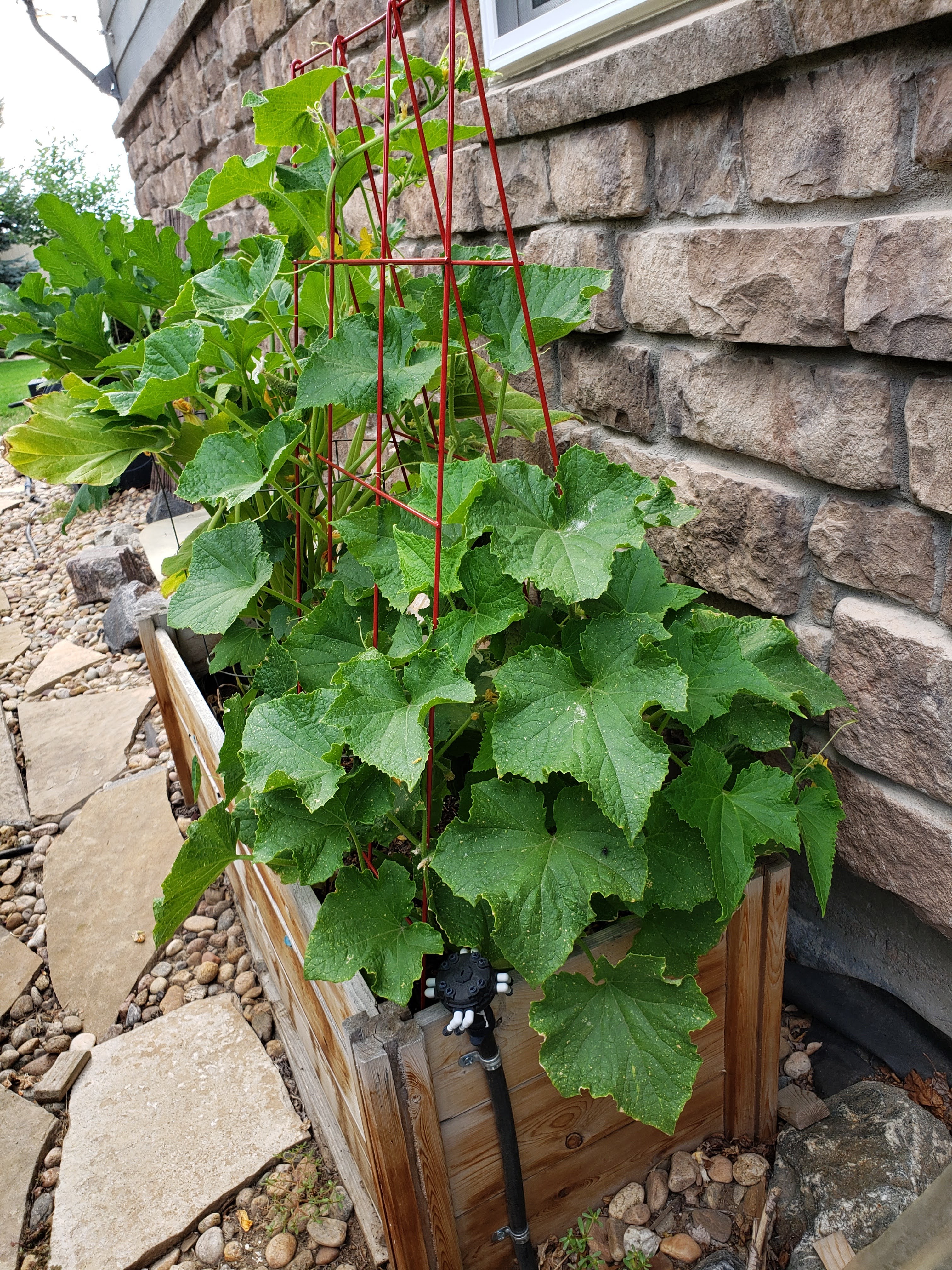
Climbing cucumbers 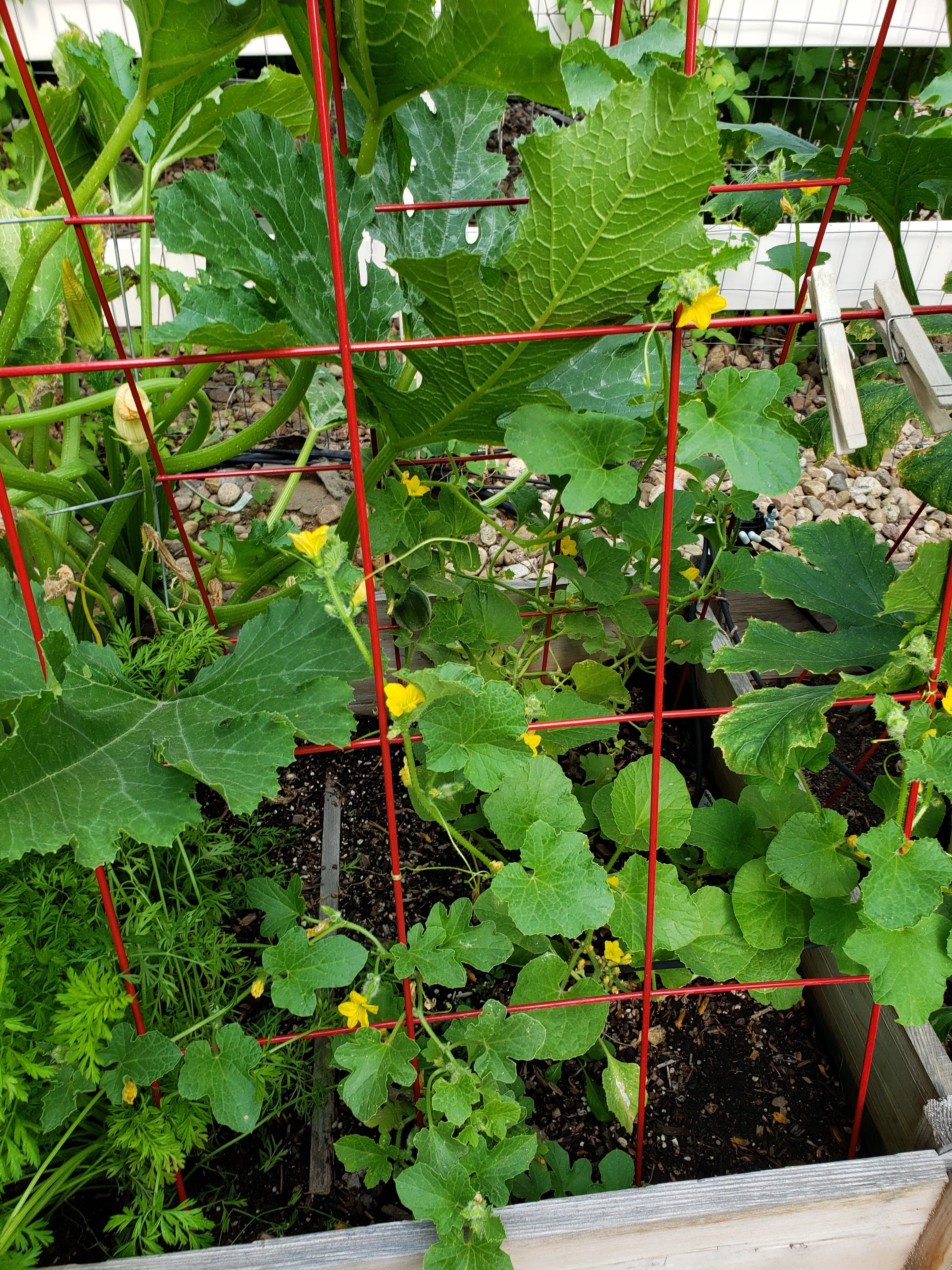
Climbing cantaloupe 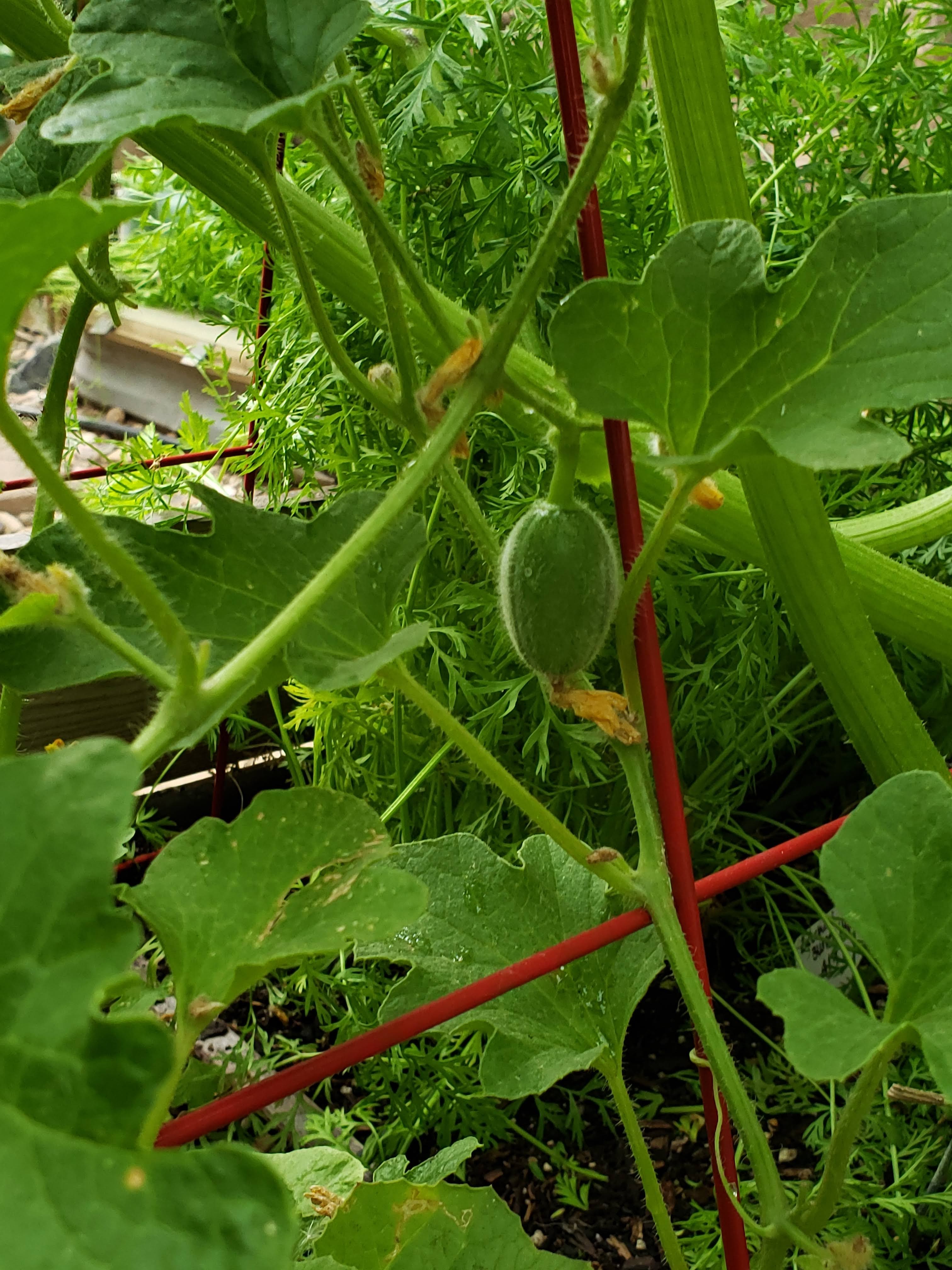
Close-up baby cantaloupe on trellis 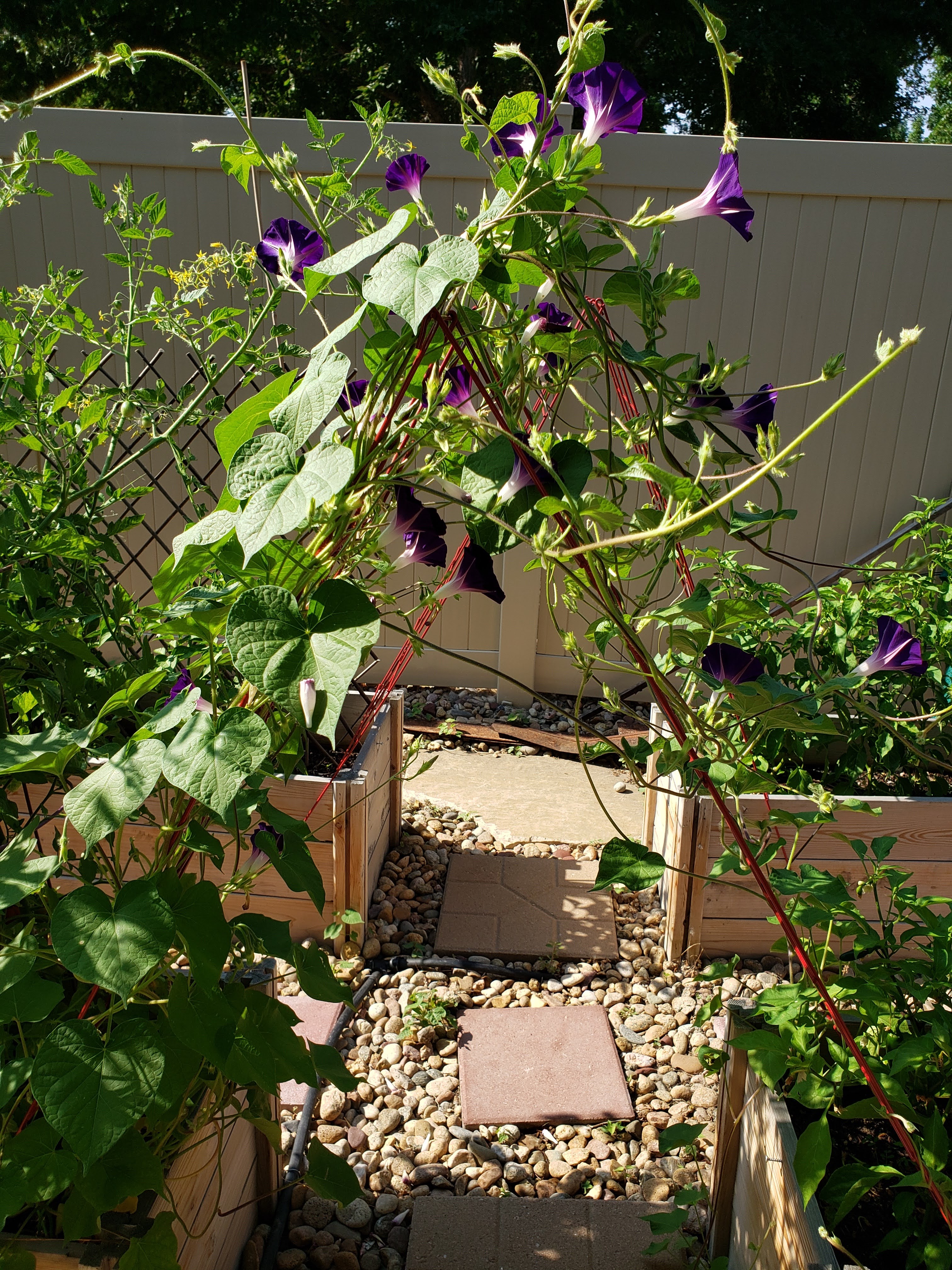
Morning Glory bridge 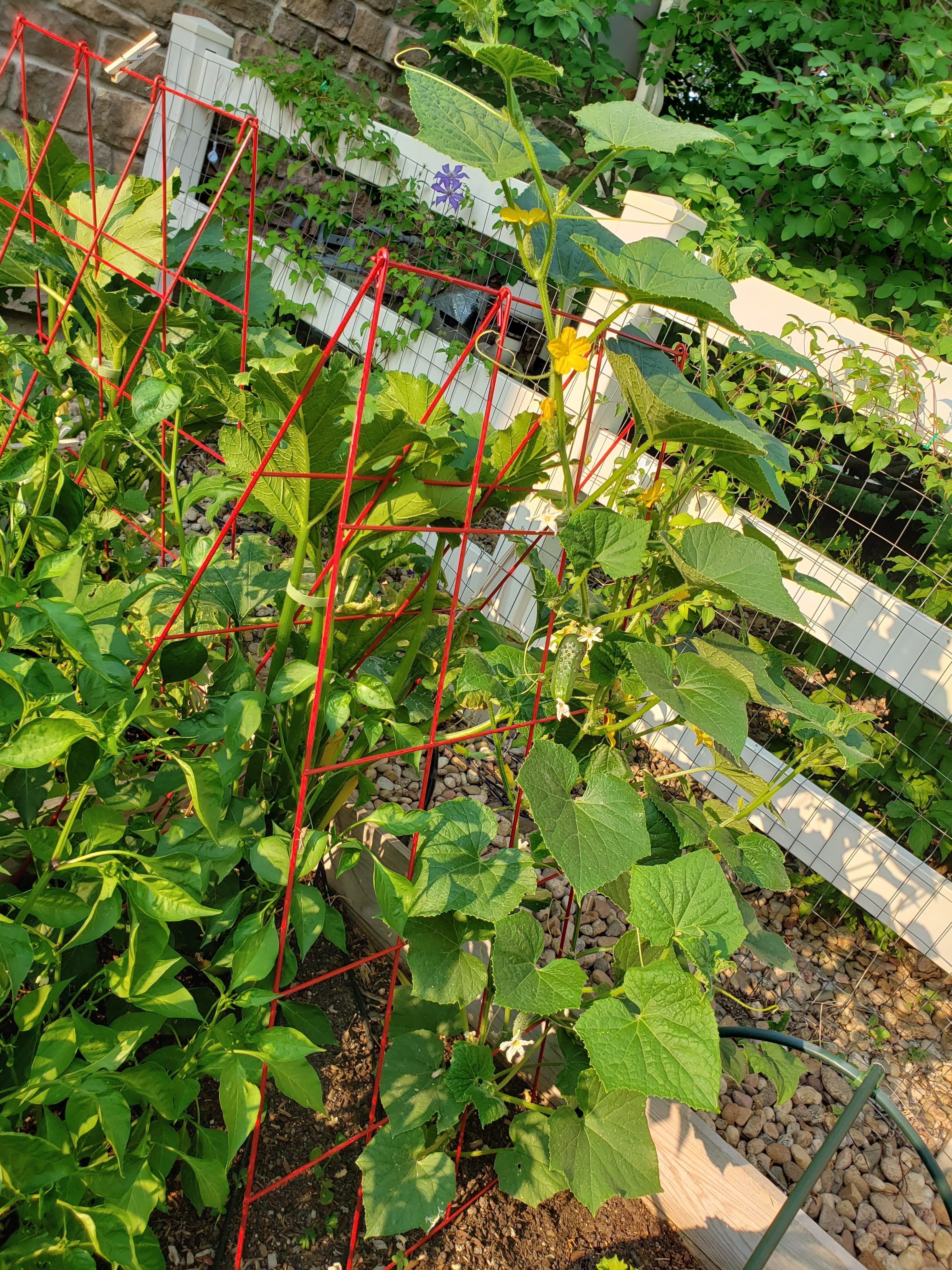
Cucumber climbing 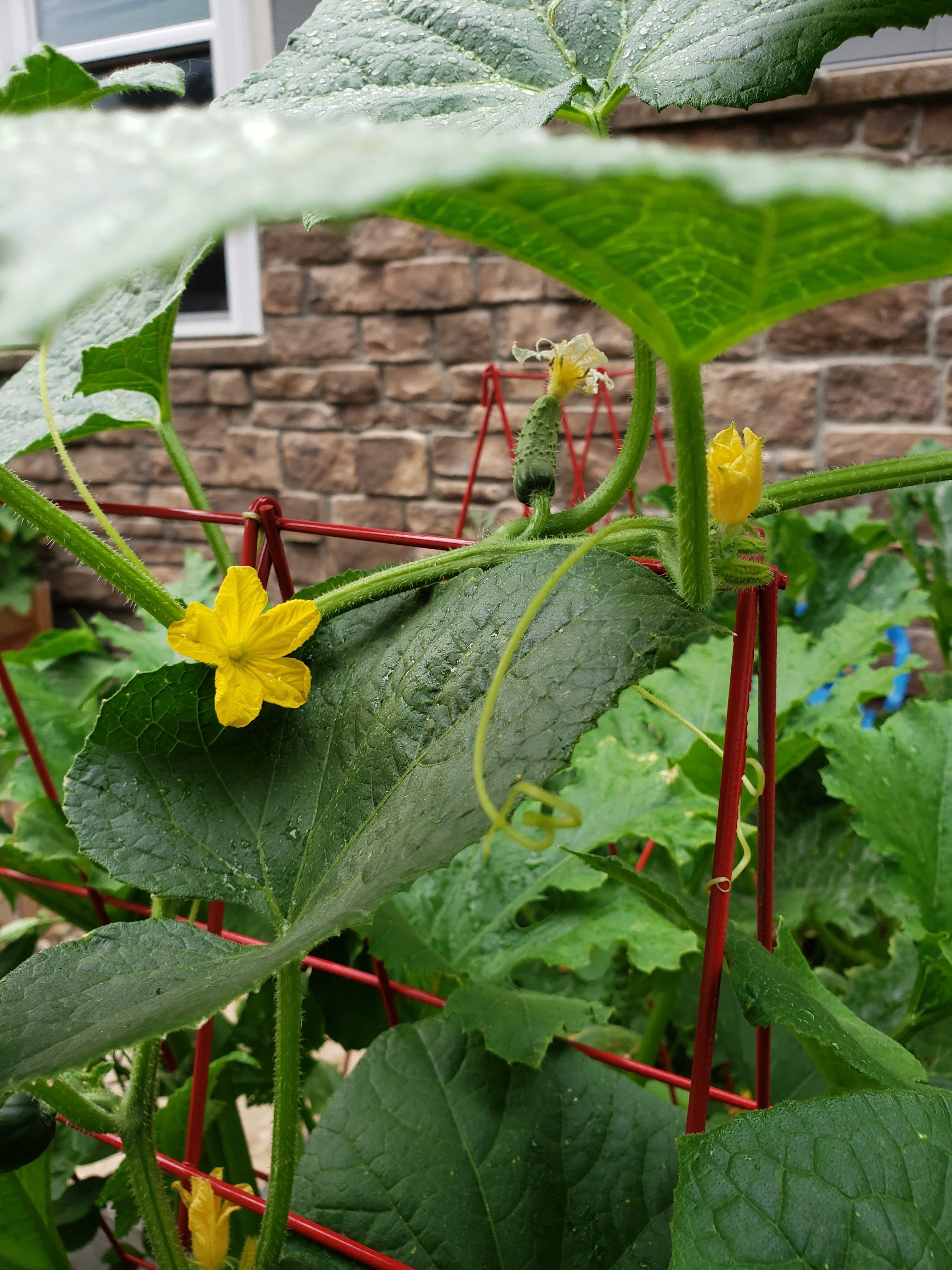
Cucumbers summiting the left side of A-frame… 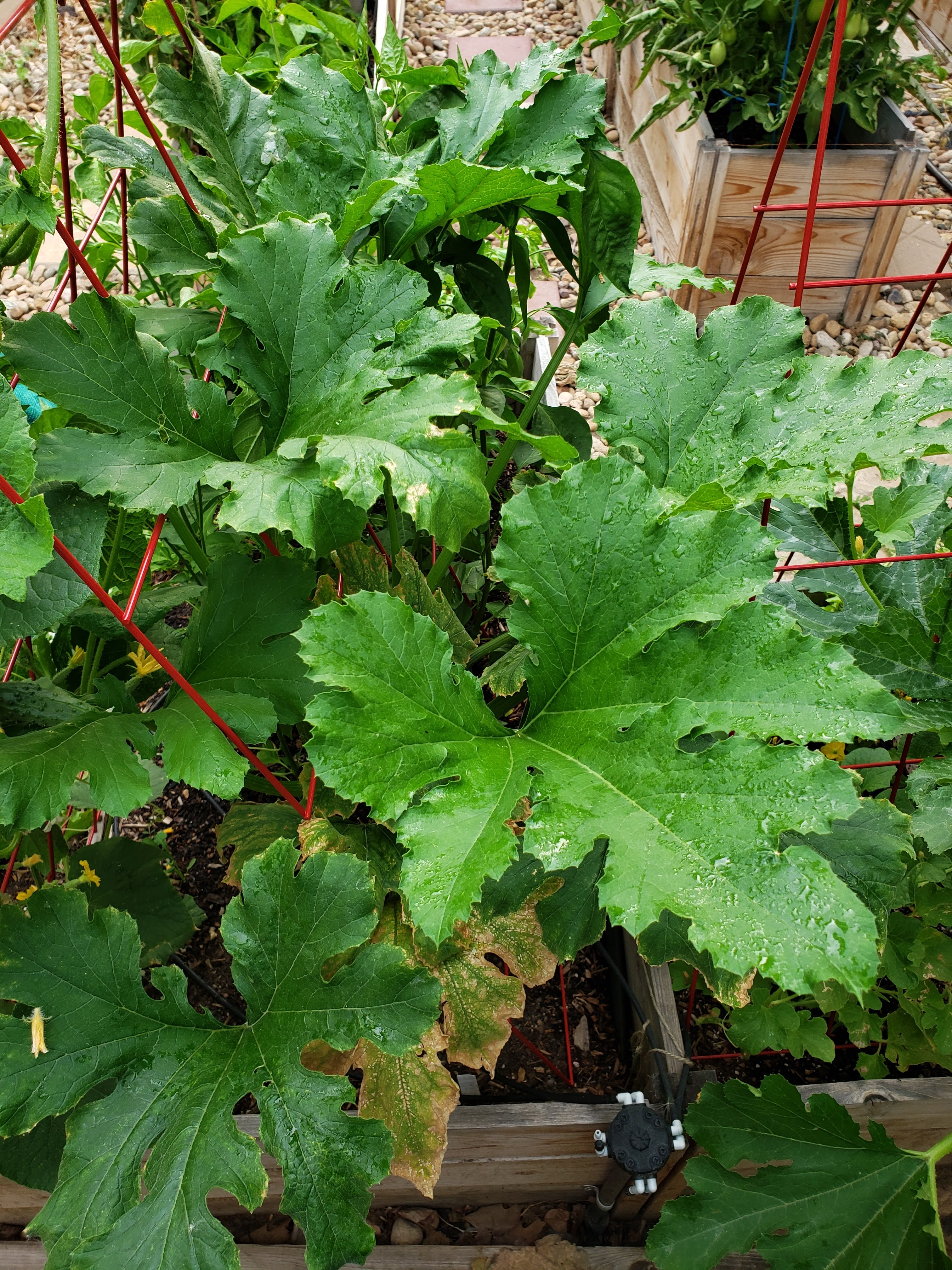
and zucchini training up the right side 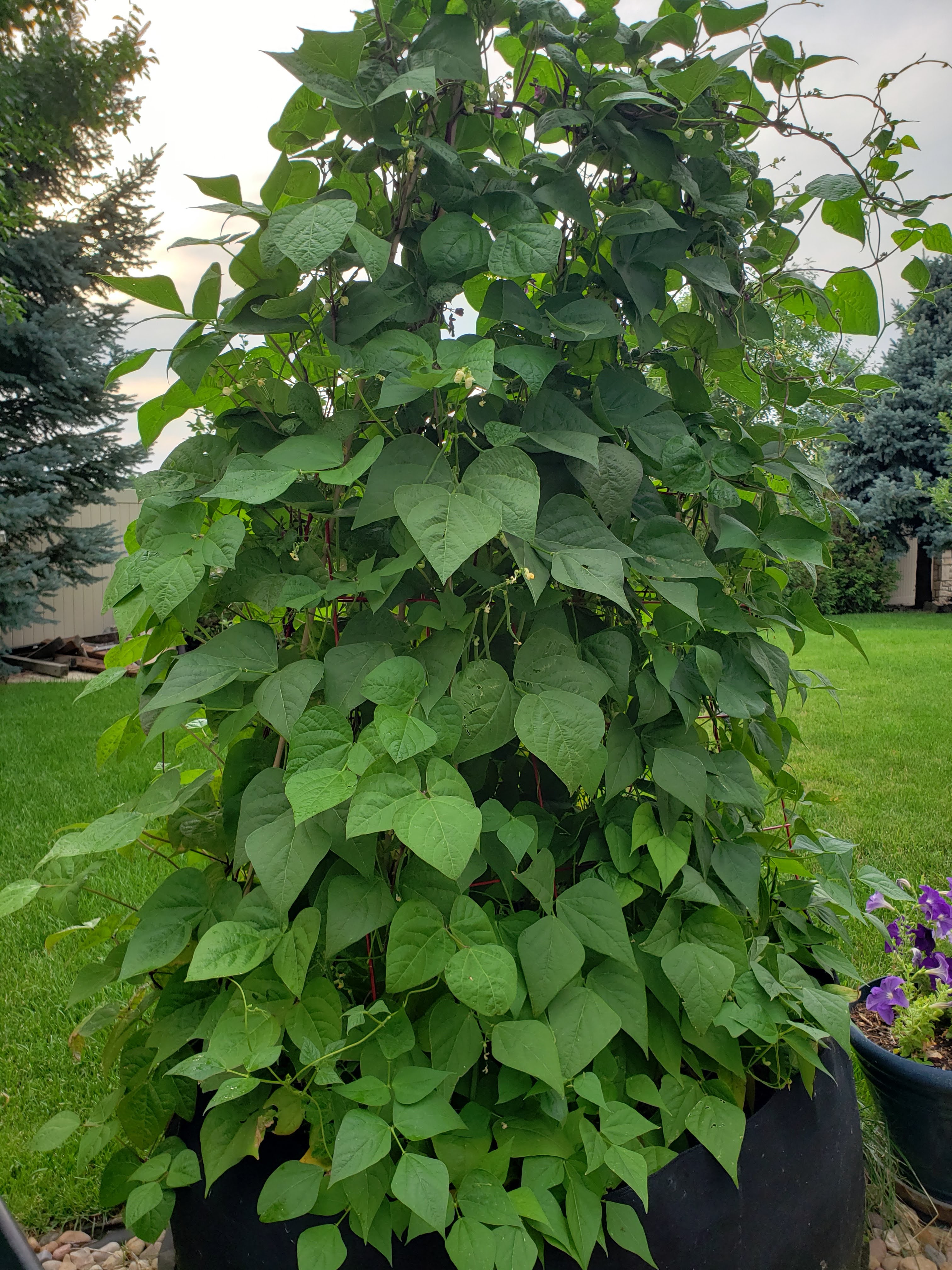
Hidden by climbing pole beans
When I first started vertical gardening, I was really paranoid that I was going to do it wrong. I searched endlessly online trying to find some instructions for how to do it and what to use. Eventually, after getting tired of looking at cute Pinterest pics of fairy gardens and wedding arbors, I decided to just try stuff. Turns out, if you’re gentle with them and make sure they get nutrition and love, your veggies can be pretty tolerant of even some rough handling. And if you get your vertical wrong, the worst that can happen is that your plant may die. But guess what? They will die in a few months anyway because winter is coming. So just try stuff, don’t be afraid!
Like this silly bastard:
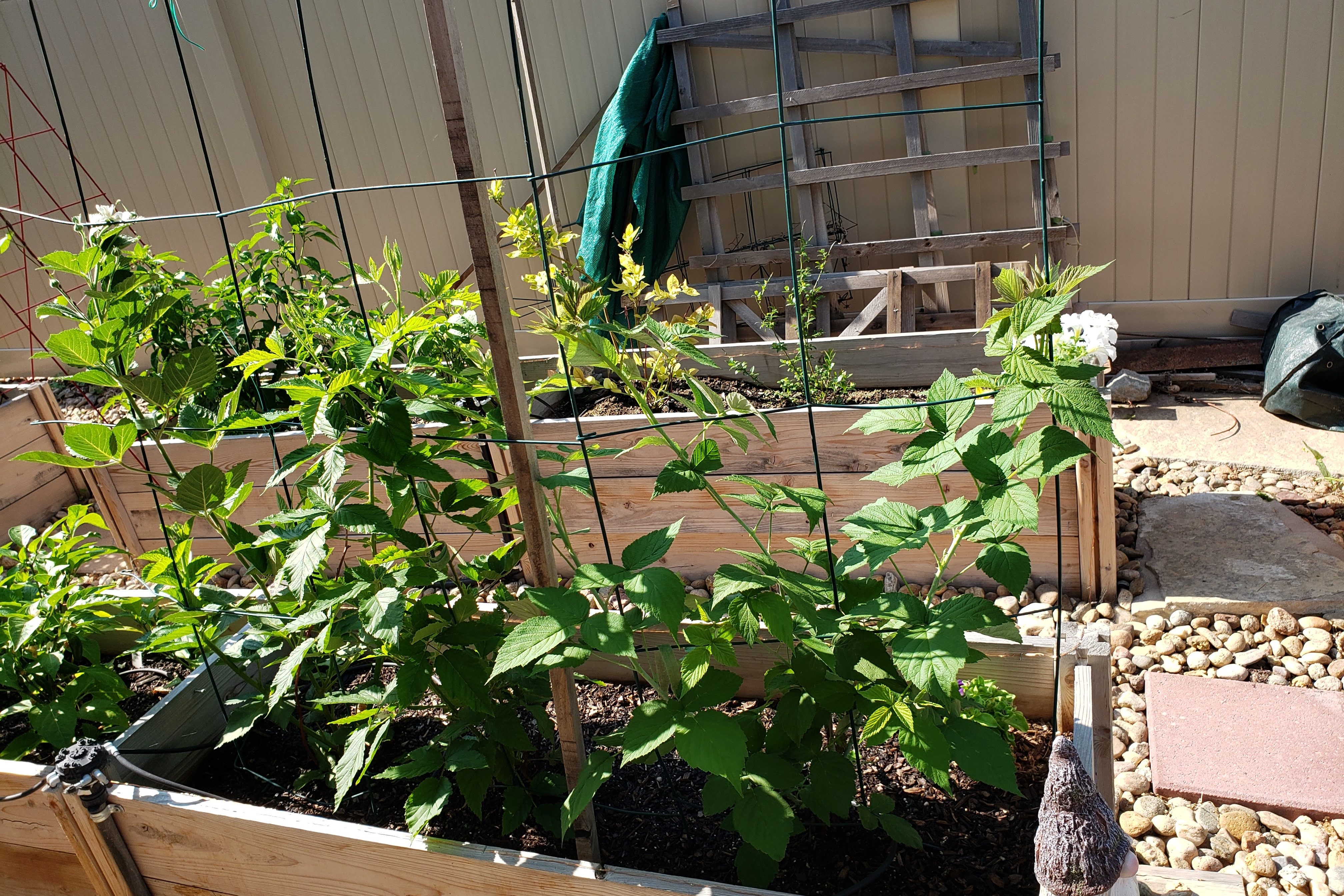
I’ve never grown blackberries before, but I had a cane I picked up at the end of last summer that somehow made it through the winter, so I picked up two more canes early this season and plopped them into a box. I have no idea if this will work. I don’t know how many square feet a blackberry cane needs, but they’re growing like pole beans, so they must like it so far. It’s fun to experiment.
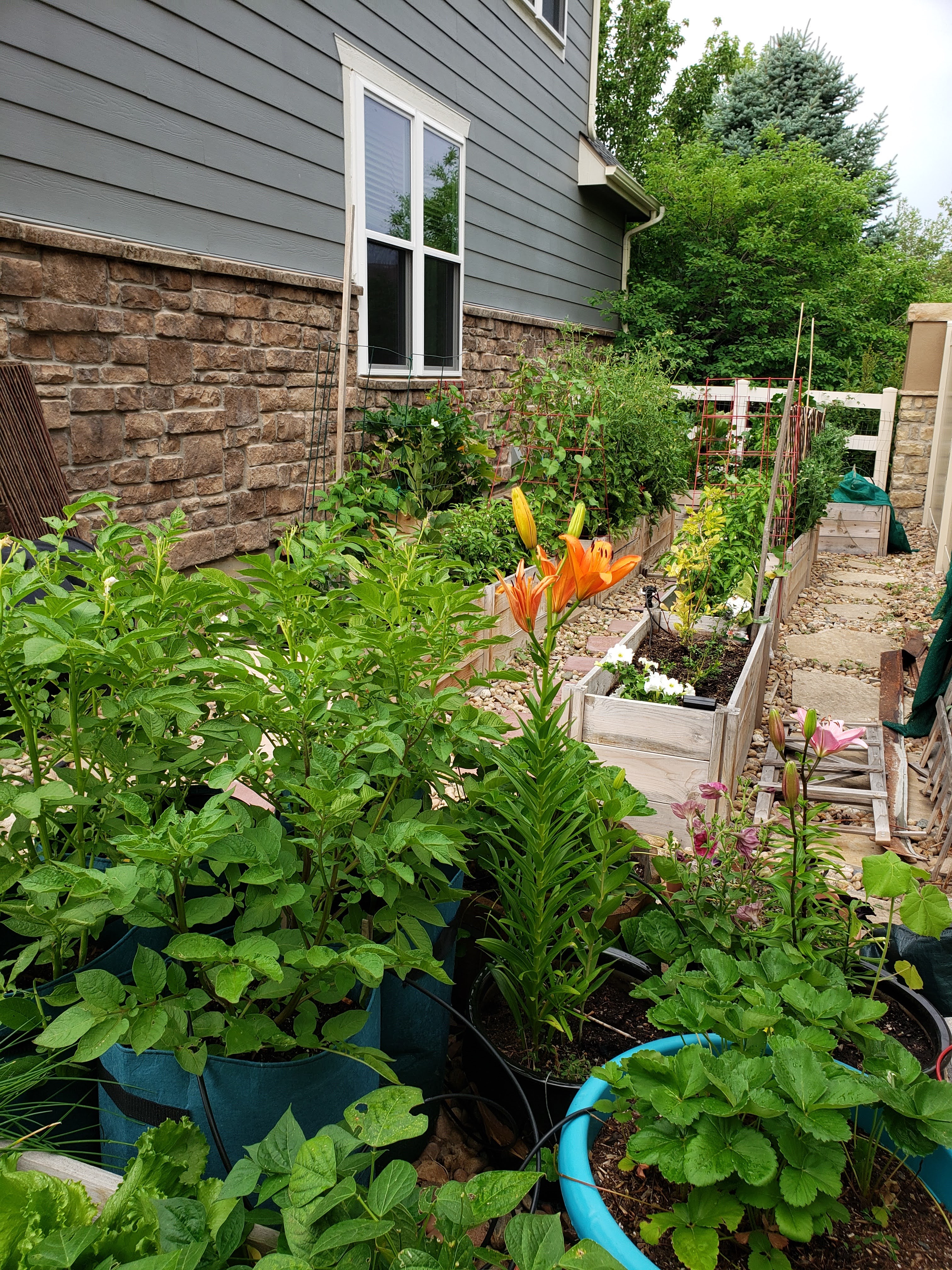
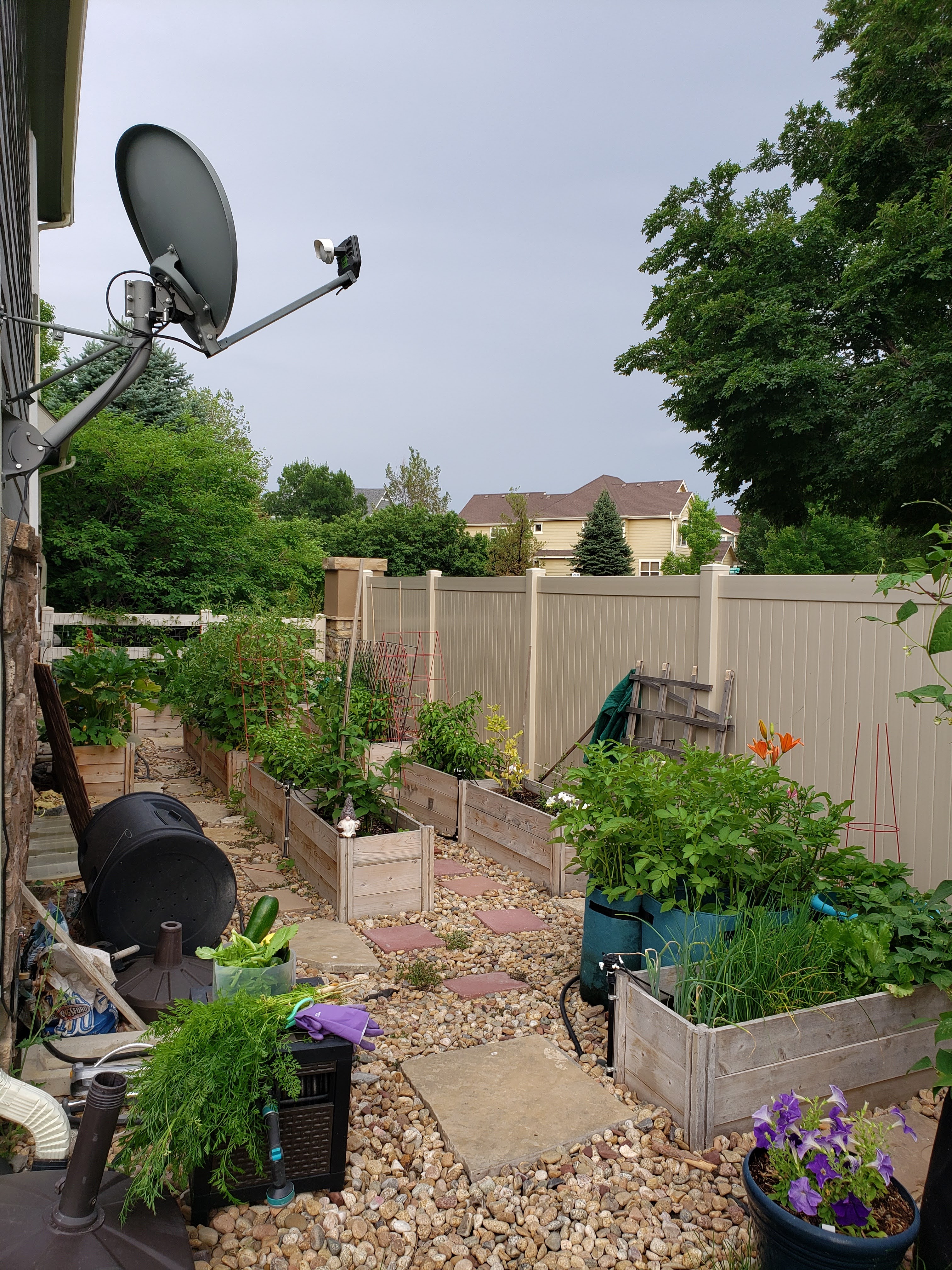
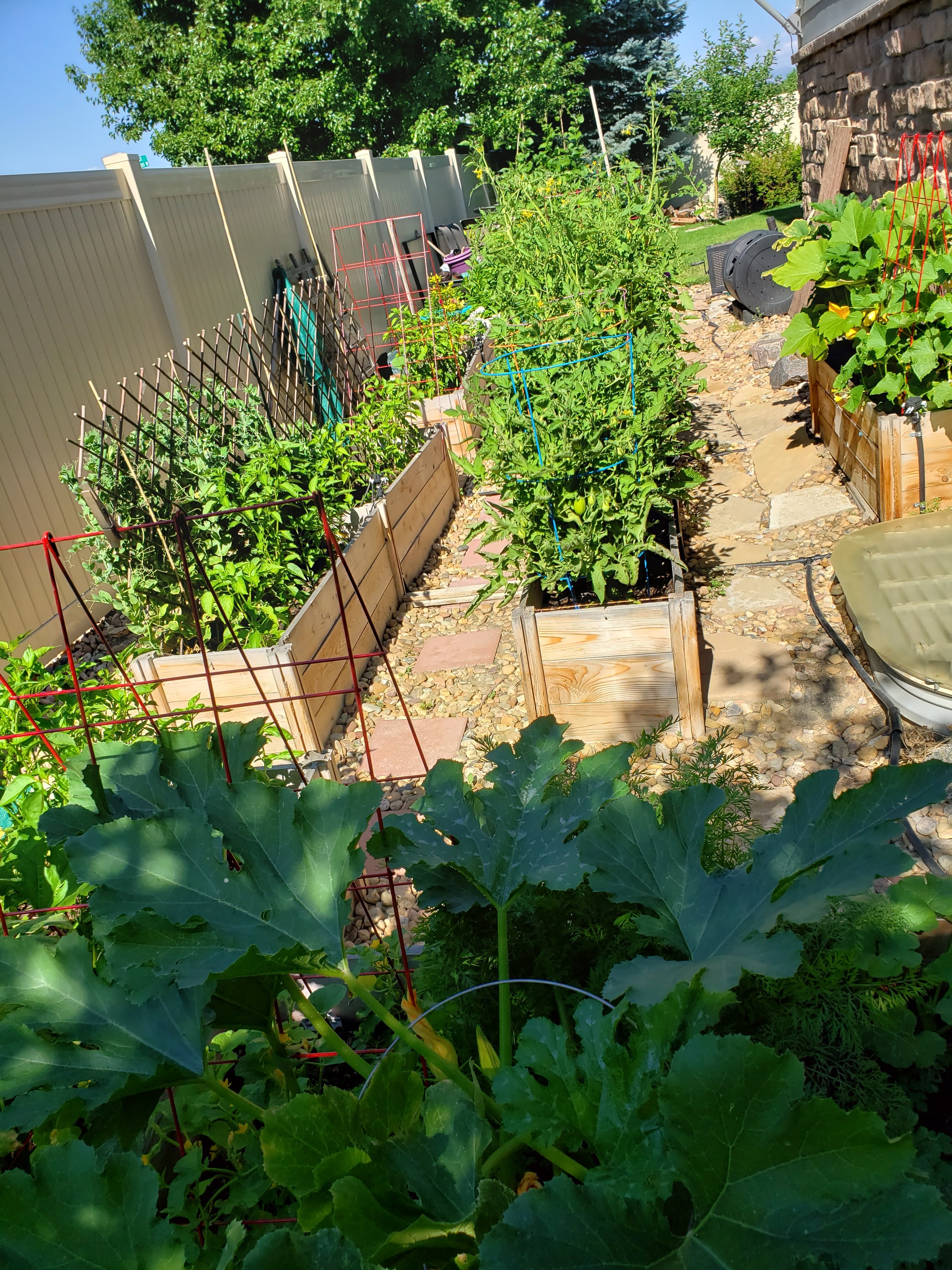
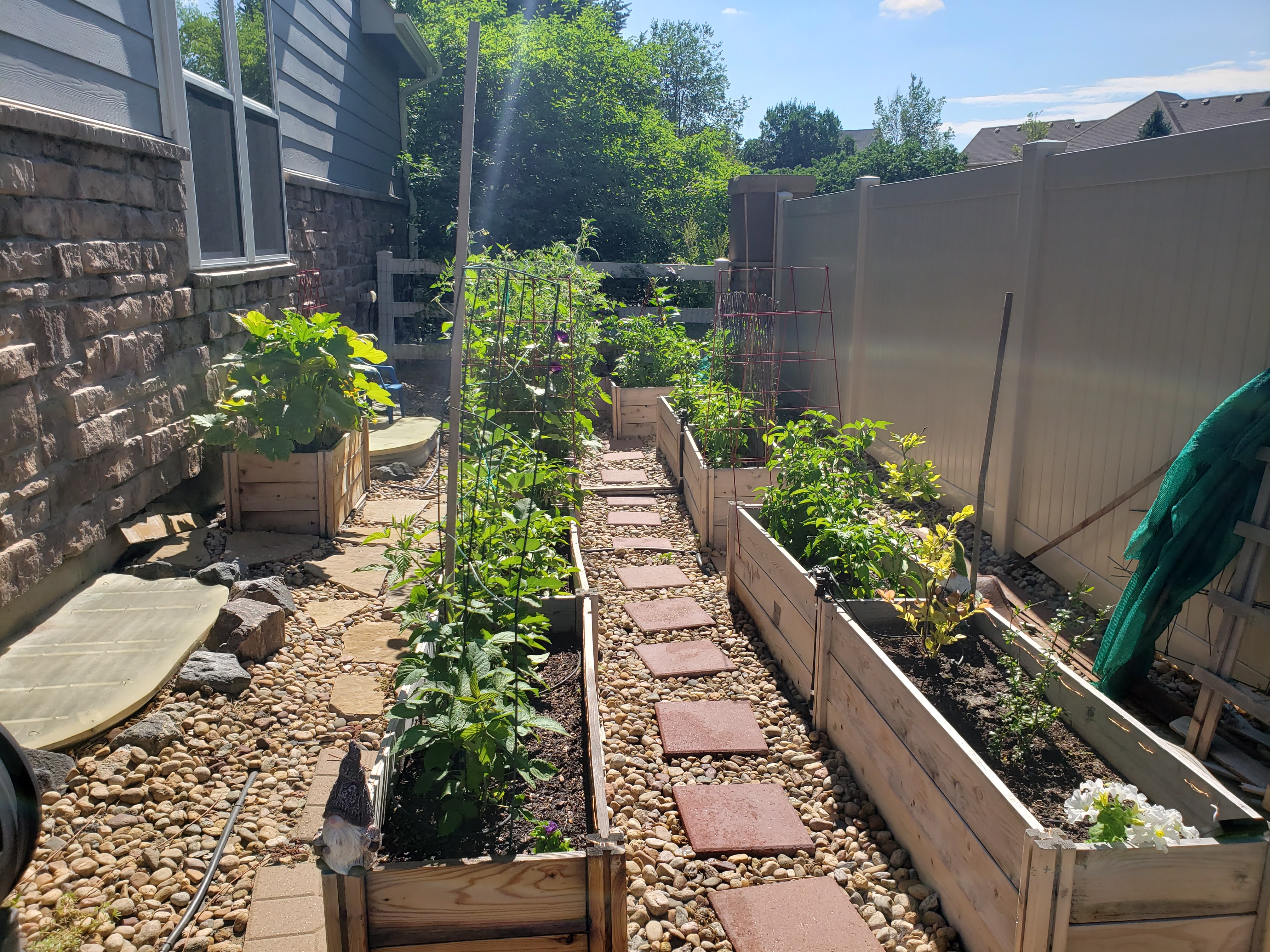
I’ll close this post with some nice pics of my bastardized vertical raised bed square foot garden:
 The Pottymouth Gardener