The potatoes are dead. I’ve not been able to find the reason. They started huge and beautiful and green and flowery. And then their leaves turned yellow and died. After much research and several attempts to fix them with nutrition – as there was no insect activity – I have come to believe it was fungal, viral, or bacterial in nature. See this earlier post for details: What’s STILL wrong with the potatoes?
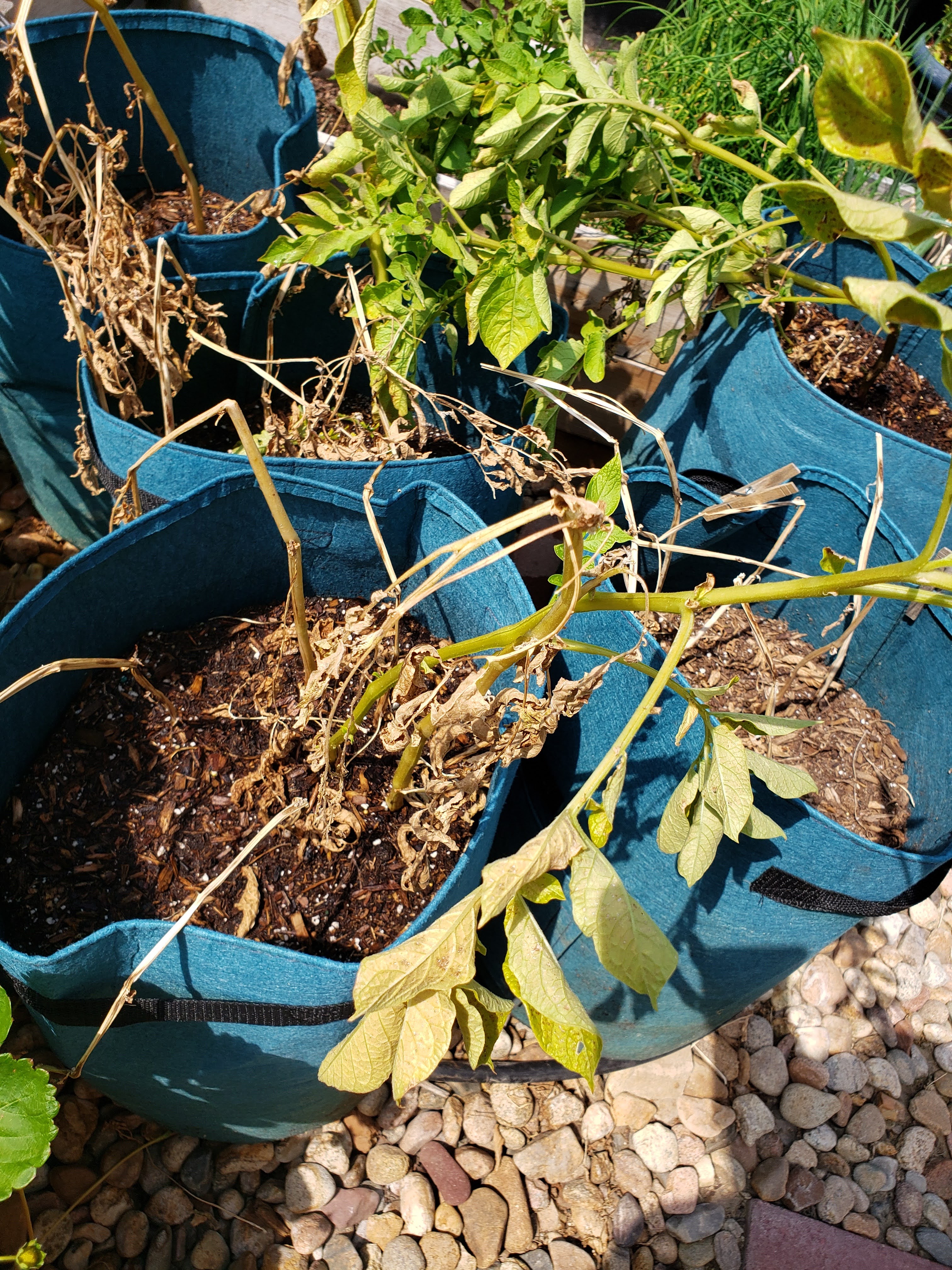
Dead ass potatoes
Some time in the next few days I intend to empty the buckets and see if any of the plants were able to produce a few tubers. I found a few delicious potato treasures earlier in the summer when investigating causes for decline, and they were yummy. But beyond that, the season is obviously over for them, and there’s nothing left to do but try and learn more over the winter.
But….
….my beans are still kicking!! They have some issues as well (’cause what in my shitwagon garden doesn’t?), but I’m still getting some pretty good harvest, and I haven’t been able to identify what is causing their distress.
For pretty much every year I can think of that I’ve grown beans, this seems to happen by about late July or August:
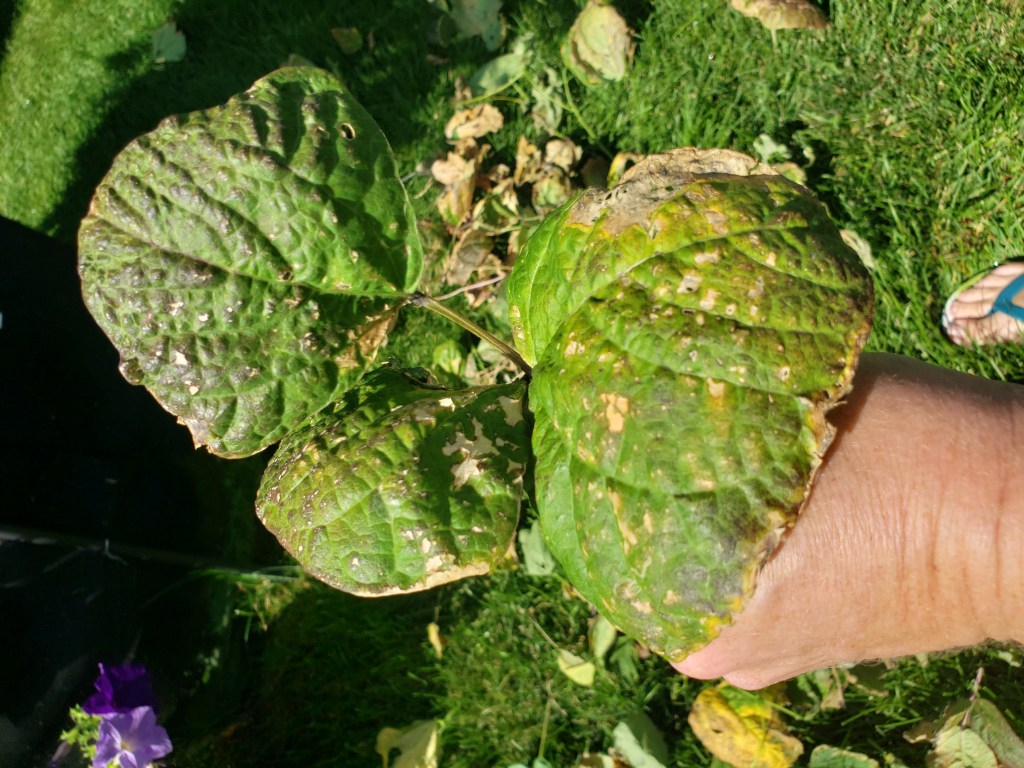
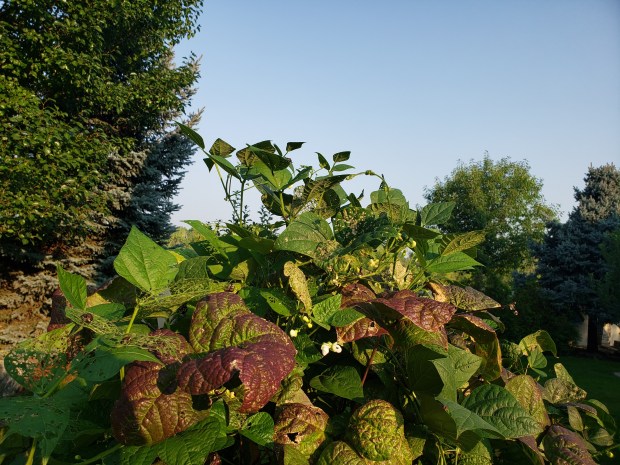
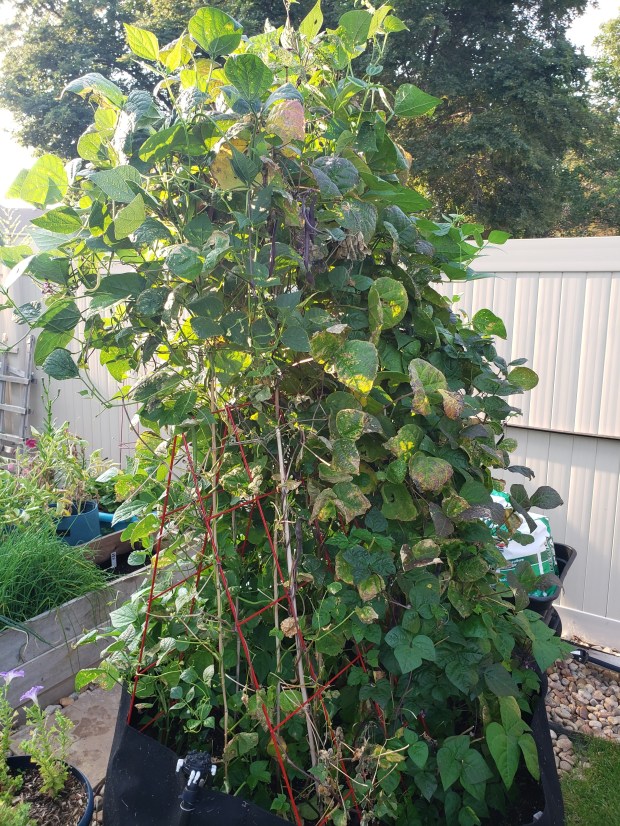
The leaves start getting crispy and red looking. Then they start dying. This year I started paying much closer attention to them, as I now have a Japanese Beetle problem in my garden, and they LOVE LOVE LOVE the bean leaves. Last year was the first year I ever saw a Japanese Beetle, but now they seem to be permanent summer residents. Fucking douchekabobs. See my previous posts Fucking Japanese Beetles and Pesticles Part 1: Japanese Beetles, Flea Beetles, and Grasshoppers for more about those shit sneezes.
Since the invasion of the Fucking Japanese Beetles (FJBs), I have to keep real close tabs on the beans because the FJBs will skeletonize the plant in just a few days if left to their evil plans. The harsh pesticides that will keep them off for a few days does wash off with rain, and cannot be used at will – it has specifically prescribed maximum applications, and is, of course, poisonous to all kinds of things (including humans!) if used improperly.
Therefore, I have to use organic methods as well: I pluck or shake the assbaskets off of the leaves and into a soapy water solution, where they promptly drown.
Anyway, the FJBs have kept me sharp about the beans, and, along with my other nutritional failures around the garden, I’ve been focusing on why the leaves that haven’t been bothered by the FJBs are dying.
Unfortunately, I have no answers. Like the potatoes, the closest fit I can find in my research seems to be viral. When I try to find images of bean leaf issues, the closest match to how my leaves look is in articles about viruses or fungi, but my leaves don’t really fit the description or the look of the images of leaves that have those problems. And, if it’s a virus or something, why am I still getting such a delicious and harvest? Admittedly, it’s not as abundant as it seems like it should be, but many of the purple bean plants have died completely.
I have made it a point to fertilize using a general veggie fertilizer as well as a supplement or two that I’ve applied to everyone in the garden. A bit of magnesium and calcium as a preventative, since several other plants in the garden have needed those.
I noticed that the beans themselves started looking longer and more plump after starting a fertilizer routine, but there’s been no change to the part where leaves are crisping up and falling off.
So…feeling like I had to do something, I chose to get rid of all the shitty leaves, and reduce the amount of water they get from the drip irrigation, hoping that maybe they’re overwatered. The bean leaves are very good at providing their stems and soil with so much shade that the soil often stays pretty moist.
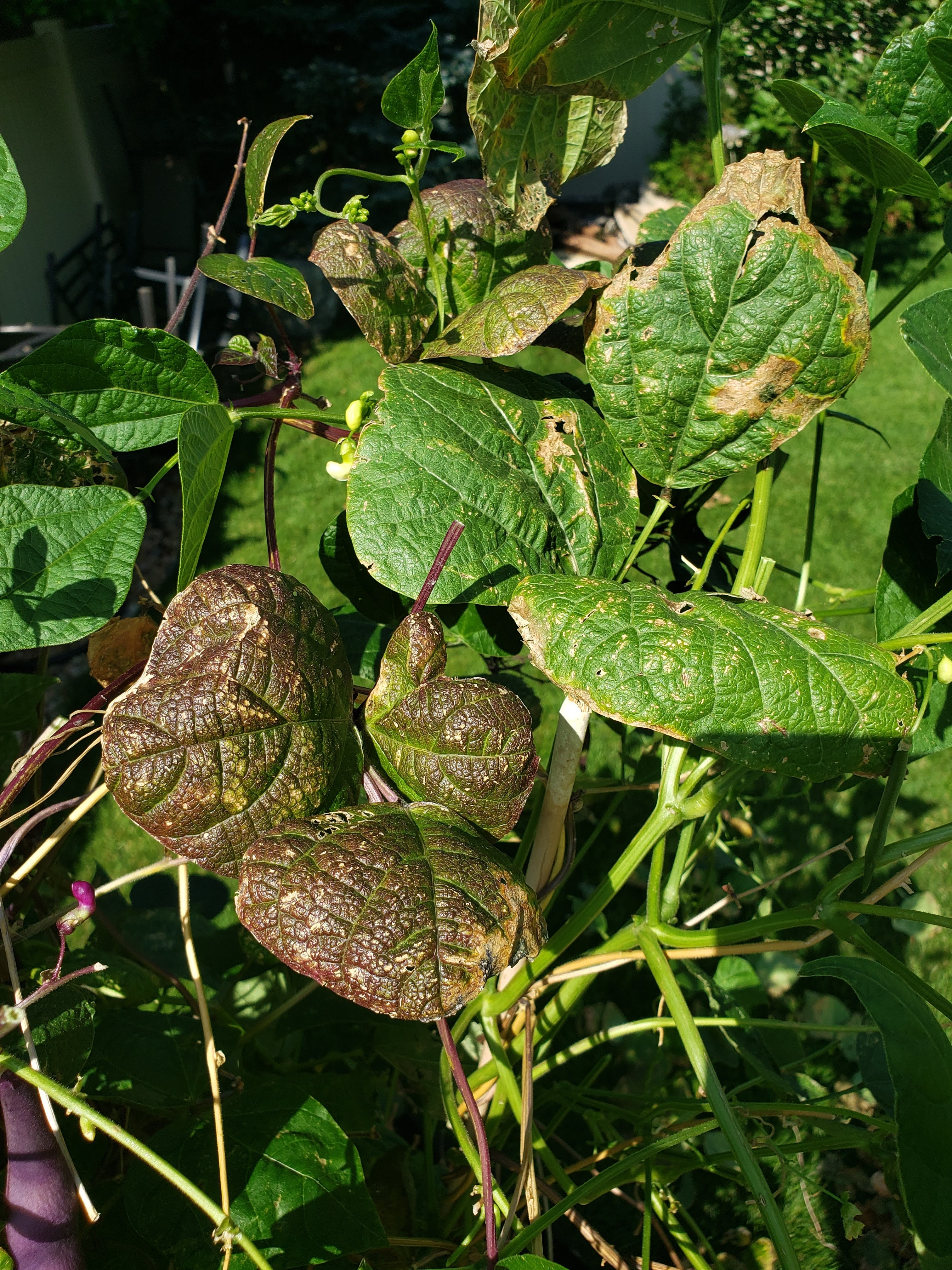
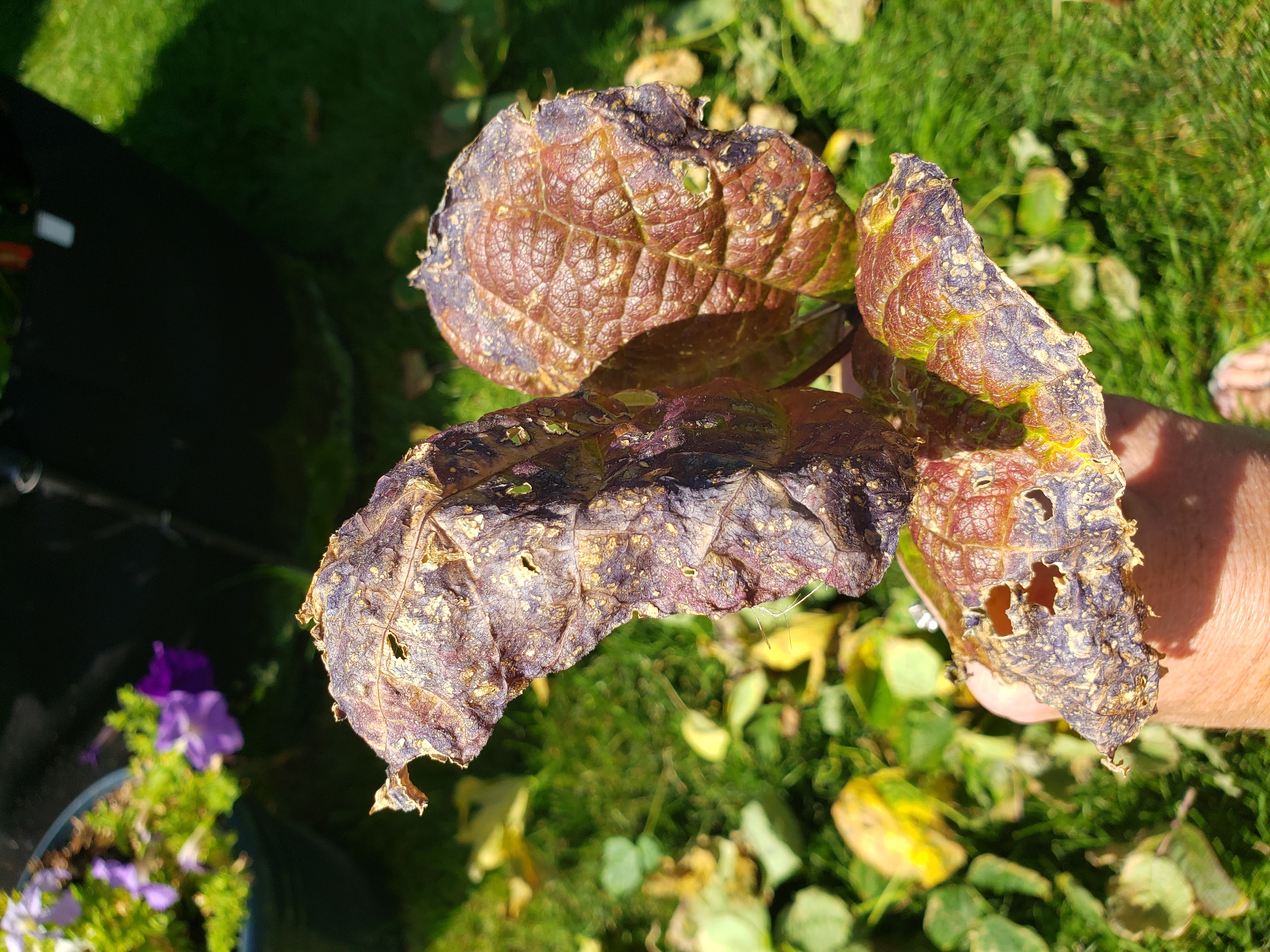
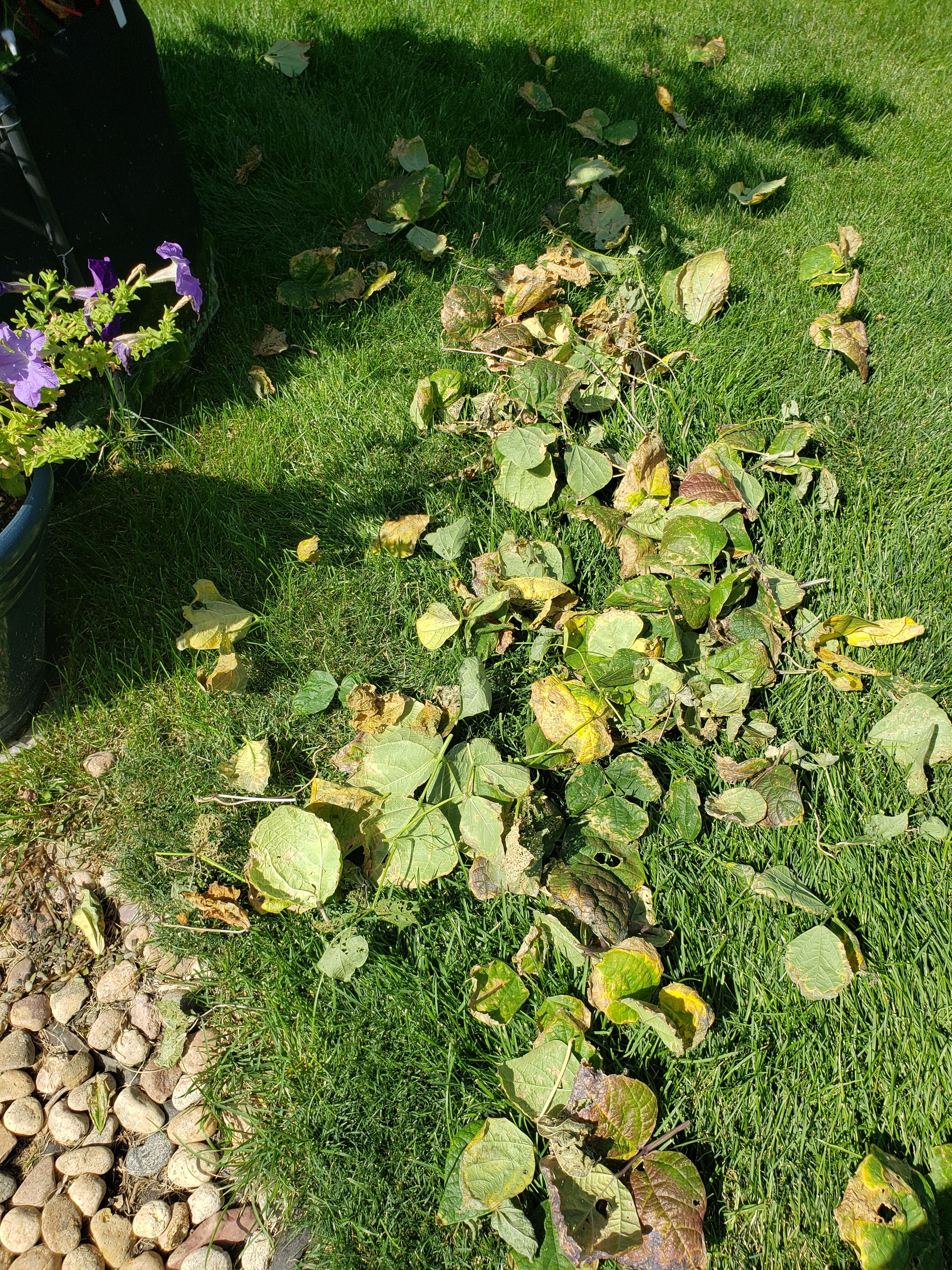
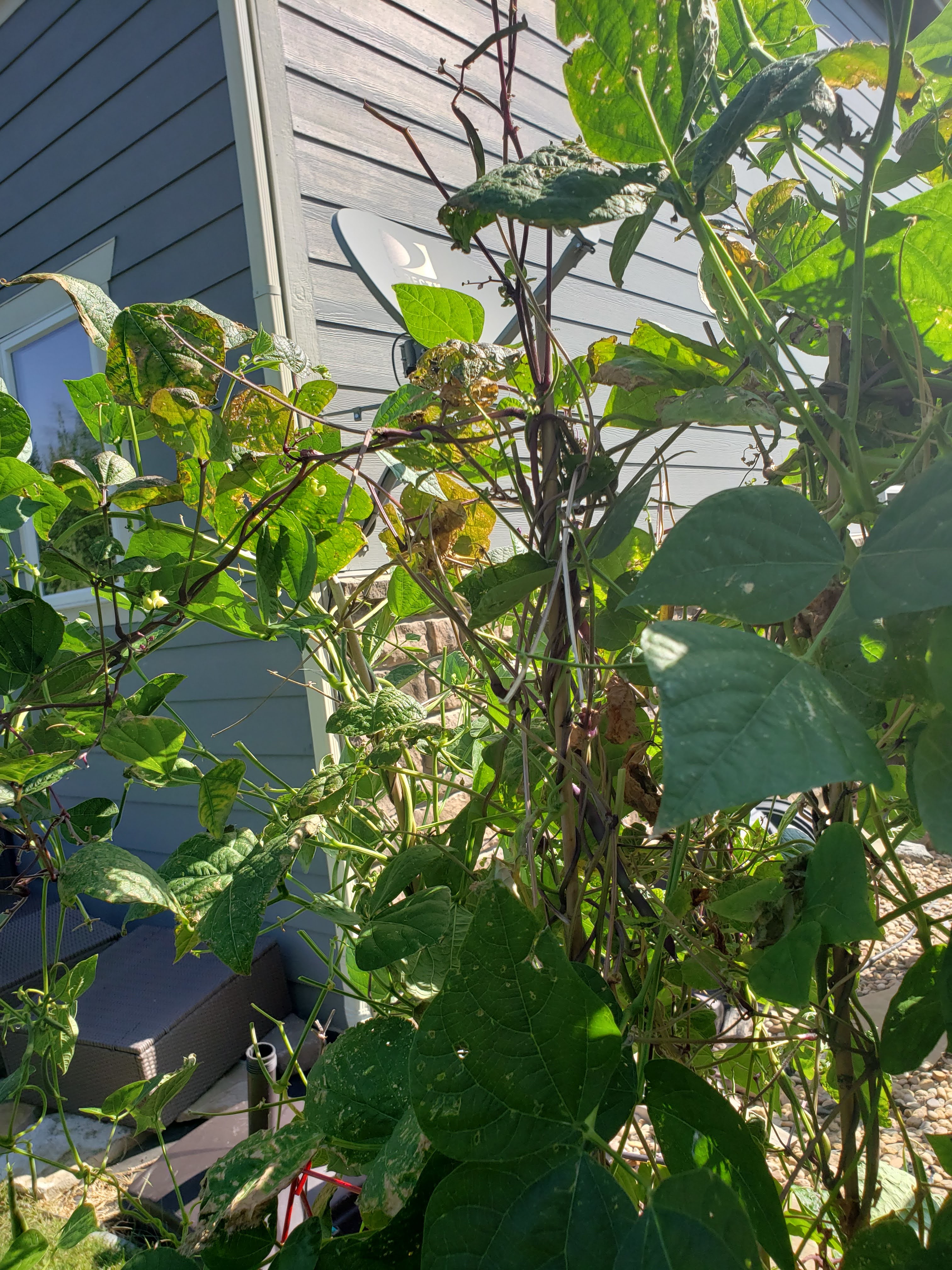
Unfortunately, the purple bean leaves seem to be hit the worst, and after removing the dead and dying leaves, there doesn’t seem to be much left of the purple crop. But the green ones are still growing well. They are still losing leaves, but seem to be looking healthier, and still producing abundantly!
I don’t have any real answers, and I continue to research, but I think the bulk of any new approach will have to happen next spring at planting. I think it’s time to ditch the giant felt grow bag that has been the home for these guys for a few seasons, with squash inhabiting the space before them. I think that in case it’s fungal or viral, I might have to dispose of the soil, or find a way to leave it fallow for a few seasons. Grrr.
 The Pottymouth Gardener