What’s STILL wrong with the potatoes?

So my beautiful potatoes were growing so well! Beautiful flowers, strong green leaves, huge tall stalks. Until they weren’t. In my last post about the potatoes What’s wrong with my potatoes? I discussed the treatment I was attempting.

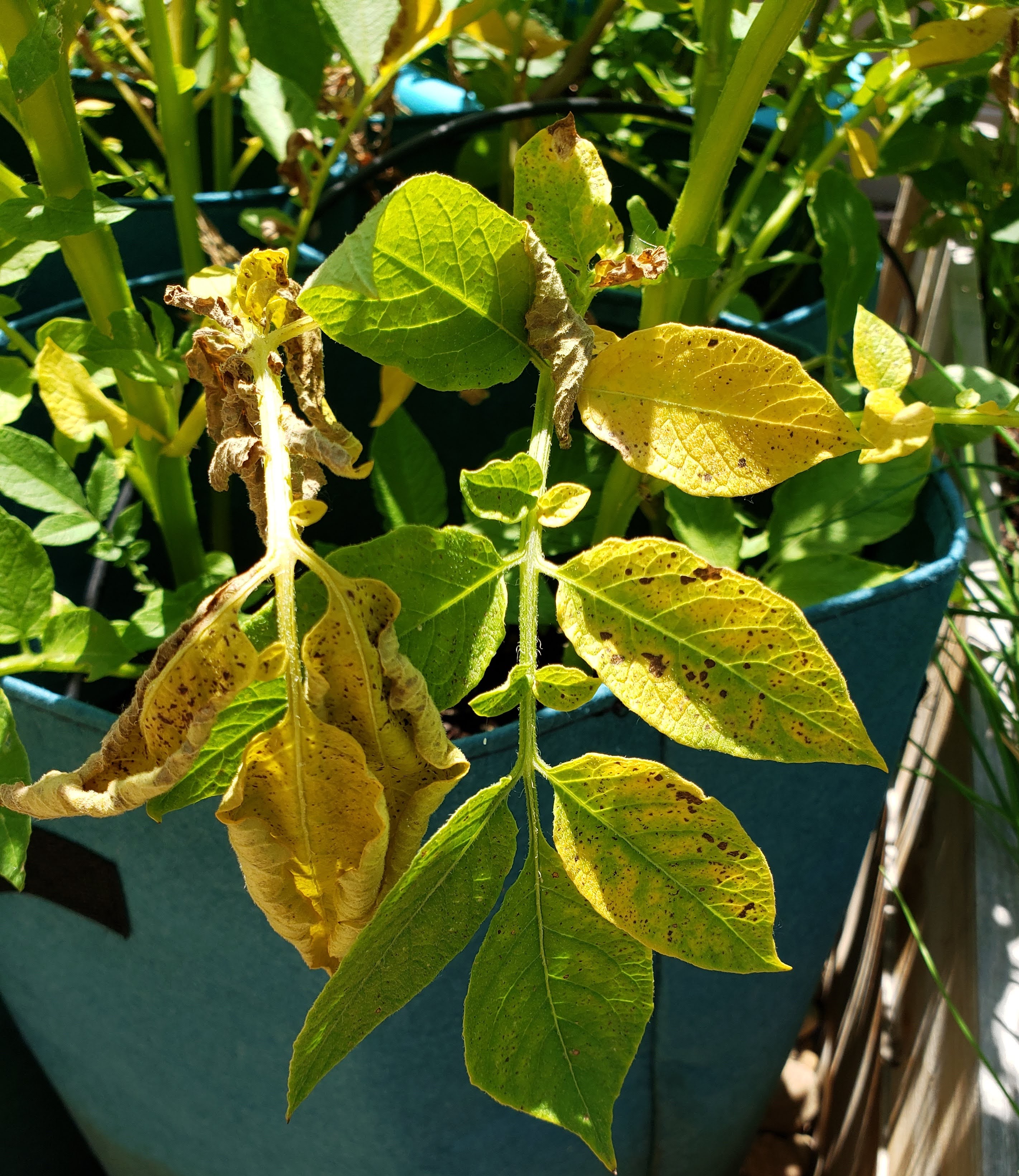
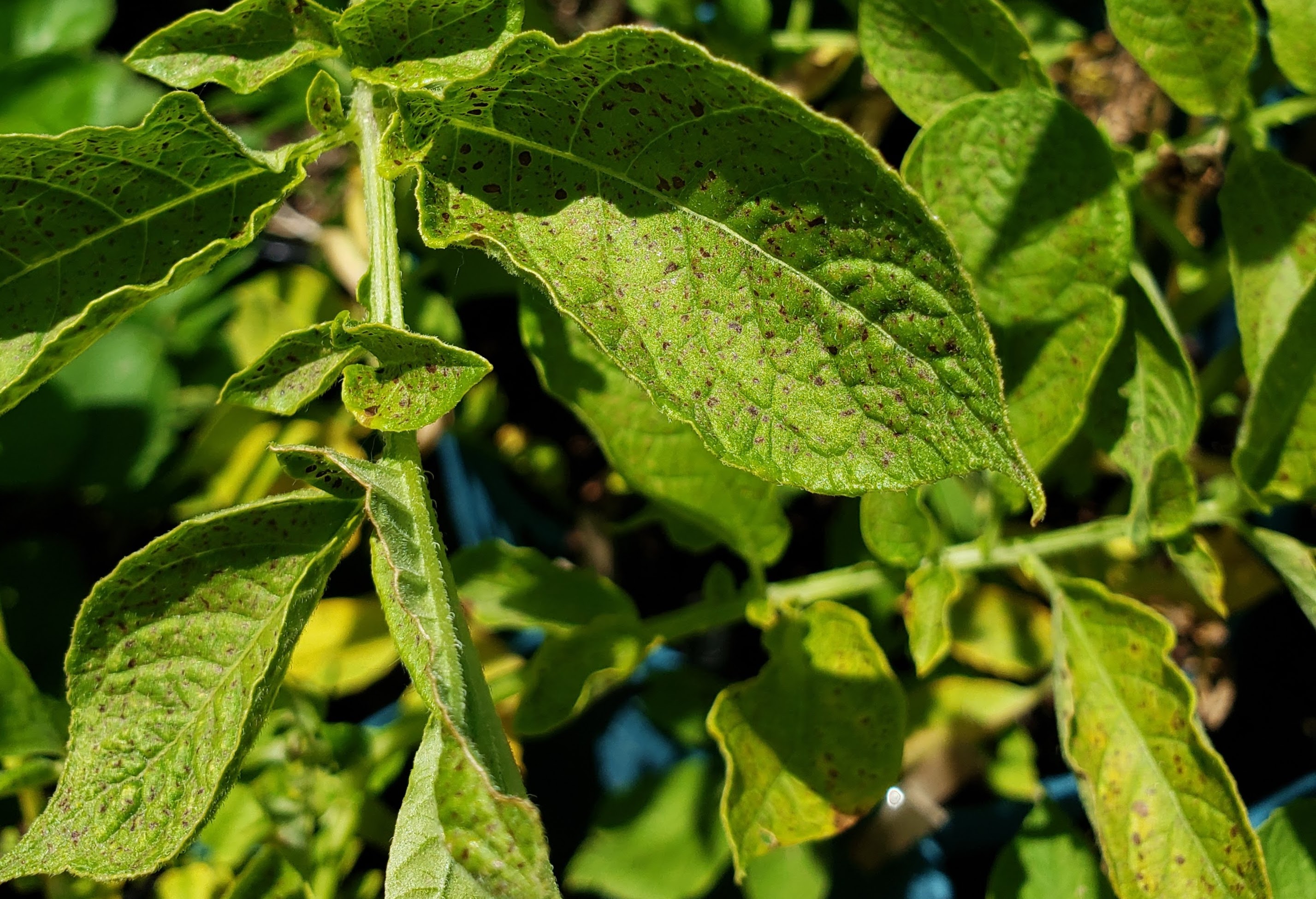
The leaves of my potatoes had started turning yellow with stupid purpley-brown spots. And the leaves went from spotted yellow to brown and fucking dead. My research told me that yellowing leaves, the oldest ones first, could be a nutrient uptake issue. And I hadn’t treated the soil with any fertilizer at all this season (I’m still learning about fertilizer).

So to try and fix the yellowing leaves, or at least stop the spread, I applied a standard Miracle-Gro garden fertilizer, and a magnesium (Mg) treatment. The Mg helps the plant to take in the proper nutrients from the soil. A deficiency of Mg means that even if the soil is rich and nutritious, the plant won’t be able to take in the treasure. It was a highly effective treatment for the Mg deficiency I experienced earlier in the season with my zucchini. See Something’s going on with the Zucchini.

More than two weeks later, there’s no discernable improvement, and in fact, the plants are very clearly dying.
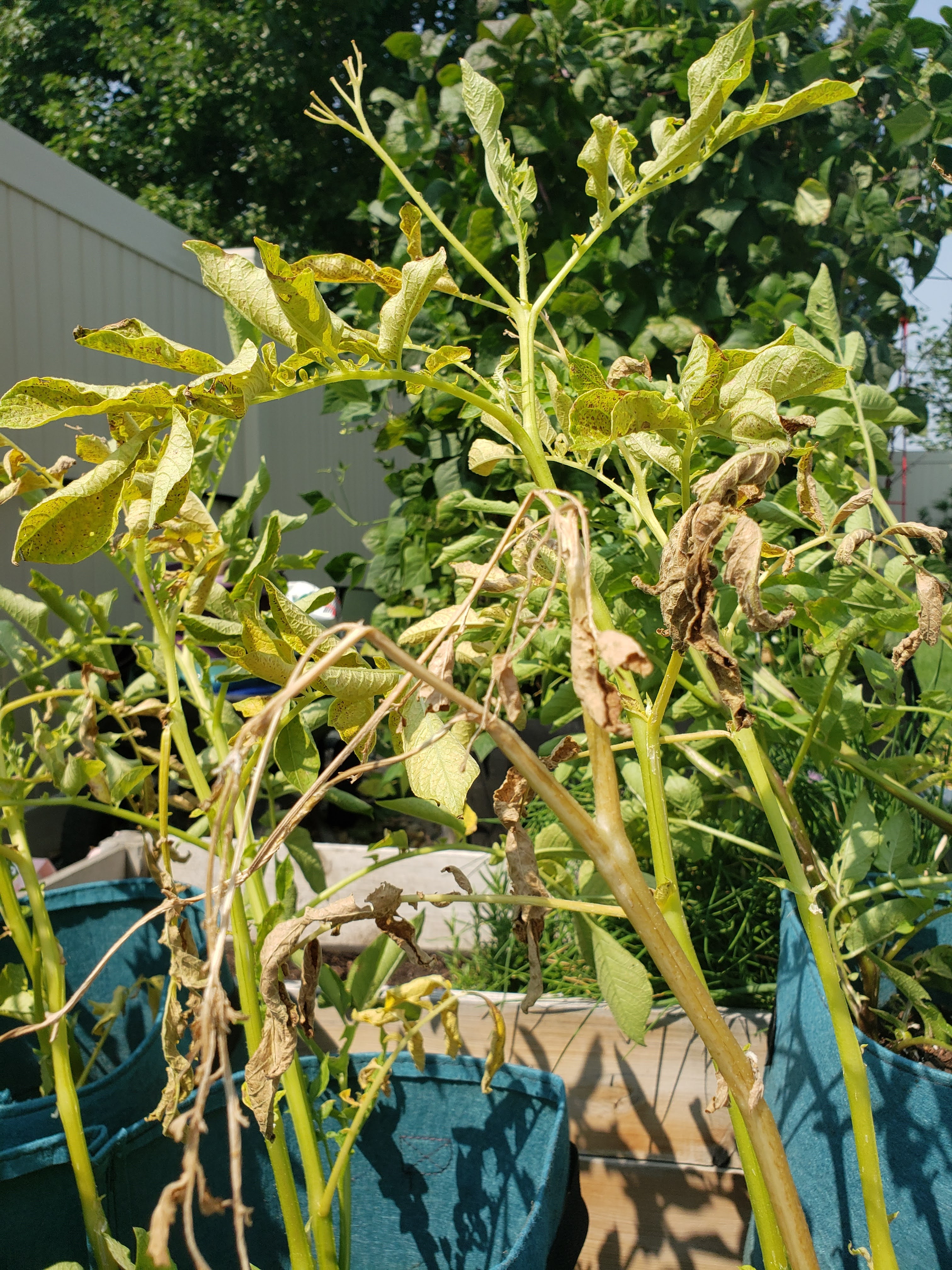
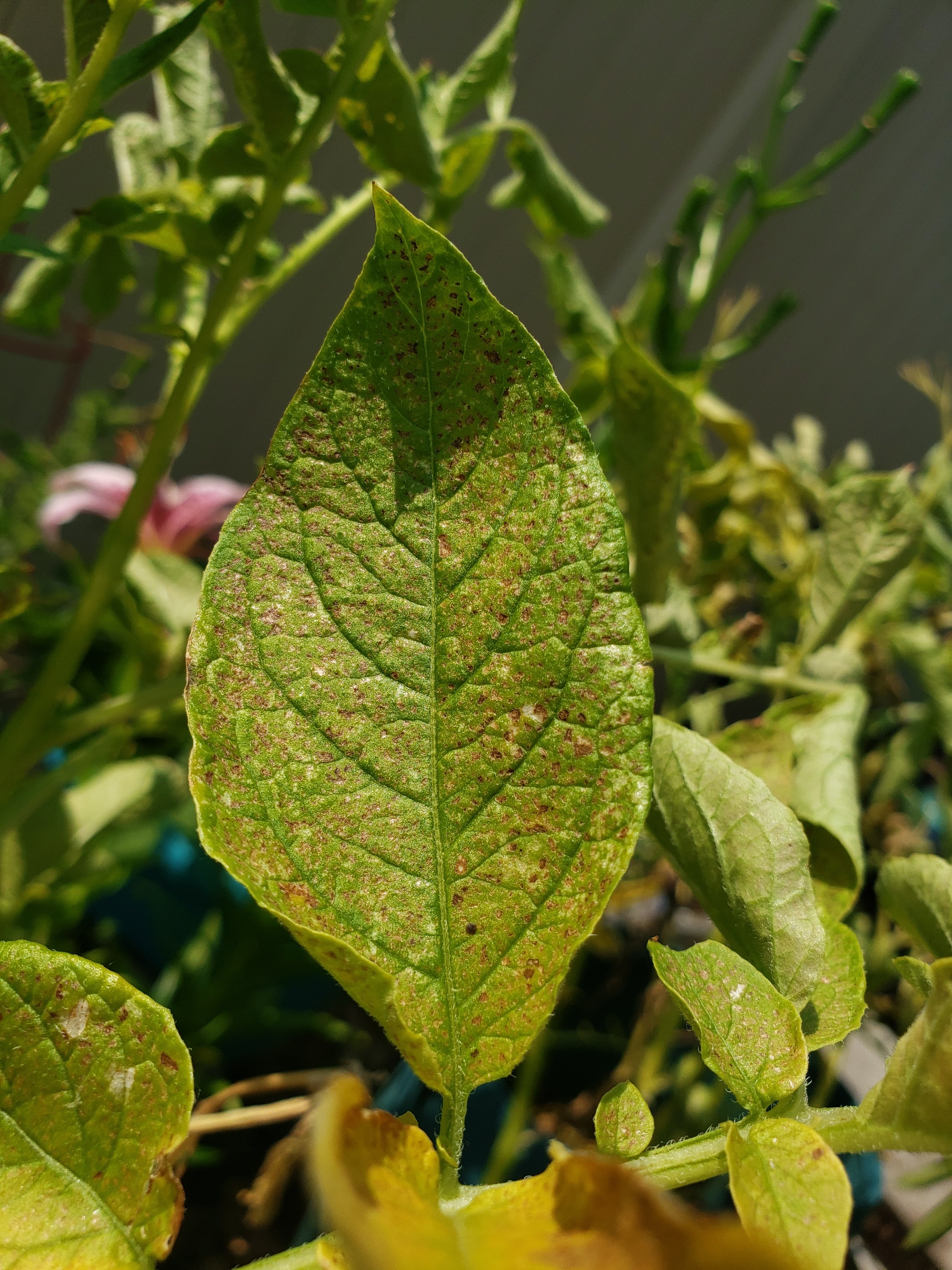
When potatoes mature to the point of harvest, the stalks and leaves yellow and die back, so I’ve been trying to kid myself that it’s near harvest time. But NO. Die back should not be happening in July.

Shortly after the potato plant flowers, you’re supposed to be able to harvest some new potatoes from the potato sack. Because of this yellowing issue, I chose not to disturb the soil, and instead just checked for moisture problems. I was worried about overwatering because, to prep for an out of town trip, I had attached drip lines to water while we were gone. It’s handy to not have to hand water with the hose, so upon return, I left the drip lines in place.

All of my research is very clear about potatoes. Do not over or under water them. No shit.

It’s super fucking dry in Colorado, and the stupid-ass wildfires and global warming are not helping. To keep any plants alive in my garden, they must be watered AT MINIMUM once a day; to thrive, they need more than that. After seven years of messing with drip schedules, we’ve settled on a schedule that uses the least amount of water (we’re in perpetual draught here in the Front Range), and gives the most benefit. We water twice: three minutes at 6 AM, and another three minutes at 2 PM.

Point is, the potatoes are not UNDER watered.

So I had to check for overwatering. But how to know? I opened all of the sacks and found rich moist soil, but there was some white powdery stuff on th outside of the felt sacks (could be minerals from the water or could be a mold/mildew), and one of the sacks did seem too moist. But I don’t know for sure.

Needing to start somewhere, I chose a working hypothesis that the drip lines allowed me to overwater. But how? These plants are huge, they should be sucking up every last drop. But they don’t. Because they’re fucking dying.

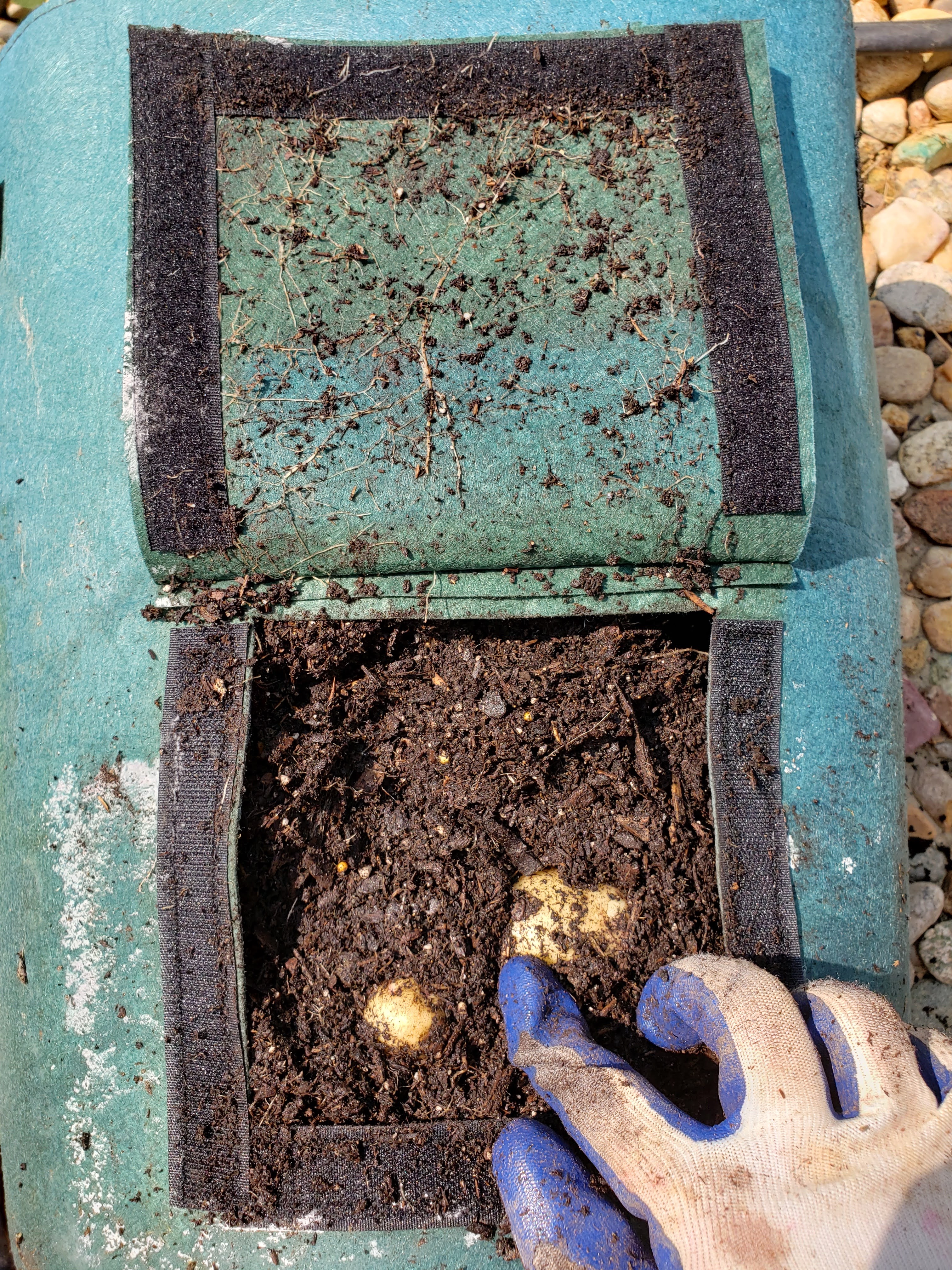
Now that I have a hypothesis to test, I needed to do some testing. First, I looked inside the bags to observe the soil moisture and root systems. Here’s what I found when I dug around:
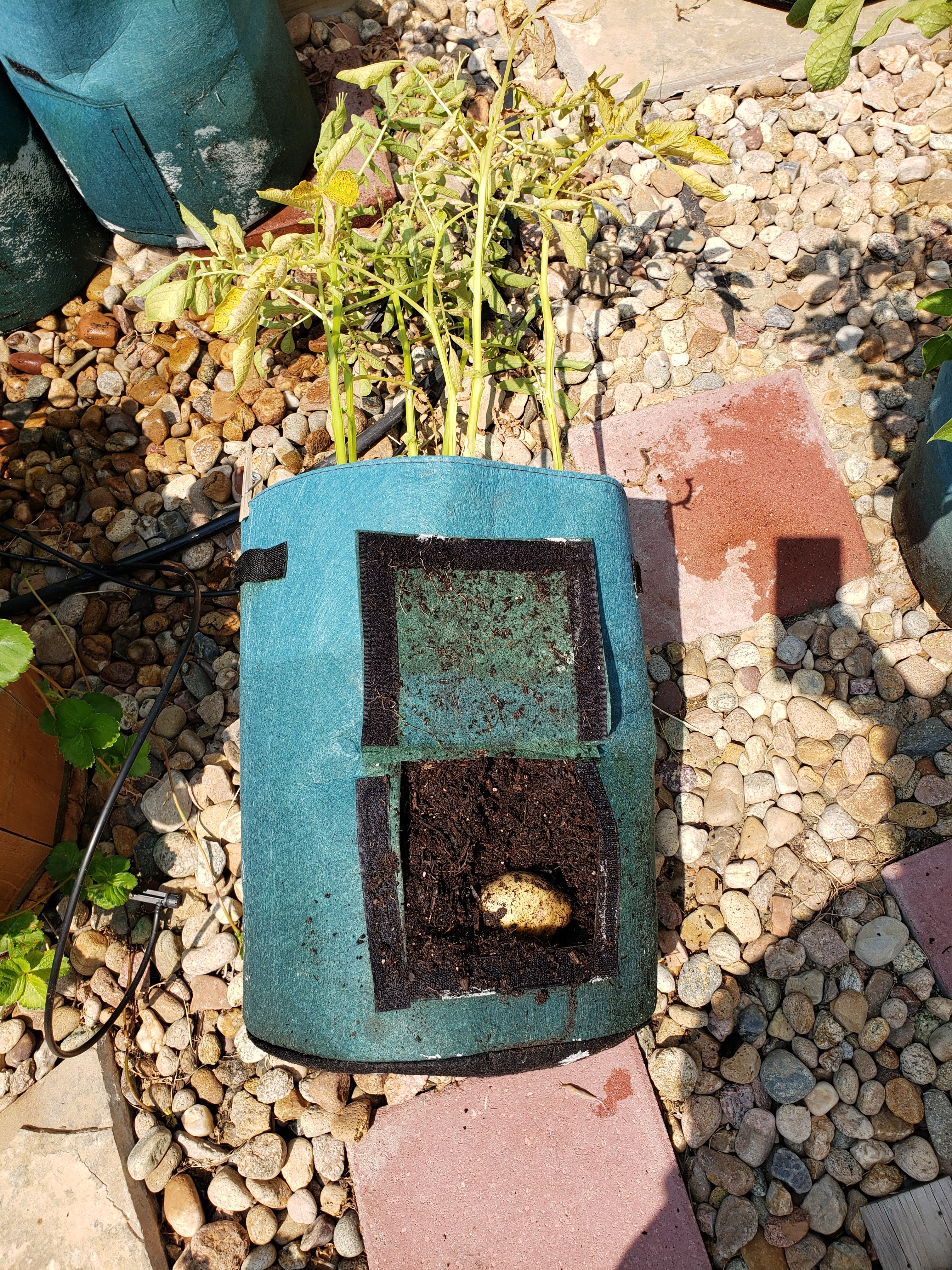
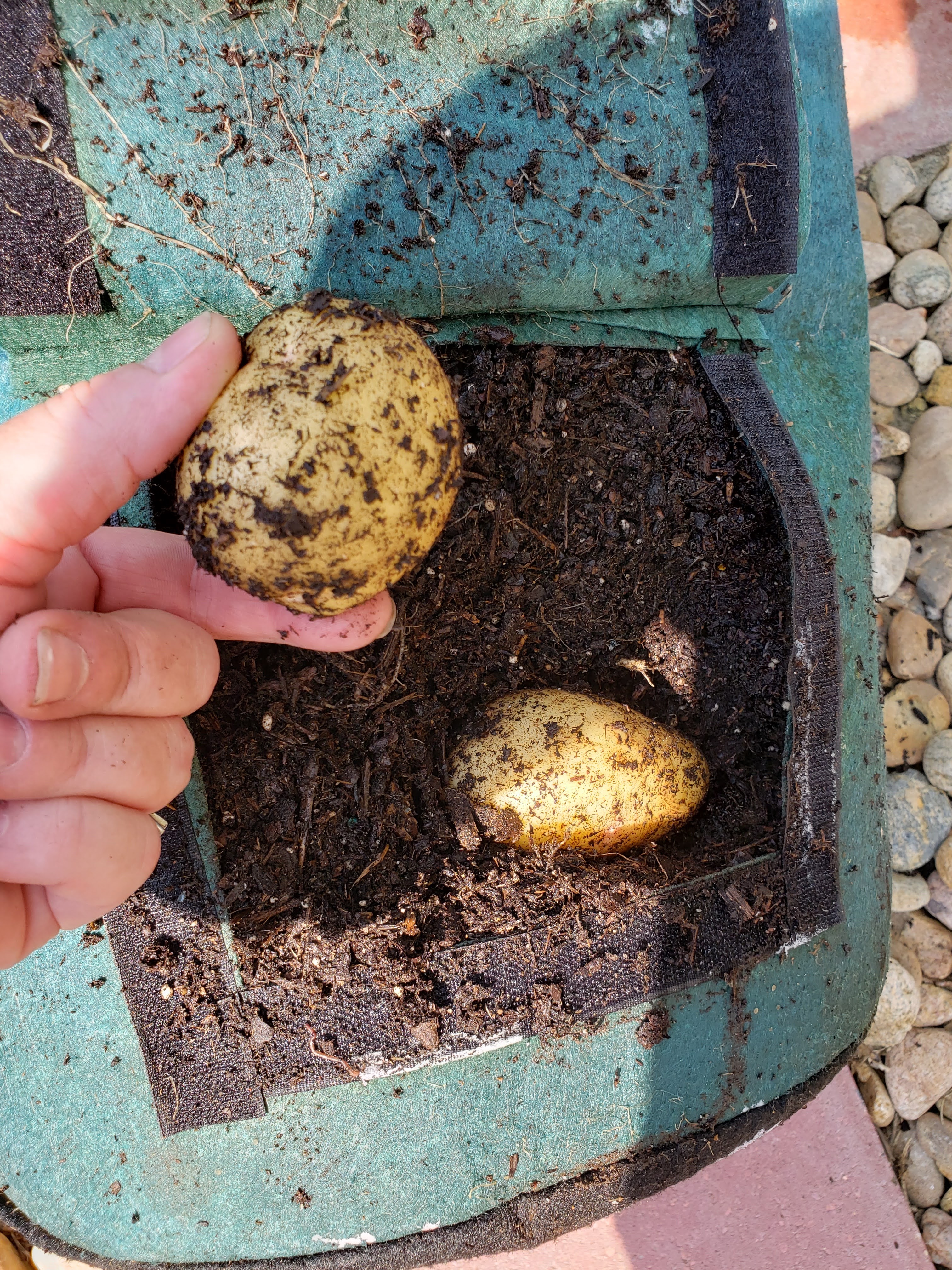
To my shock, I found several lovely firm beautiful potatoes! They’re drying on my counter, and I haven’t eaten or cut into them yet, so I don’t know what they look like inside.

I felt around for more and smaller tubers in the bags, and didn’t feel much of anything except roots. I went ahead and pulled the potatoes I did find, because I am not optimistic that there’s more coming, and I don’t want the ones I have to rot in the bag.

But back to what’s wrong with the little fuckers.

Having investigated the soil in all the bags, I replaced everything back to their positions minus my little treasures, and waited 24 hours to dry out the soil. The bags dried out quickly, and I’m back to hand watering – just a little bit, so I can make sure not to make them too moist.

But folks, that’s not the problem. I still have one nice green potato plant, it’s the purple variety of seed potatoes that I picked up on a whim from Lowe’s in the spring. The other four bags are the Yukon seed potatoes I ordered from Gurney’s back in February.

Here’s the thing. It’s best to use seed potatoes because the seed companies make sure the seed potatoes are blight and fungus free. Well, they try to. And because all of my seed potatoes are from reputable seed places, I haven’t considered blight or fungus as a real threat. But after my initial investigation, and with further research, I sadly have come to believe that the Yukons (four of my five potato bags) are plagued with Shit Spot. Oh, I mean Brown Leaf Spot.

I did a whole bunch of research, and this article has me close to convinced, because of the picture of the leaves. These leaves look just like mine (the brown spots were all purpley just a week or so ago):
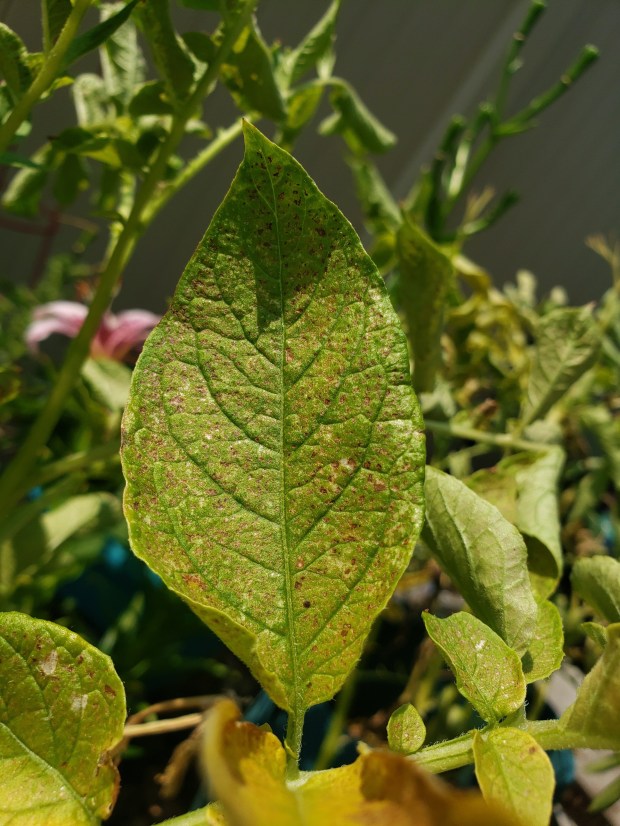
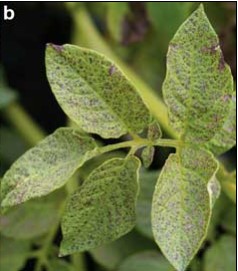
To be honest, I don’t actually know what’s wrong with these potatoes, I’m just using the science techniques of literature review, testing hypotheses, and data collection. There’s a real possibility that the problem could be Verticillium Wilt or Fusarium Wilt, both of which are common fungal issues, and of which, my potatoes have several of the same symptoms.

I’m not a botanist or master gardener, so I’m having a hell of a time diagnosing the problem with any certainty. One of the reasons I can doubt the Brown Leaf Spot diagnosis is because my research says that it will cause reduced crop, like around 10%. But what I’m seeing from my actual plants is something far more devastating, which leans me towards the fungi or a bacterial wilt. For a few minutes, I was actually sure it was bacterial wilt.

Well, sonofabitch. If the problem is Brown Leaf Spot, then my research says it can be managed with a couple fungicides for the rest of the season, but my research results have yielded information primarily for farmers, not for the home garden, and not for potatoes in containers. And, at this stage of progression, even if I can keep the plants alive, there’s not enough time in the season for growth of a real crop of potatoes.

The other possibilities of wilts and bacteria will simply be the end, and will require me to destroy the plants and fallow the soil for years. Fuck a duck.

So, what am I left with? A handful of yummy new potatoes, and 4 containers full of tainted-ass potato plants, and no real solutions.

My plan: The one remaining healthy-looking bag will remain, and I’ll keep my fingers crossed for some yummy purple tubers in the fall. For the other four bags, I’m going to keep hand watering as necessary, until they finish dying. Just in case there’s another edible potato or two to come. At the end of the season I’m going to dump the bags and the soil entirely, maybe even burn them all (burning everything is one of the requirements for farmers who have blight), and start all over again next year with new bags, new soil, and new seed potatoes. Grrr, fucking pesticles!!! I’m really bummed out about this. Potatoes have been so easy to grow in the past, and so very very yummy!
What’s wrong with the potatoes?

Grrrr. The bane of my gardening existence. Fucking pesticles. Which kind this time?

Last year, the Apocalypse made seed potatoes impossible for me to get ahold of, so I tried to grow from grocery potatoes. I’ve read that grocery potatoes have treatments to prevent the growth of root nodes, or eyes, so it’s hard to get them to grow in the garden. Plus, I read that you can risk blights and things that way. But it was the Apocalypse, so fuck it, I’m gonna have to make do.

In the end, it was just really poor performance. Only a few of them sprouted, and of those, only a handful flowered, but the flowers kept disappearing. I can’t prove it, but I had very active grasshoppers in the garden last year, and I think they ate the flowers from my potatoes and cucumbers.

Whatever the cause, I got no potatoes in 2020. None. No soft buttery new potatoes, no big ole fall brown love nuggets, none. Boo. But every spring is a new spring so…

This year I replaced my potato sacks because the others had fallen apart after several winters outdoors. I ordered seed potatoes from a seed company, then got lucky and found a few more seed potatoes at Lowe’s. I put in new soil, and Voila! Potatoes a-growin’ like mad. Purple ones and yukon golds, if I remember correctly.

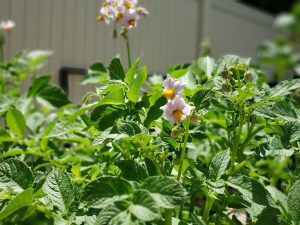
They’ve looked wonderful this year, their beautiful flowers are actually the photo on my home page.

Lovely green potato foliage and flowers.

Until now.

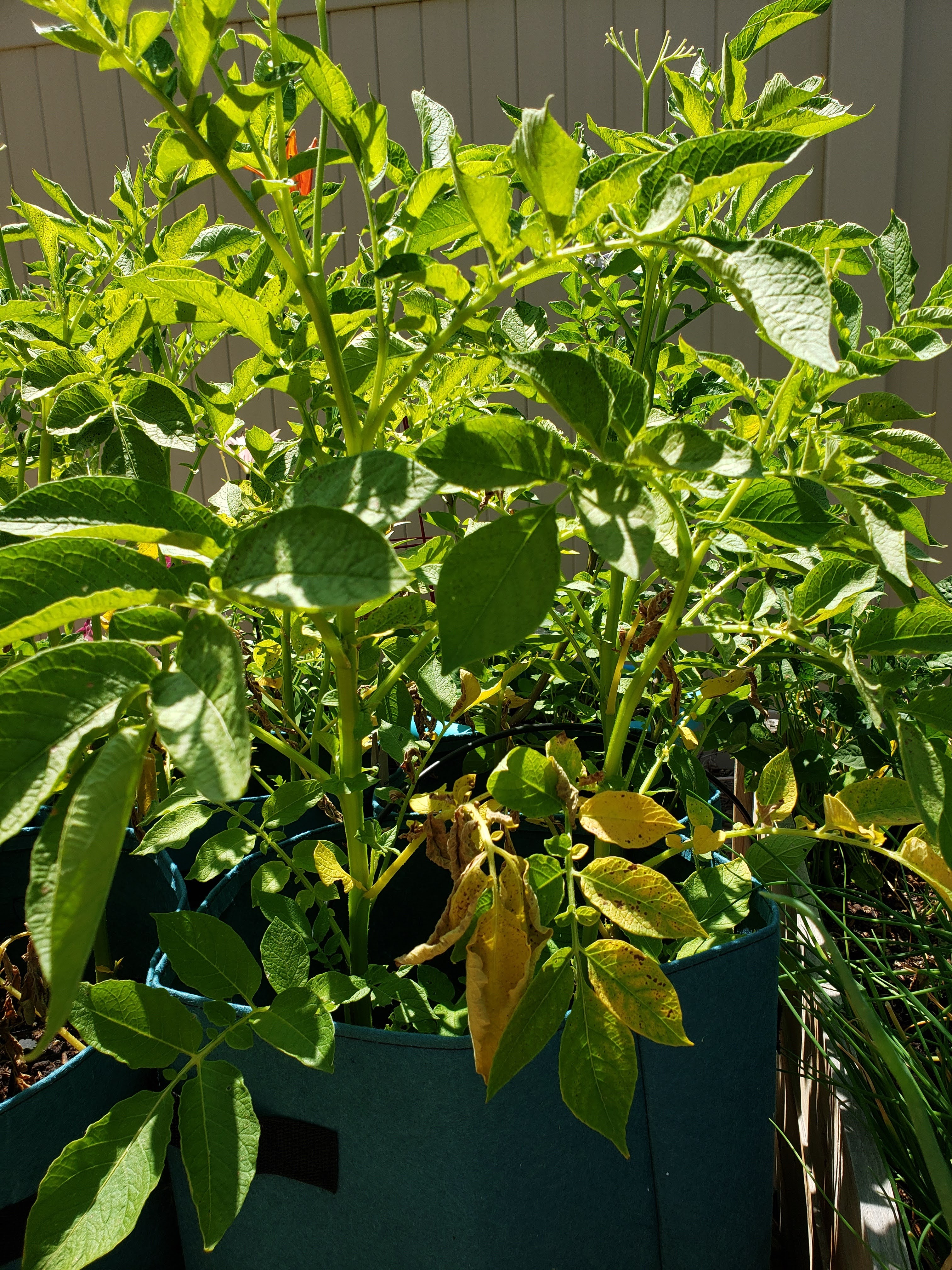
Now happening very quickly, is yellowing and speckling of the leaves, from the oldest leaves working up. And the lowest branches have yellowed and browned so much they’re falling off! Sonofabitch!!

First things, first. I got up close and personal, looking on top and under the leaves for little beasties. Bugs are the first pesticle I look for. In previous years, my potatoes have been pest-free except for hungry grasshoppers, so I wasn’t expecting insects and I didn’t find any.

Next I checked the moisture of the soil. I stuck my finger down into the dirt where the stalk meets the soil, and it’s appropriately moist just under the surface. I also checked moisture down lower, by lifting up the little root flap and touching the soil. It was mostly dry. For bagged potatoes, you don’t want the soil way down in the bag retaining much moisture because it can cause root rot and wreck your whole crop. Here in Colorado, the air is so dry, and we get so little rain, that everything dries out pretty well. Having the taters on a drip line helps find the right balance. So watering looks okay.

Bugs and moisture are the easy checks, from here it gets harder to diagnose. Is the problem viral, fungal, bacterial, or nutritional? The first three can be very hard to diagnose because so many of those issues look so similar, and require a lot of research and specialized knowledge. Also, because my garden is small and I grew from official seed potatoes from a reputable seed company (either Burpee, Territorial, or Gurney, I can’t remember), I’m not too worried about blight. So I’m looking at nutritional first.

Earlier this season, after doing the same tests on my zucchini plants – see Something’s Going on with the Zucchini – I discovered that a Magnesium (Mg) deficiency was the problem. Because the potatoes are presenting similarly, I’m going to try Epsom salt. I’ve learned a lot about Mg, specifically that it is a “mobile” nutrient, which means that it moves around within the plants’ vascular system as needed. This presents as the older leaves having a deficiency as the newer leaves use what’s available. New leaves are greener, older leaves yellow and die. That’s what I’ve got, so I went ahead and treated the potatoes with a 3 TBSP per 2 gallons of water mixture, applied to soil at the base of the plant. I went ahead and a hit all the tomatoes, too.

I’m also going to treat the taters with a general veggie fertilizer (yes, you can do both together) because it has occurred to me that I haven’t fertilized the potatoes at all yet this season. I’ll update with results!

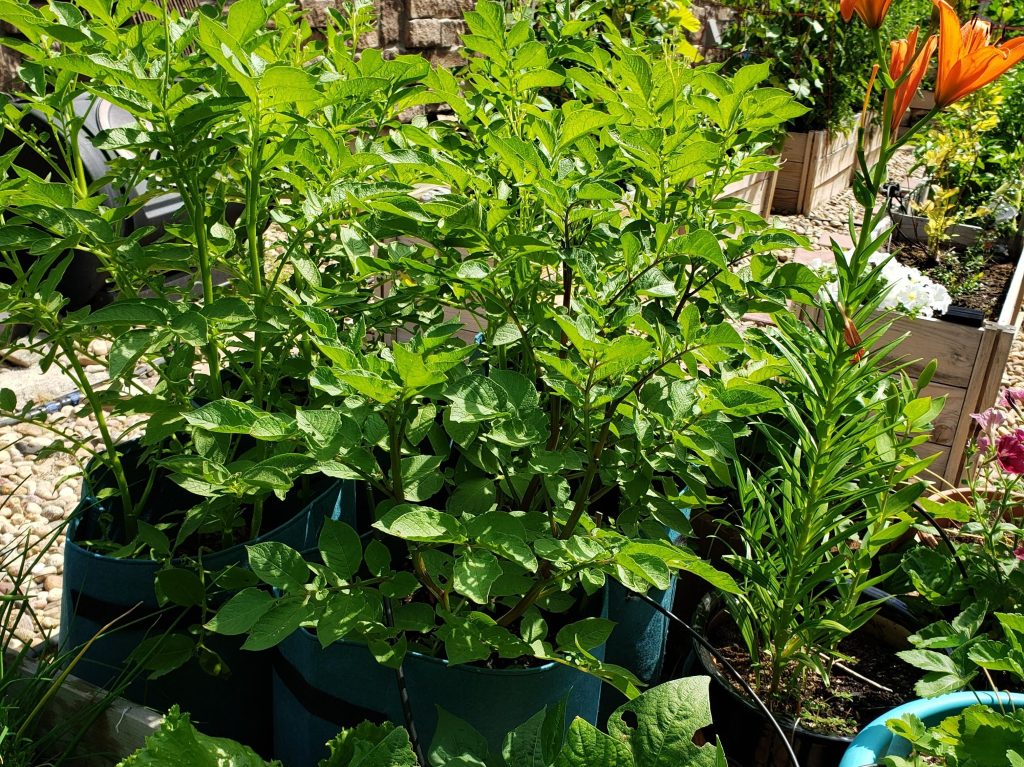
Potatoes in grow sacks during greener days (2 weeks ago).

SUCCESS!! So THAT’S what’s wrong with the zucchini!

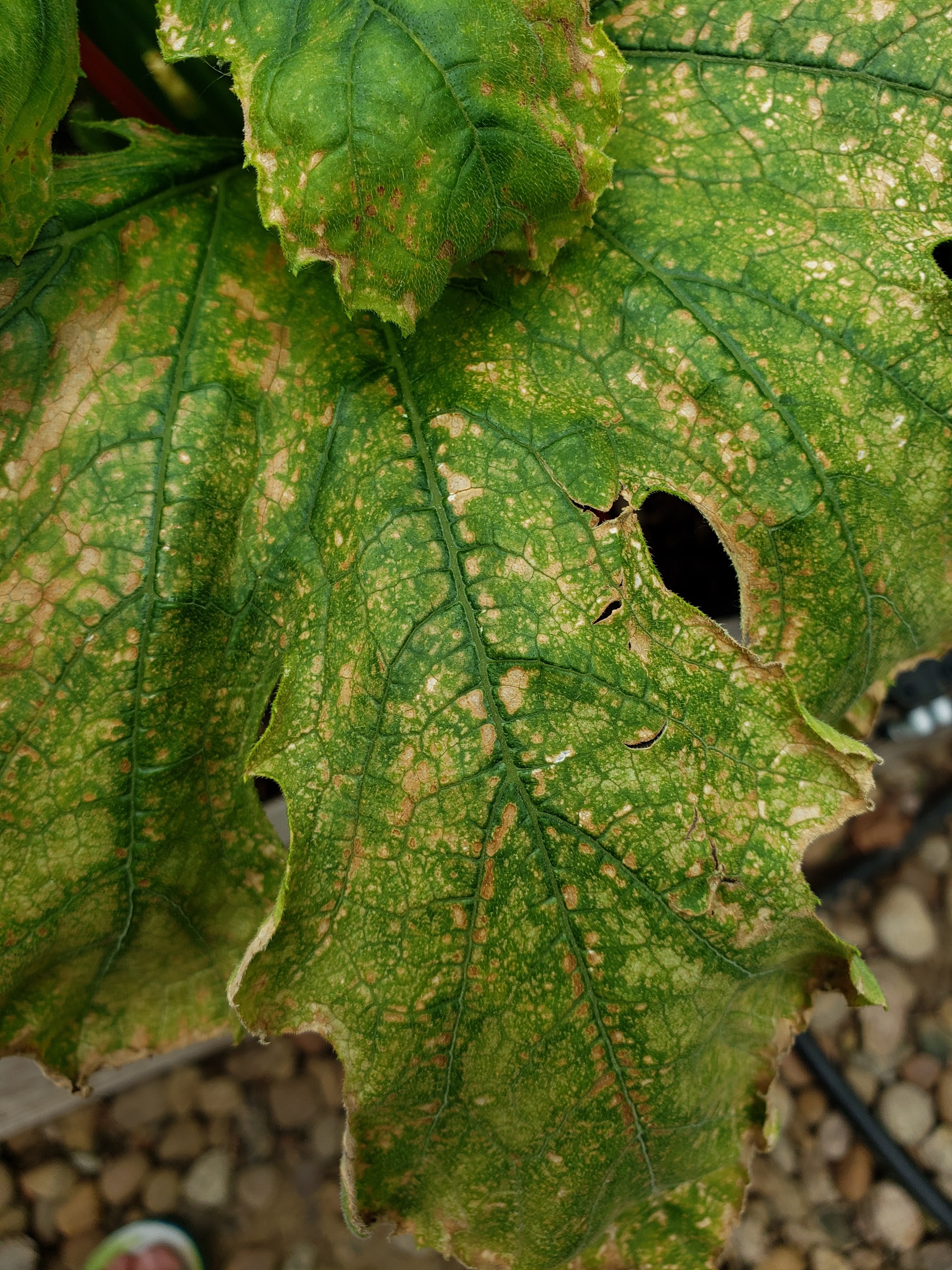
I have been trying to figure out what’s wrong with my fucking zucchini. Two of the three plants I’m growing had yellowing, browning, and eventually, dying leaves. This is not a new problem, I’ve never had great production from my zukes, and never understood how folks have enough to make bread or to give away. Hence my fucking zucchini frustration. This summer has certainly been the worst so far. See my previous post for pics and descriptions: Something is Going on with the Zucchini.

That being said, this summer I’ve focused on solving this issue, and have finally made some progress. As explained in my earlier post, I used a generic vegetable fertilizer and didn’t see any results after a week; the leaves actually got worse. So I tried the other suggestion I’d found through some research: magnesium. Using a solution of Epsom salt and water, I treated the base of each of my cucurbits, and then left for a camping trip.

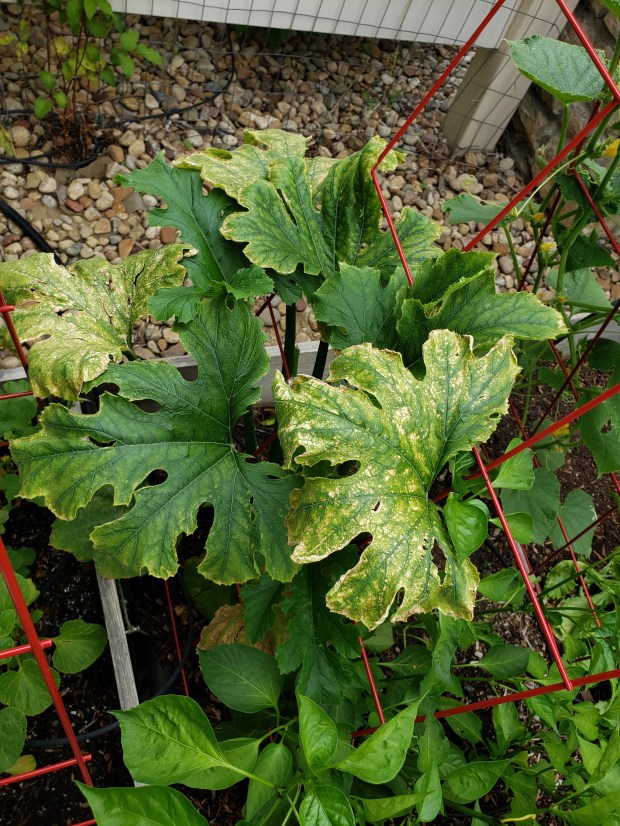
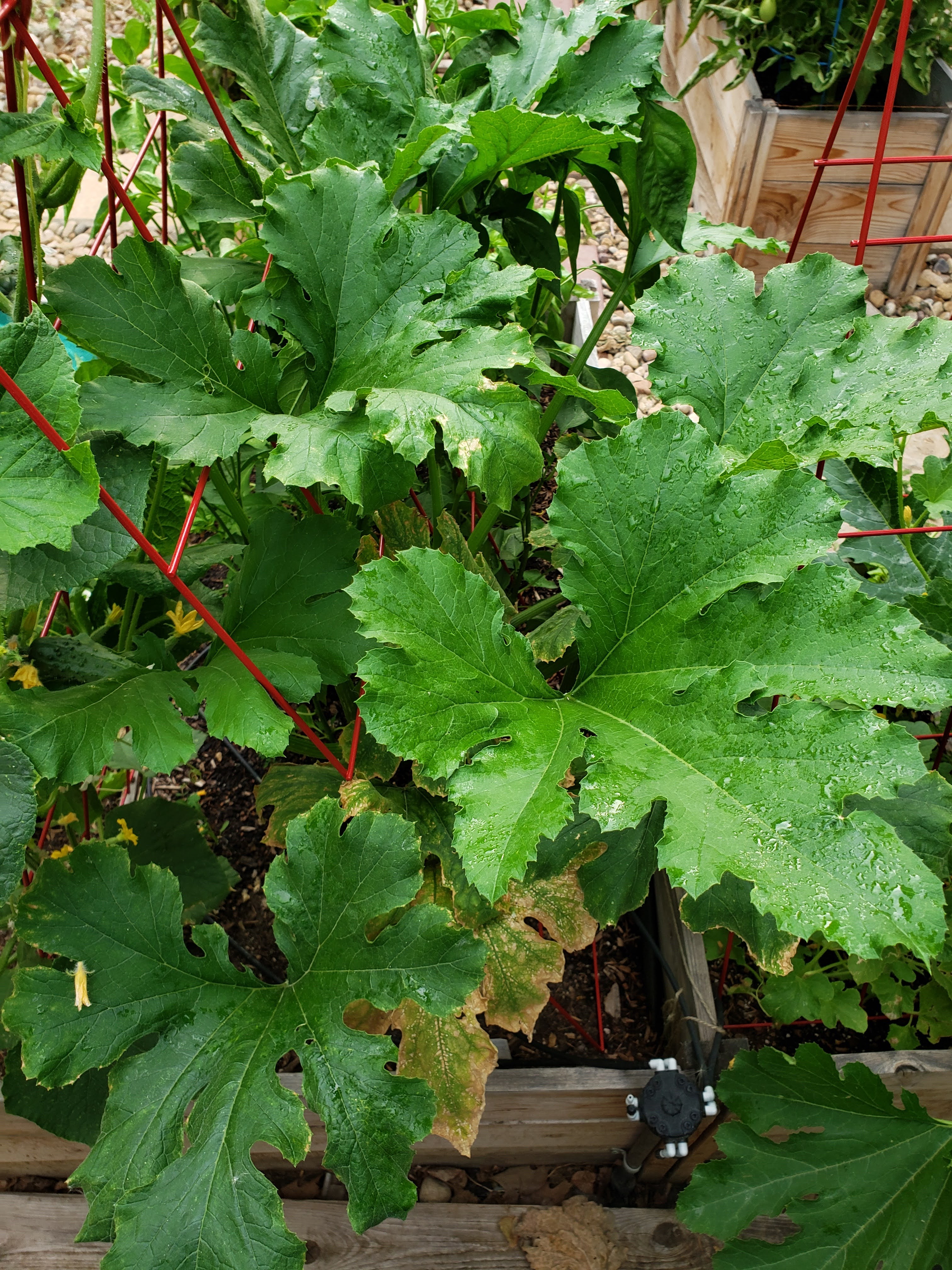
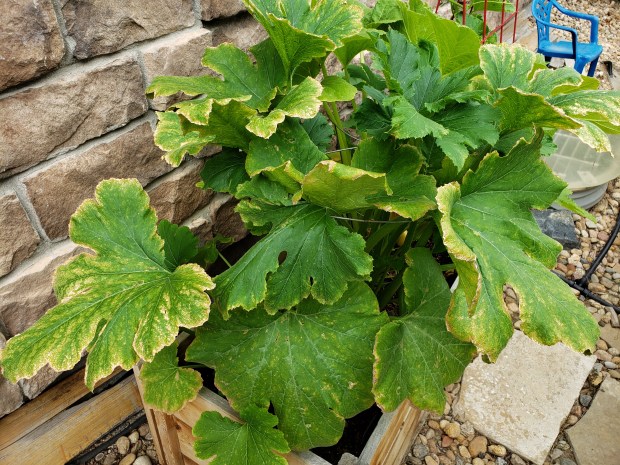
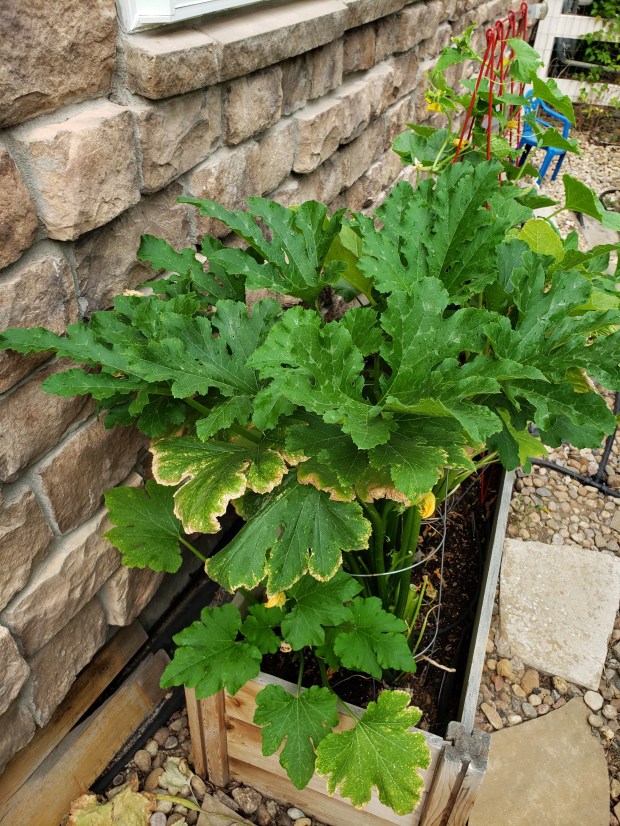
And SURPRISE!!! When I returned after several days, the results are significant and positive!

I feel pretty confident that the Epsom salt made the difference. A week before the Epsom salt treatment I used a generic vegetable fertilizer (Miracle-Gro Tomato Plant Food 18-18-21) on all the veggie plants, and while everybody definitely got a little greener and bigger and healthier looking, the fertilizer didn’t even make a dent in the zucchini leaf problem. One week post Epsom salt treatment, however, and the results are clear and definitive.

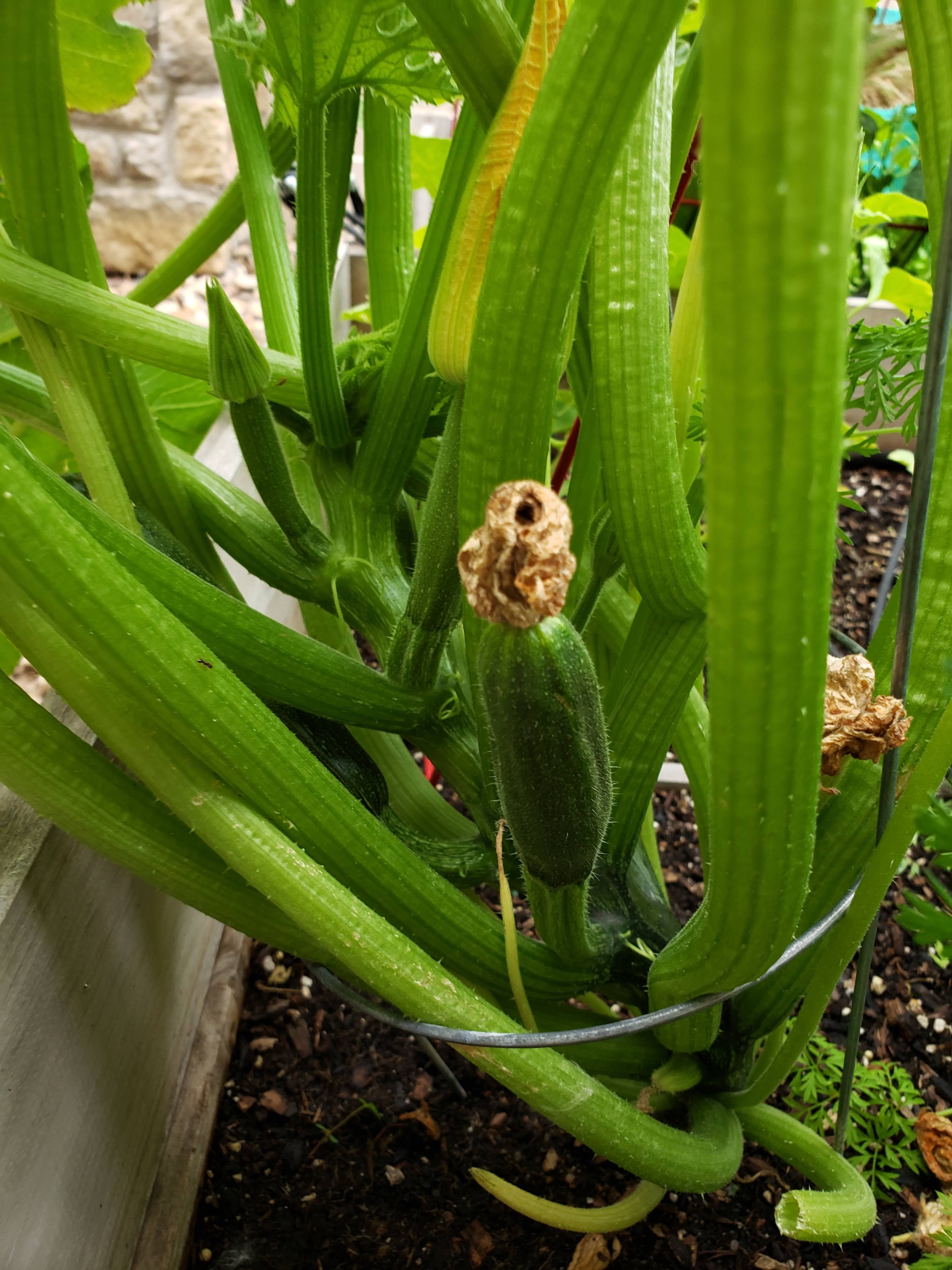
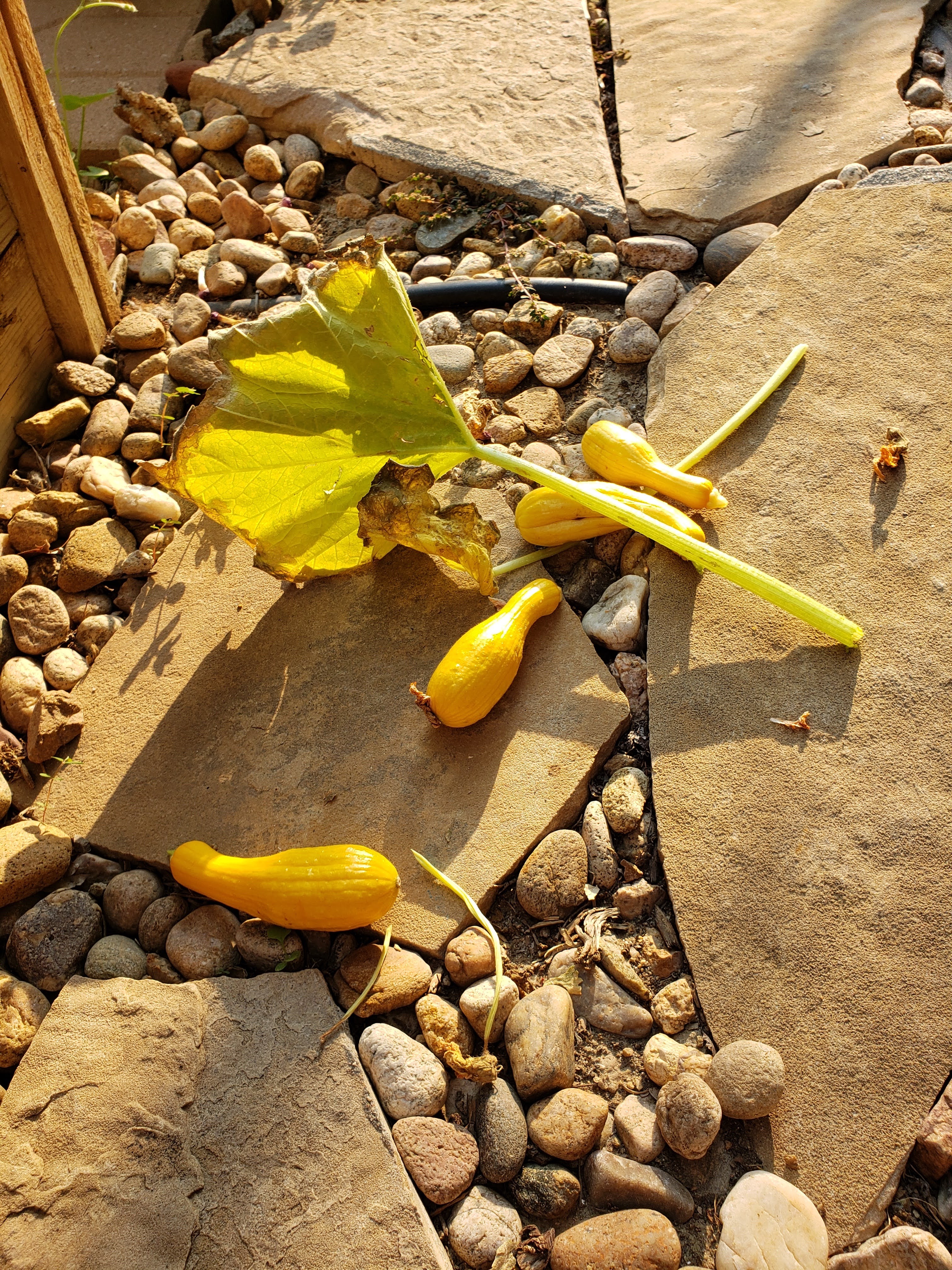
There have been other improvements as well. I read that the magnesium is required for uptake of nutrition, so an Mg deficiency prevents the roots from taking in the necessary good stuff. Since I did the fertilizer a week before the Mg, I was able to see that the fertilizer didn’t really do much to improve the zukes. Besides the yellowing and browning leaves, I had also noticed that the plants were producing very small and slow growing fruit. I even noticed some end rot:

My previous experience with summer squash is that once pollinated, the fruit grow to harvest size in just a few days. So a zuke this tiny three weeks after pollination is an indication of something wrong.

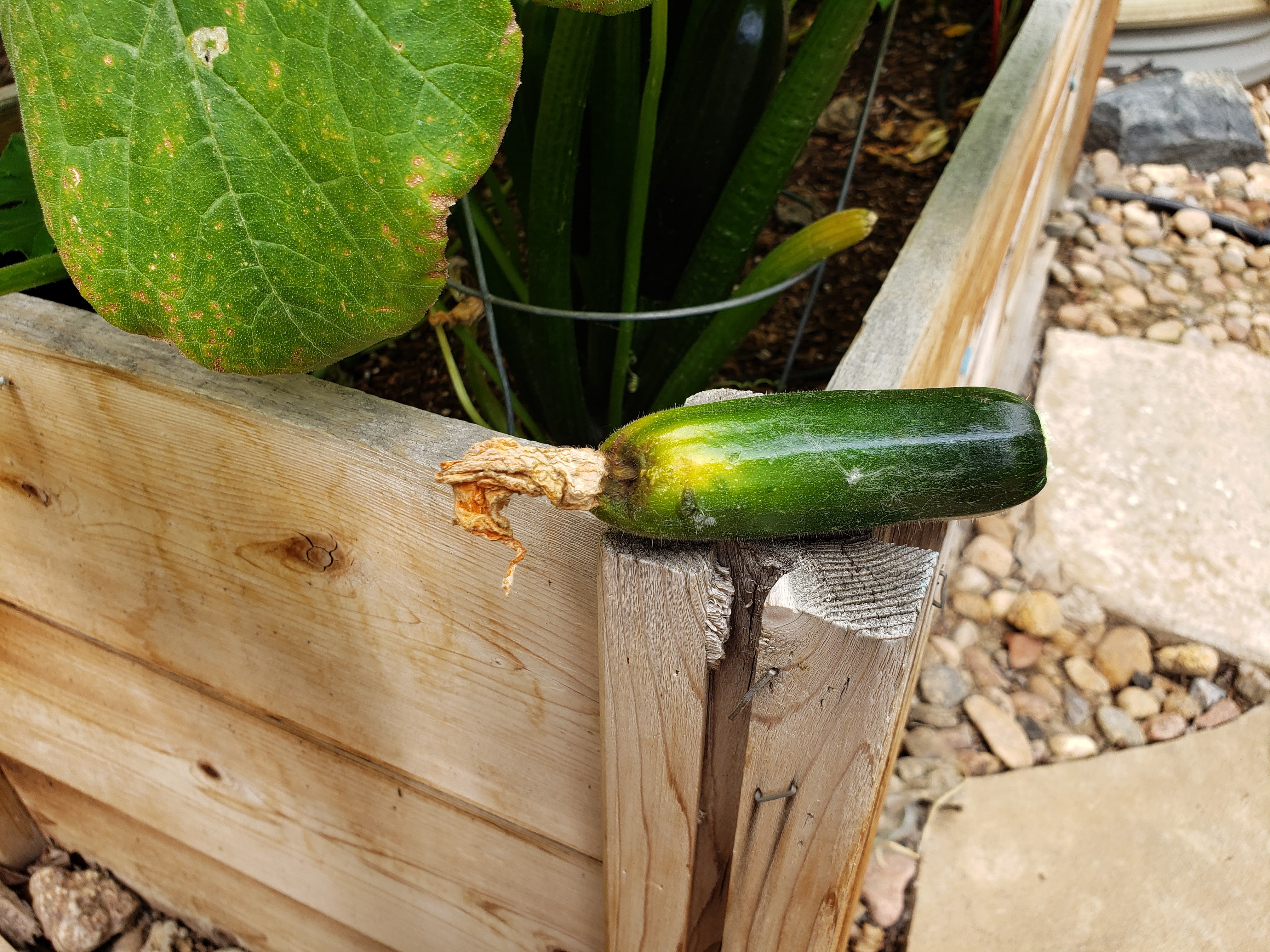
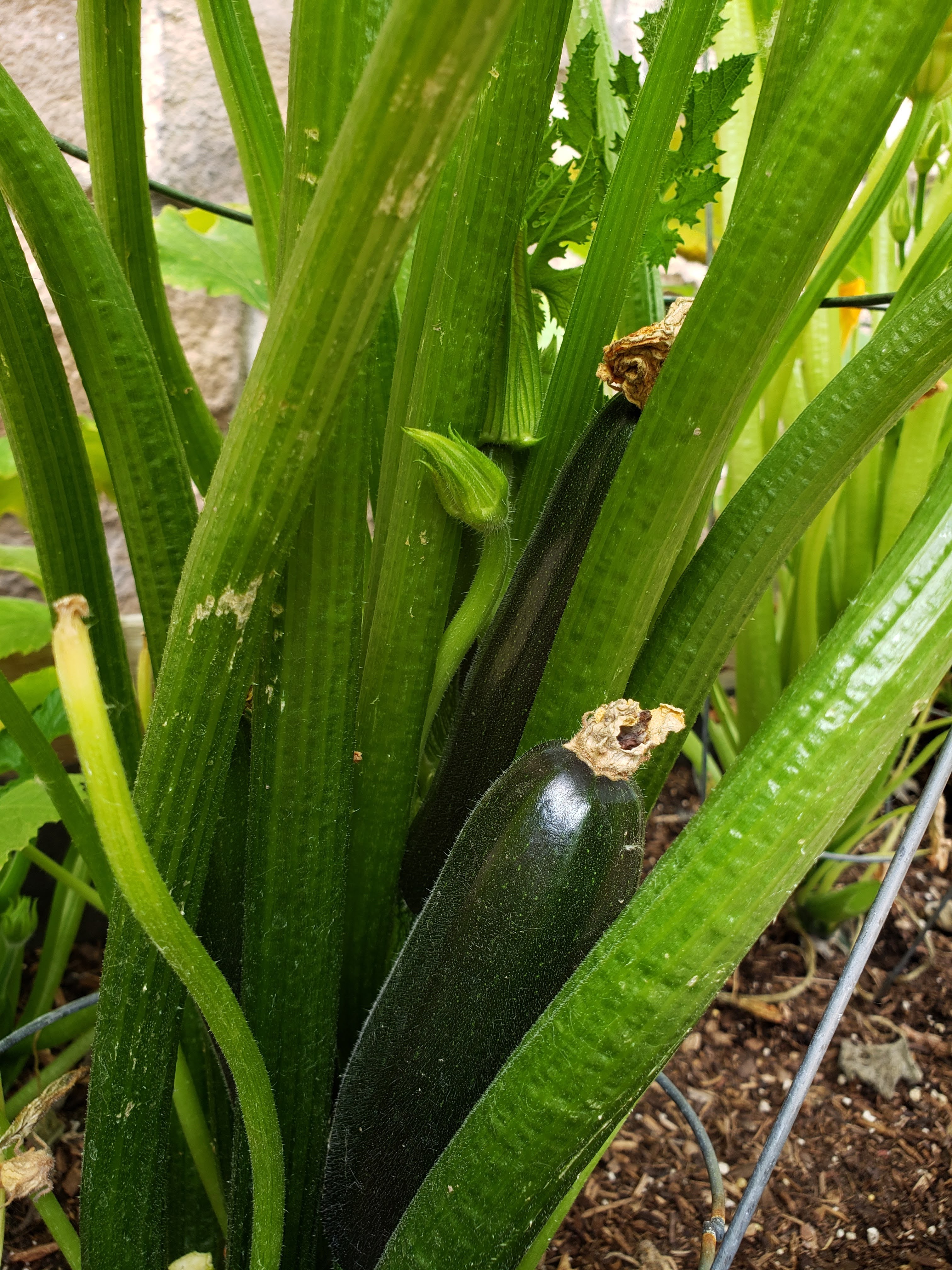
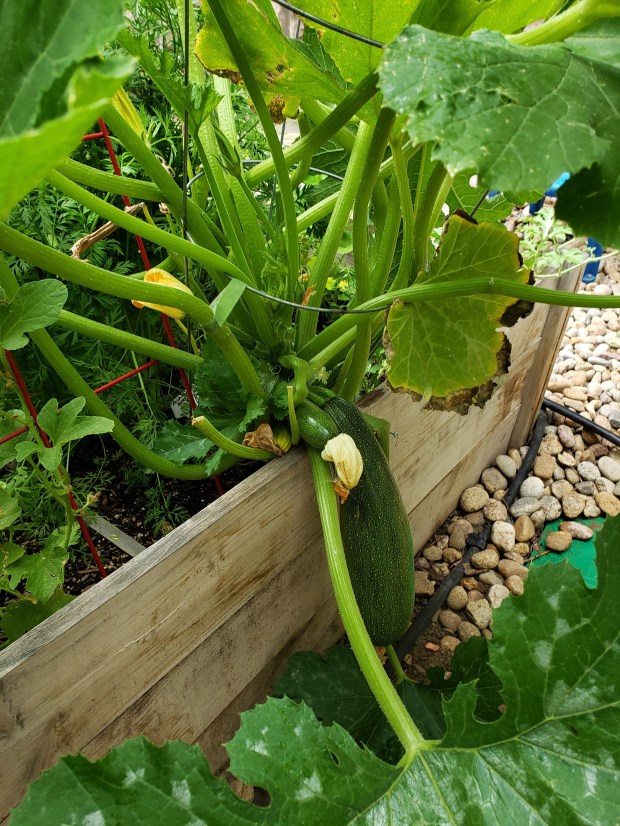
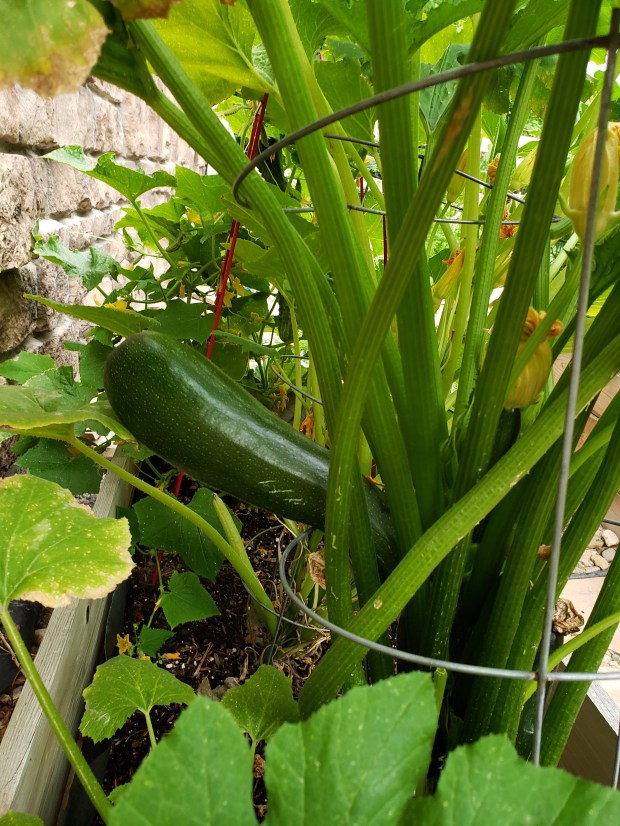
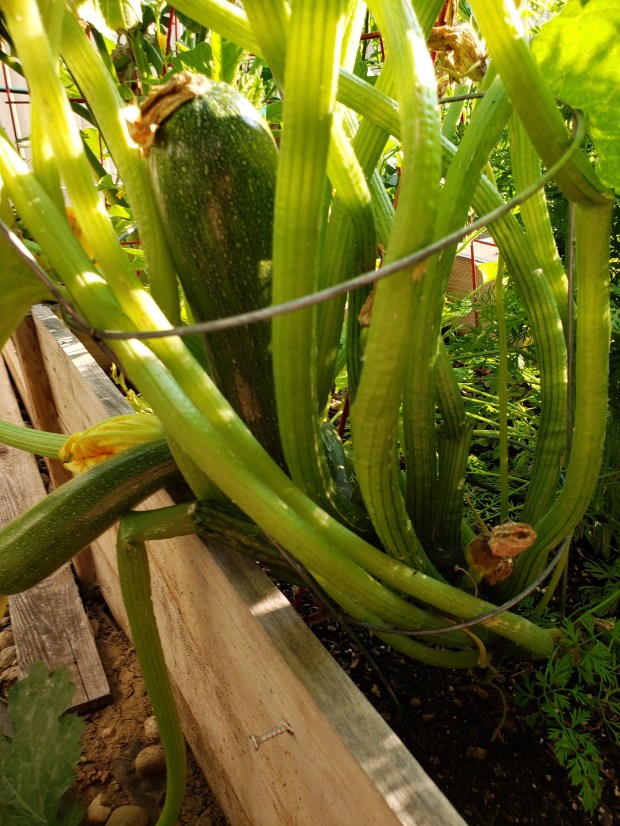
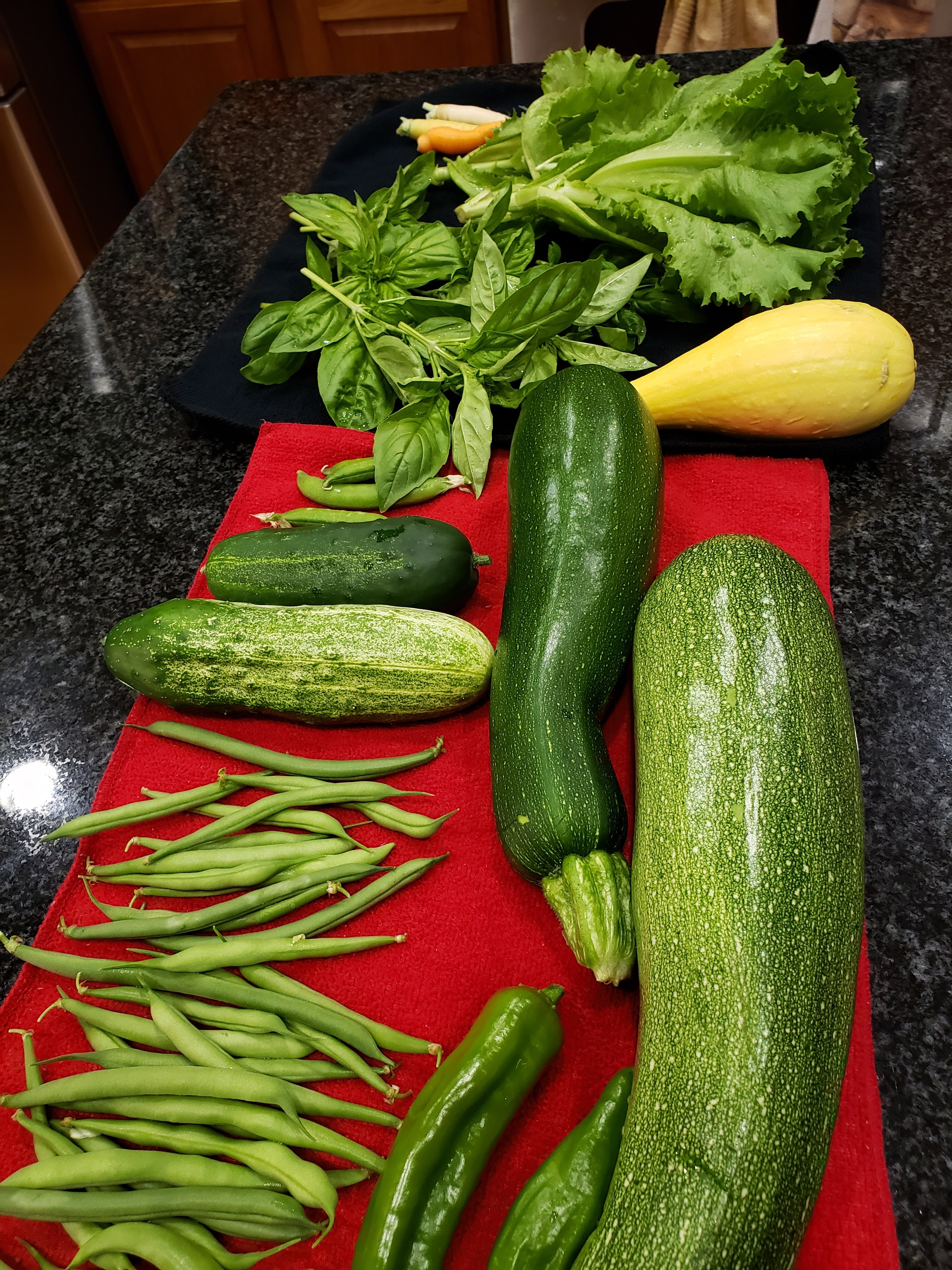
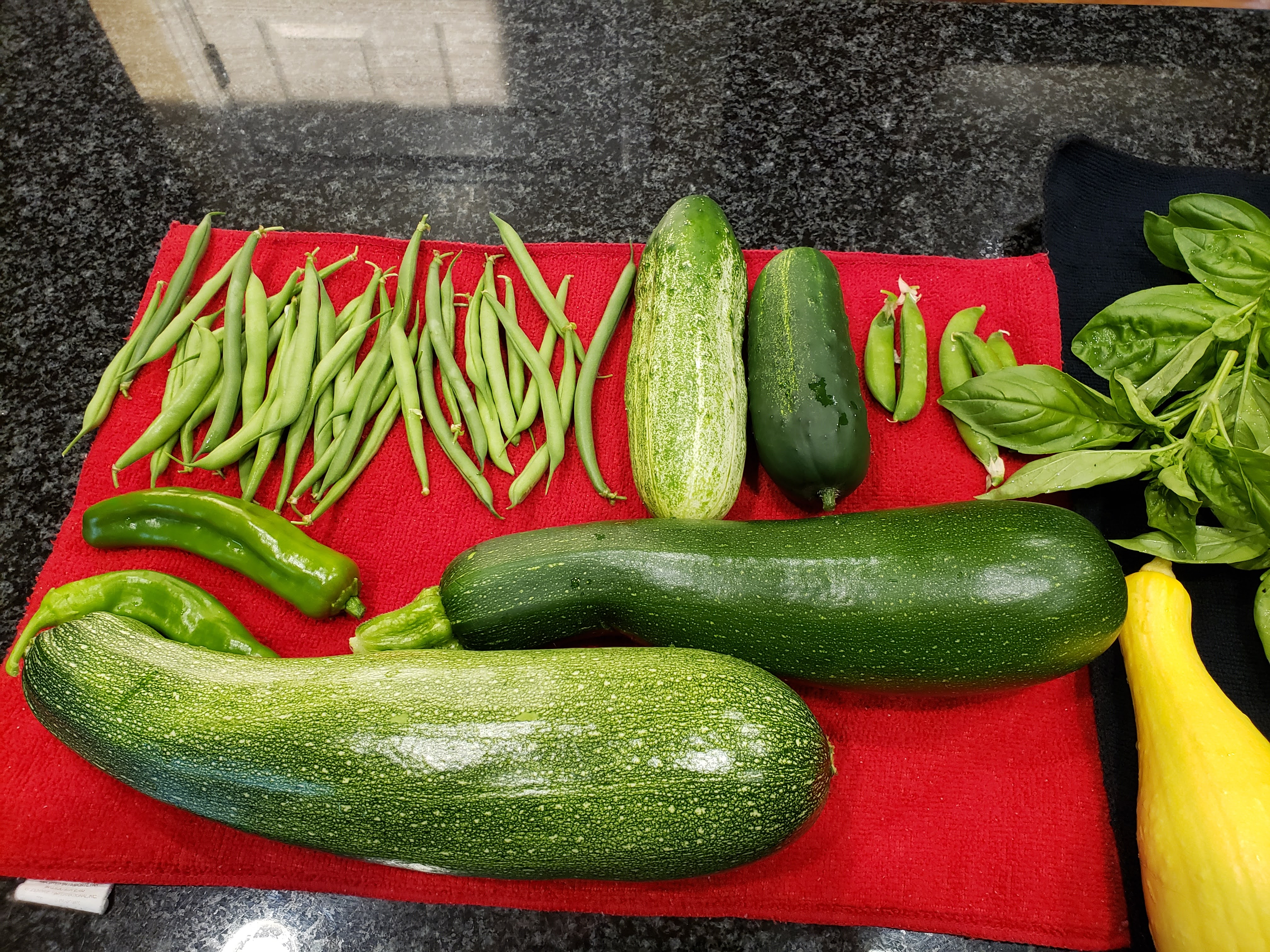
The great news is that this problem seems to be fixed as well! One week after Mg treatment, and check out these stupendously phallic bad boys:

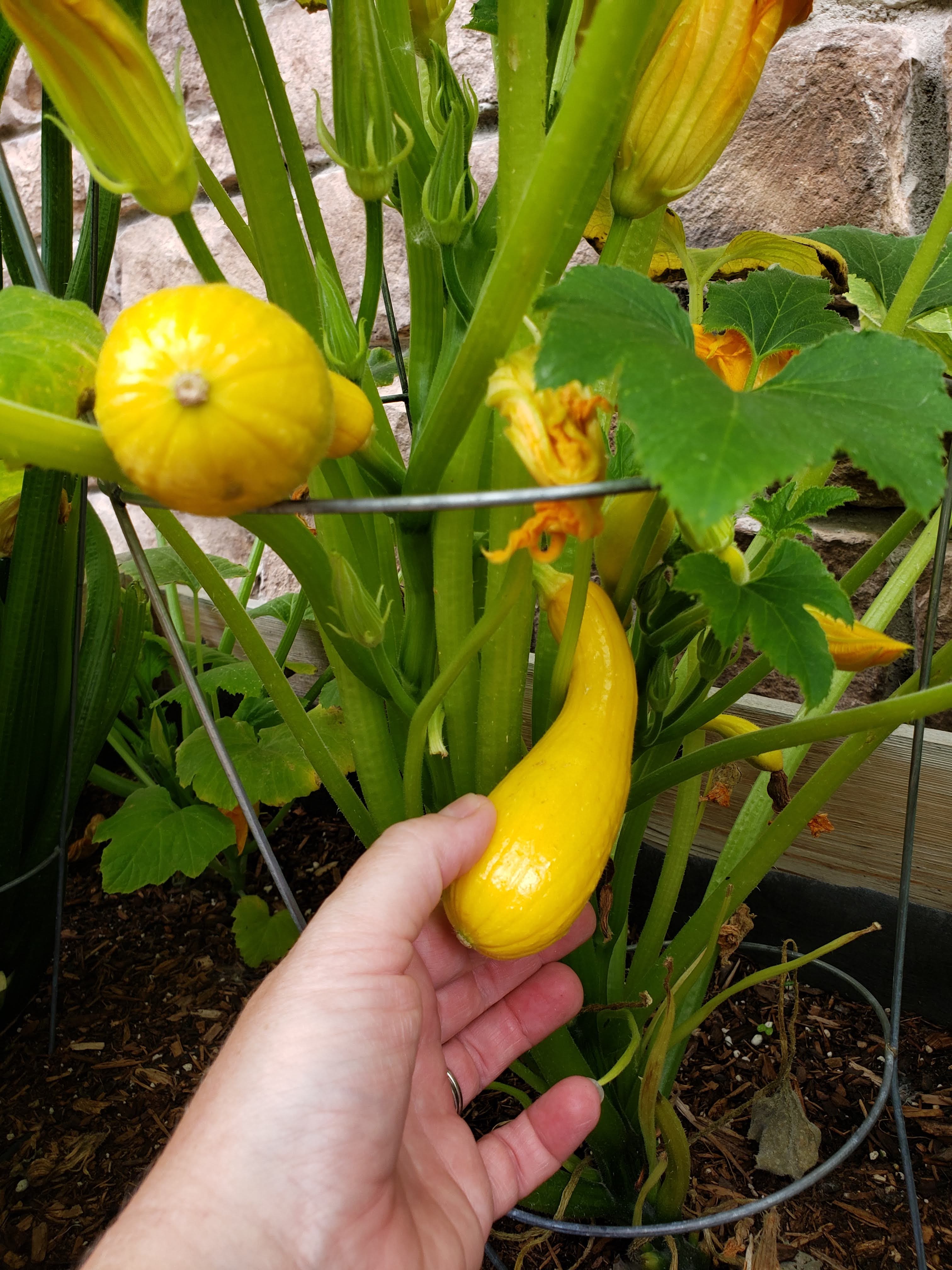
More good news came from the yellow squash and the cucumbers. My cukes and crooknecks had been growing, but slowly. I had a gazillion flowers, suspiciously few fruit, and the tiny little potential squashes were pollinating but not setting. A squash that didn’t pollinate completely will stay very tiny (tinier than in these pics below), but will also become soft. These squash obviously pollinated, were firm, and even grew a little bit, but they never got any bigger than this, even two to three weeks after the bees knees did their sex magic.

But one week post Mg treatment, and voila!! Cucumbers AND squash!!

In past years I’ve always had lame harvests of squash and zucchini, and always wondered how others got so much! Now I know why. I suspect I’ve had this magnesium problem for a while, but never carefully and intentionally tried to fix it. Partially, that is because in previous years I’ve had massive pest infestations, and have usually associated these issues with pests. This year, however, I’ve had few pests, so have had the time and brainspace to do some goddam sciencing!!