PESTICLES PART 1: Japanese Beetles, Flea Beetles, and Grasshoppers

Sometimes I get to feeling down about my garden, like last summer during the Apocalypse when I was known to come in from tending the ash-covered garden cussin’ the whole thing, “Fuck that stupid garden!”

To be clear though, it’s never really the garden that bums me out, because green growing things are joy. It’s the goddam pests. Fucking pesticles. Yeah, I said pesticles. It’s a winner, go ahead, try it out! It’s as much fun to say as it is to hear! Pesticles is my new addition to the gardening glossary. I wish I could claim credit, but it was my partner’s crafty (dirty?) mind that gave me that verbal gold nugget.

The urban dictionary has some choice definitions involving sweaty man-parts, but I’m hijacking it for legitimate gardening purposes: a disparaging expletive in the sexually explicit tradition of “fuckers” and “assholes”, that refers specifically to garden pests: any of the animal, bacterial, viral, or fungal wankers that are fucking up my happy place.

Over the years, I’ve had a several different kinds of pesticles wreaking havoc, but last summer was the perfect storm of shitbags. I had Japanese Beetles, grasshoppers, cucumber beetles, earwigs, caterpillars, squirrels, aphids, slugs, whiteflies, spider mites, and powdery fucking mildew. I probably missed some – oh yeah, like the moth invasion! It was the stuff of nightmares.

This summer, I’m adding to the pesticle list with flea beetles and downy mildew.

Apocalypse 2020: My collective summer 2020 garden experience. During the height of the COVID pandemic my garden should have been my refuge. But the symptoms of climate change manifested significantly in my happy place, and, combined with close proximity to a pond/nature area, and some plain old bad luck, I was not feeling very fucking happy about my happy place.

The wildfires that ravaged the West in 2020 left Front Range skies looking like Mordor for much of the summer. We even had ash snow down on us several times, and for days on end. The pic to right shows the small pond behind my house cooking under ominous skies. Temps were higher for longer than ever before, and it was so very dry. The summer heat and dry problems only compounded the late start to the planting season. We had late freezes in 2020 that broke my new hydrangeas, and stunted the growth of everything that dared to live through it. But none of that even includes the pesticles.
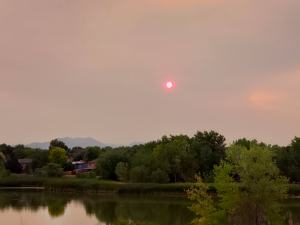
The smoke-filled skies of Mordor blocking out the mountain view west of the pond behind our house, Summer 2020.
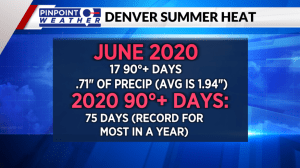
Local Fox 31 News image showing record-breaking heat. Click for article.

Japanese Beetles

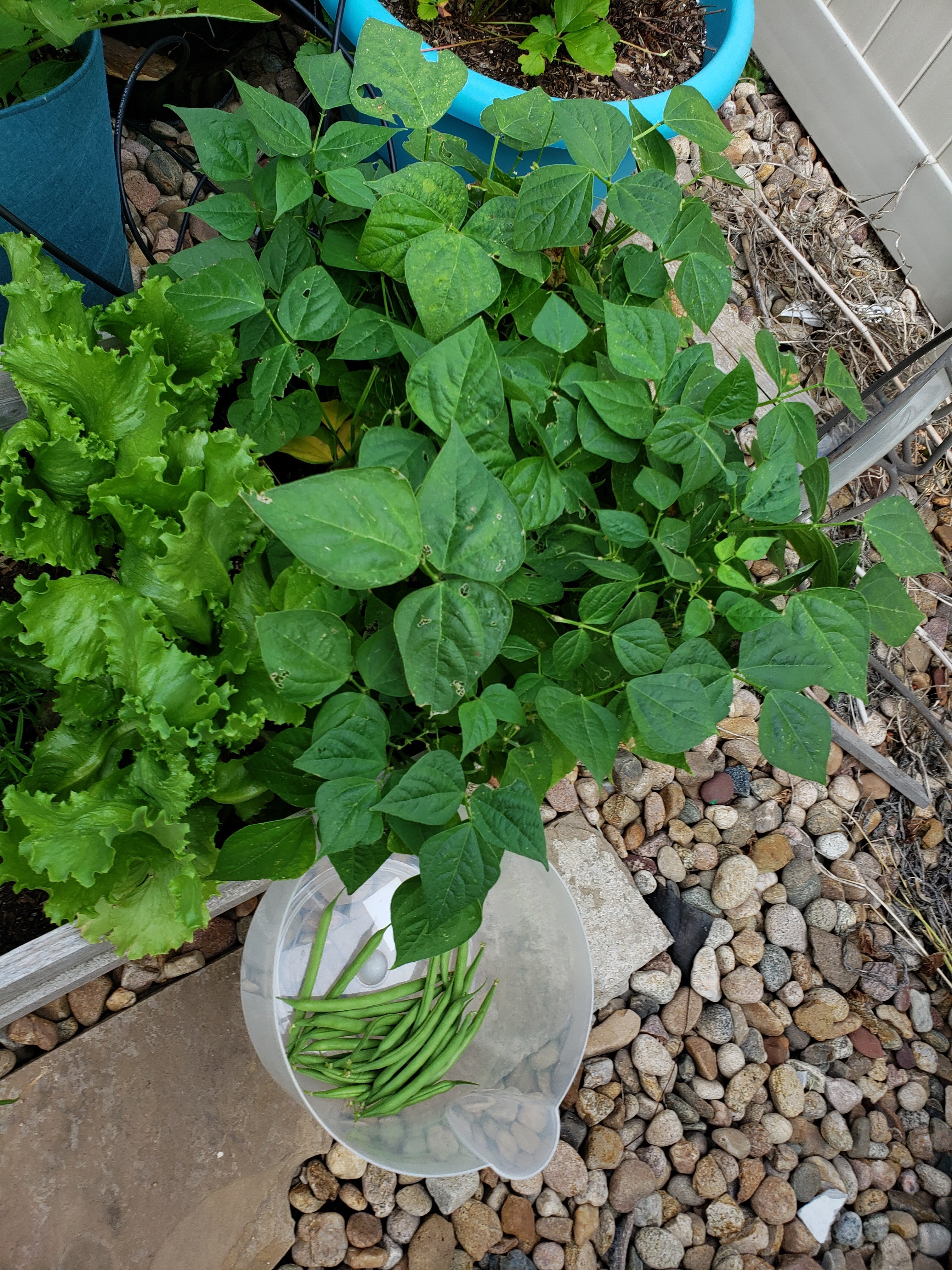
Last year was the first time I encountered Japanese Beetles in my garden, and they’ve returned this year. Please see my earlier post Fucking Japanese Beetles, to see how that has gone. Since my beetle obliteration treatment, I’ve only found one more this summer, and I used the gentle organic method of removal.
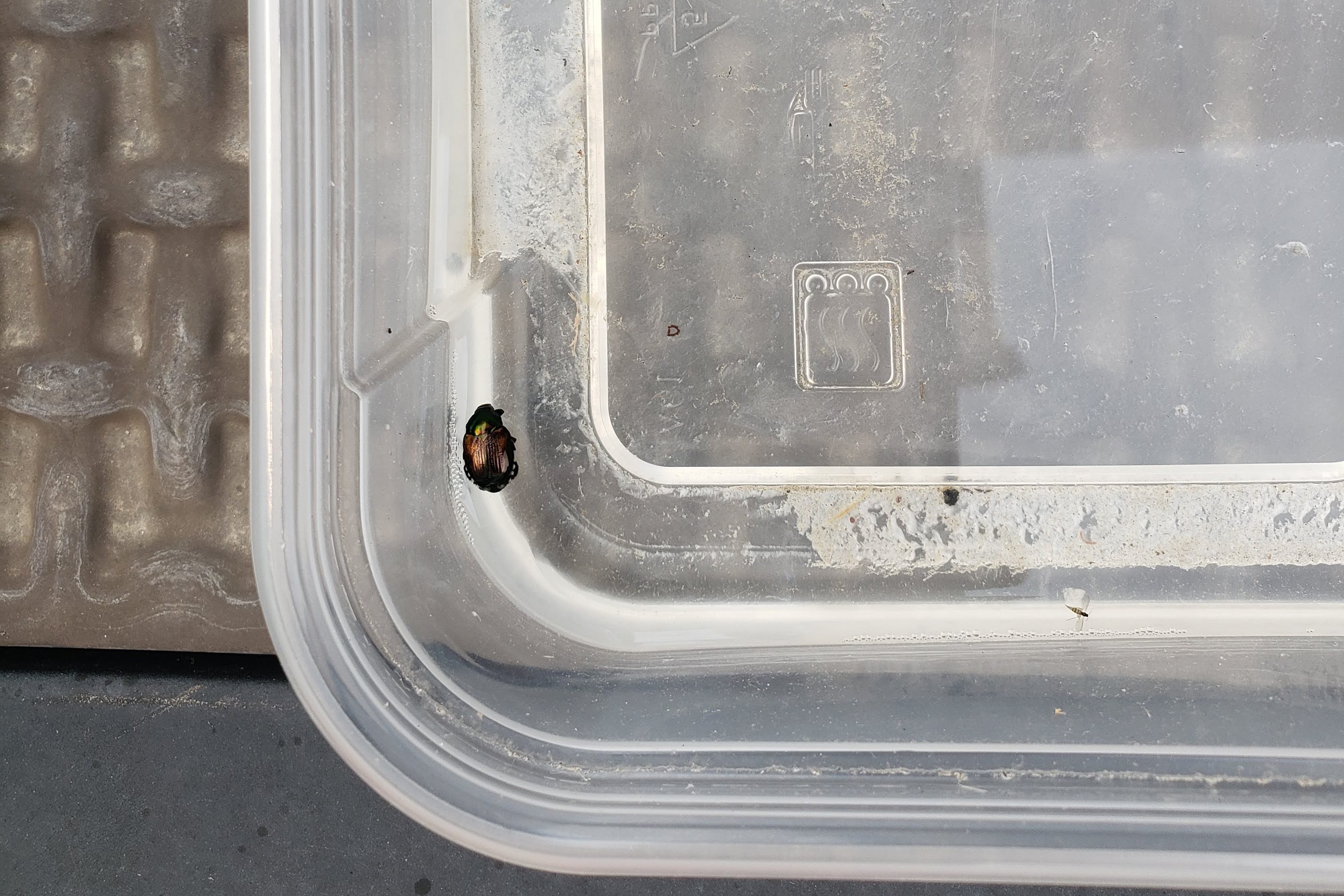
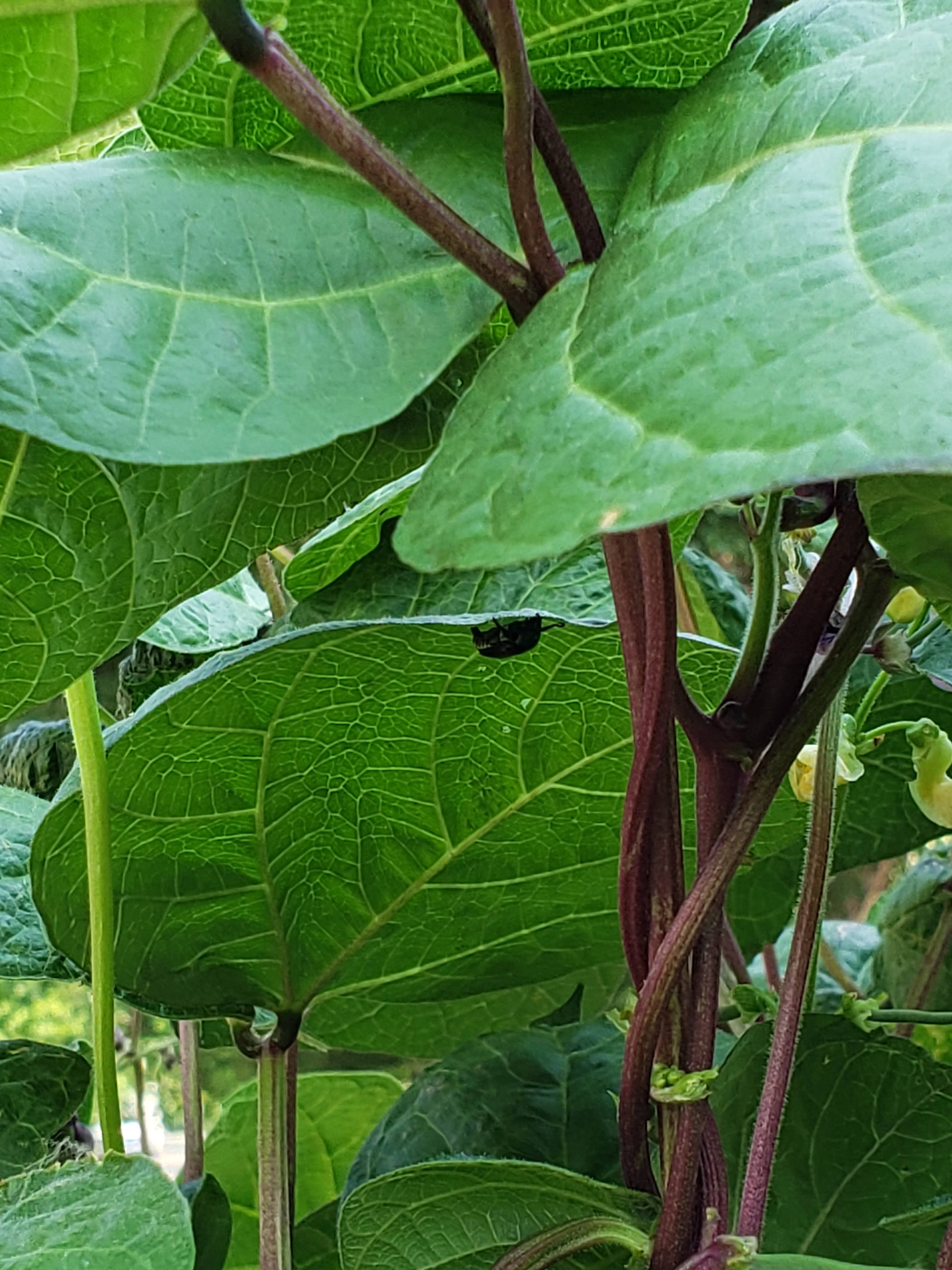
Japanese beetle humanely shaken off of my beans into a container with soapy water. Where it inevitably fucking DIED.

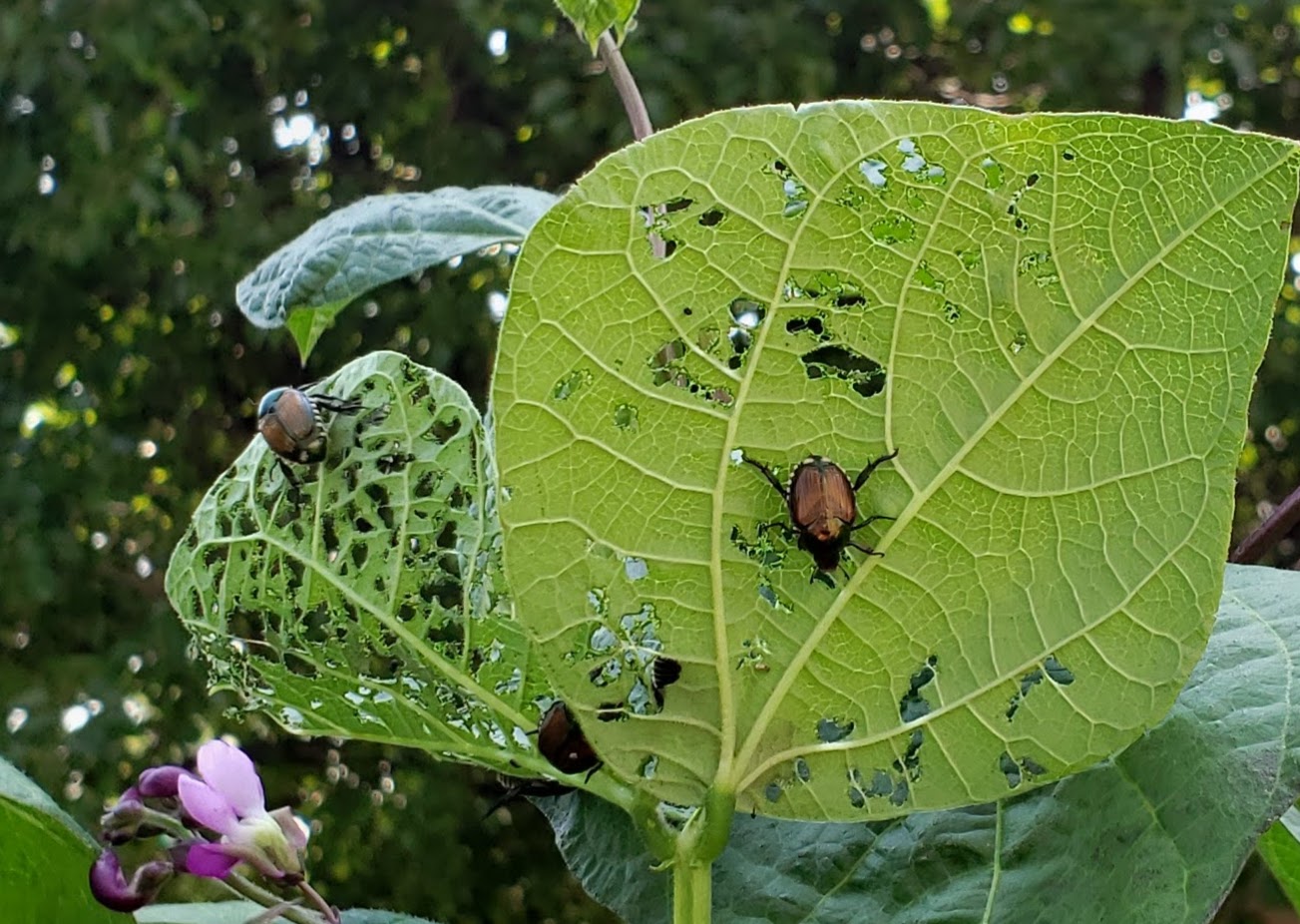
These pretty beetles are harmless to you but will decimate your garden. And your neighbor’s garden. And every other garden they can get to. They will congregate on sunny leaves and eat them skeletal in minutes. They don’t really mess with your actual fruit, but they’ll kill your plant by eating up its leaves.

Flea Beetles
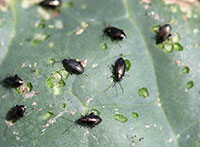
I hadn’t started photographing my garden yet when I ran into these wankers early this spring, so I’ll use my words and borrow photos. Flea beetles are hard to see because they’re so very tiny. It will look like your plant has finely ground pepper shaken on them, pepper that takes to the air as soon as your hand approaches. They jump, so as soon as you get close to the plant that has them, they just jump away, it’s enough to make you question what you’re seeing. Fucking gaslighters. (Image at left from https://extension.colostate.edu/topic-areas/insects/flea-beetles-5-592/)

Basically, it looks like your fresh new sprouts and transplants have become target practice for a legion of ant-size sharpshooters. Tender new leaves will be shot full of tiny holes, giving them a lace-like appearance. But they’re tough to address because they’re hard to see and they just jump away from your pesticide.

From my research, the best hope is that your fresh new baby garden plants are healthy and strong enough to deal with the holes for a few weeks until their leaves are big and tough enough that the beetles move on. This is how I got through my infestation. [Admittedly, it took me so long to finally research what was going on, that “waiting it out” was only like two weeks of waffling about pesticide.] The sprouts and transplants were too young for me to feel comfortable using pesticides, especially with our late freezes that put the whole garden behind schedule. I didn’t want to fry my little seedlings and have to start all over again at the beginning of June. However, if I get them again, it’s good to know that there are plenty of the usual pesticides that will mitigate. See this link to Colorado State University’s extension page on flea beetles for more information.

Sure enough, although the flea beetles took bites of almost everything, none of my babies appeared harmed by the little holes, and the beetles moved on after a couple of weeks. I didn’t try any pesticides, and the lace-patterned leaves quickly disappeared under the mountains of new growth to maturity. Whew, feeling like I got lucky!

Grasshoppers

So these assholes are just eating machines. I’m convinced that they were at least half the reason I had no potato crop during the Apocalypse last summer. Mine were hyyuuuge and brought friends. They’re tough because they can just jump away from you and your spray. And then come back to munch after you have left and your spray has dried or washed off.
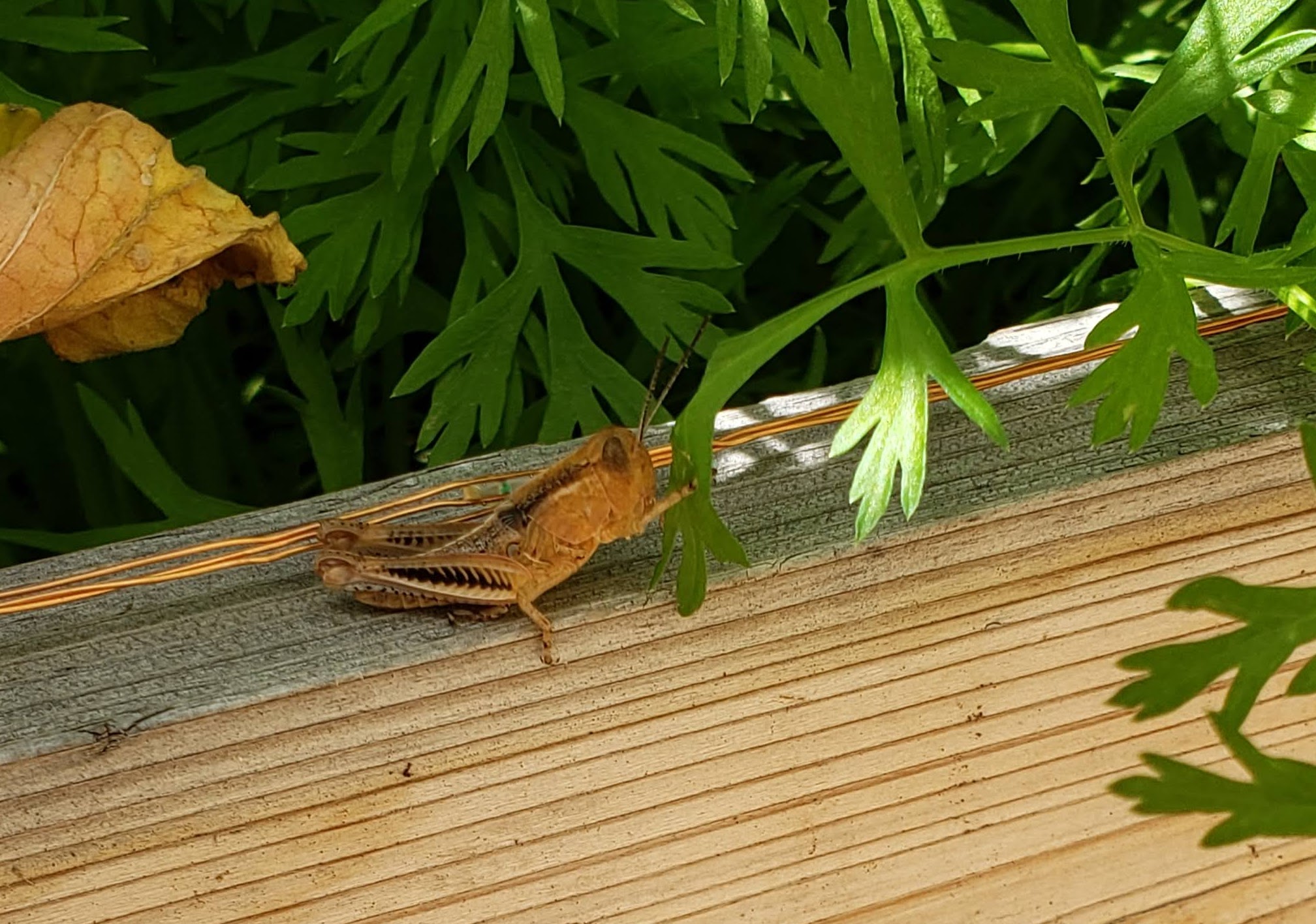
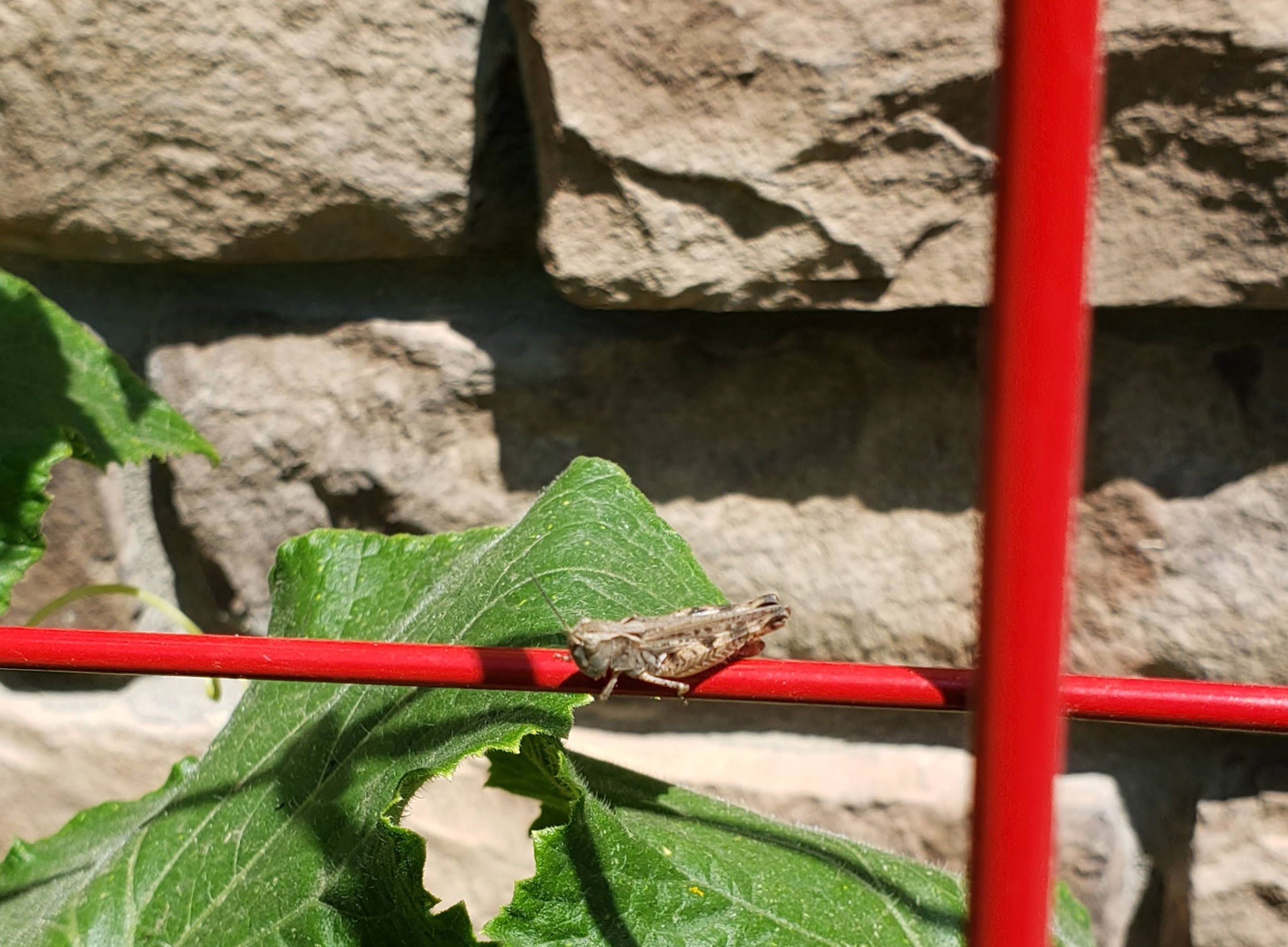
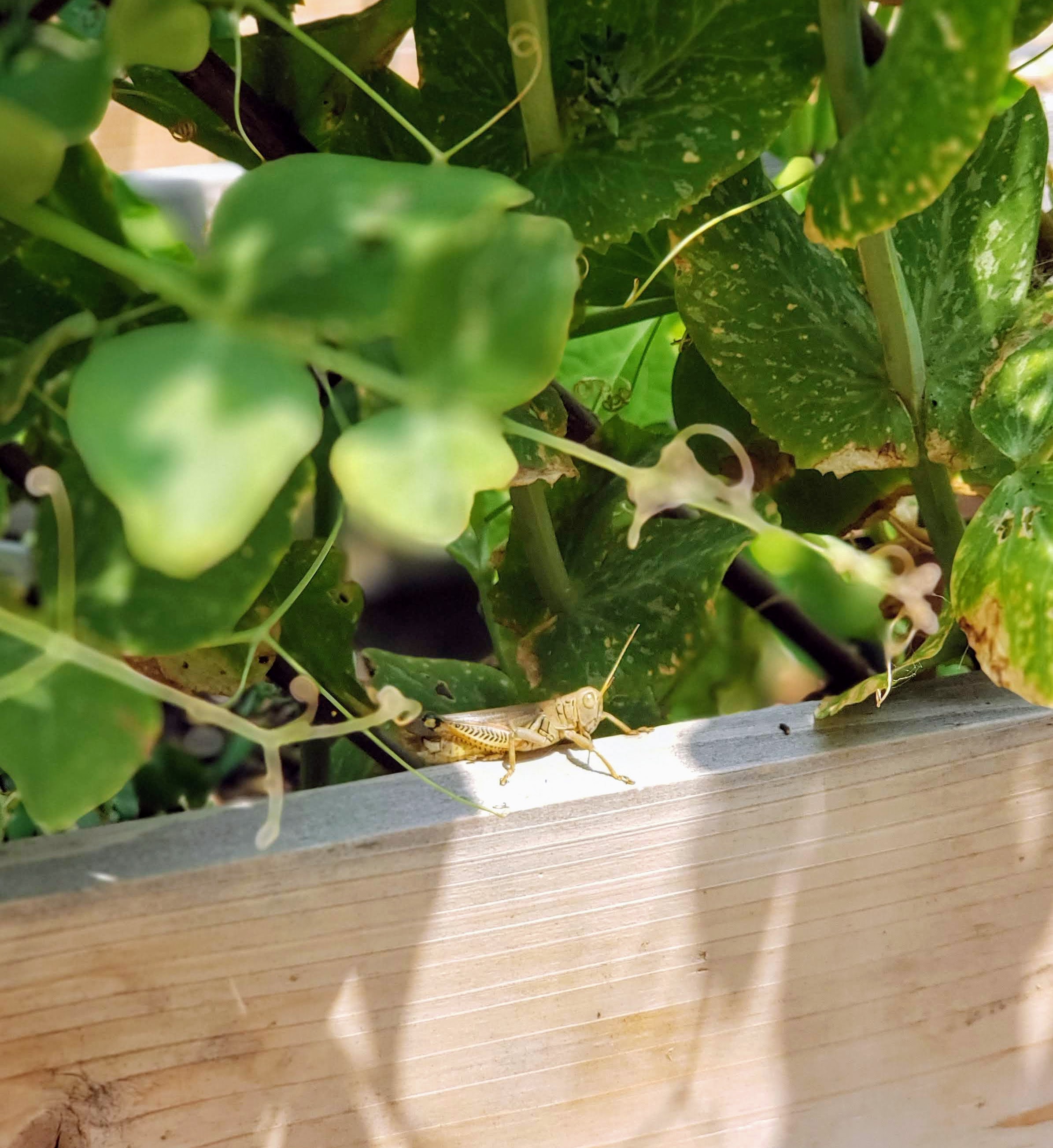
This year there must have been a nest or something nearby because at the beginning of June I had a zillion little baby grasshoppers all over the garden! If they weren’t so destructive, they’d be super-duper adorable! My youngest daughter is a budding entomologist and just fell in love with the tiny twats. But fortunately for all involved, these veggie-mowing baby bastards seem to have cleared out, and the pics above are about all I’ve seen of them lately.

Last summer, I had grasshoppers everywhere in the garden, but I had so many other issues there that I never did any research how to get rid of them. This year’s early summer grasshopper nursery seems to have graduated on to greener pastures, because now I’m only seeing one or two of them around the plants, and am not seeing much, if any, actual grasshopper damage anywhere in the garden.

I’ve been lucky this year with the grasshoppers, but if you’re interested – and for my own future reference – I’ve read that grasshoppers are averse to garlic and spicy peppers. A quick Google search shows a gazillion recommendations for DIY sprays to deter the bouncing bastards. It also seems reasonable that there are chemical solutions to this problem, but I haven’t looked into that so far. [<—–Omigosh, somebody please LOL at my pun there. Or is that a double entendre? Whatever, do you get it? Chemical solutions? Homogenous mixture of a solute and solvent? But solutions are also how you solve a problem, see? Ha! I kill me!]
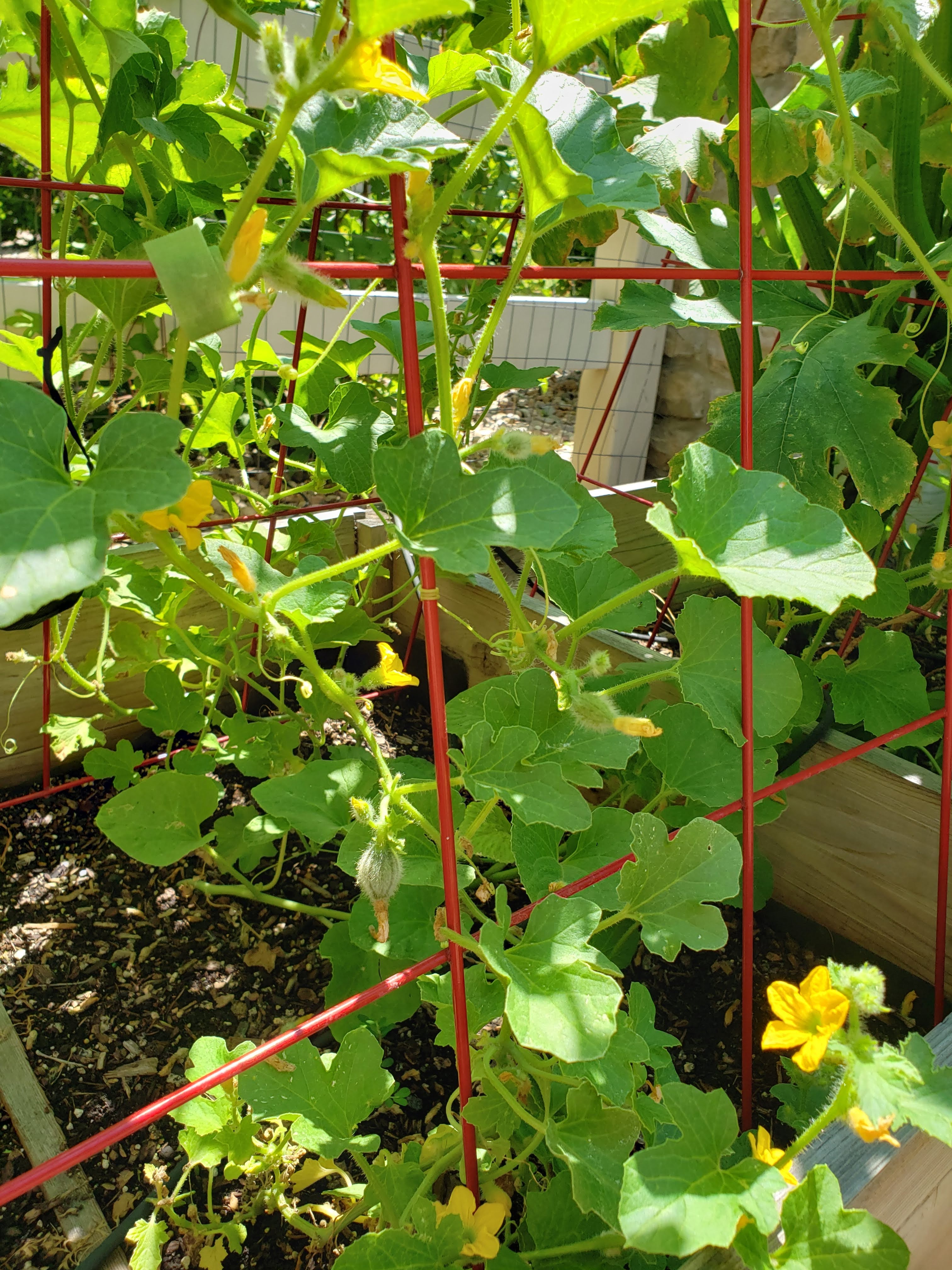
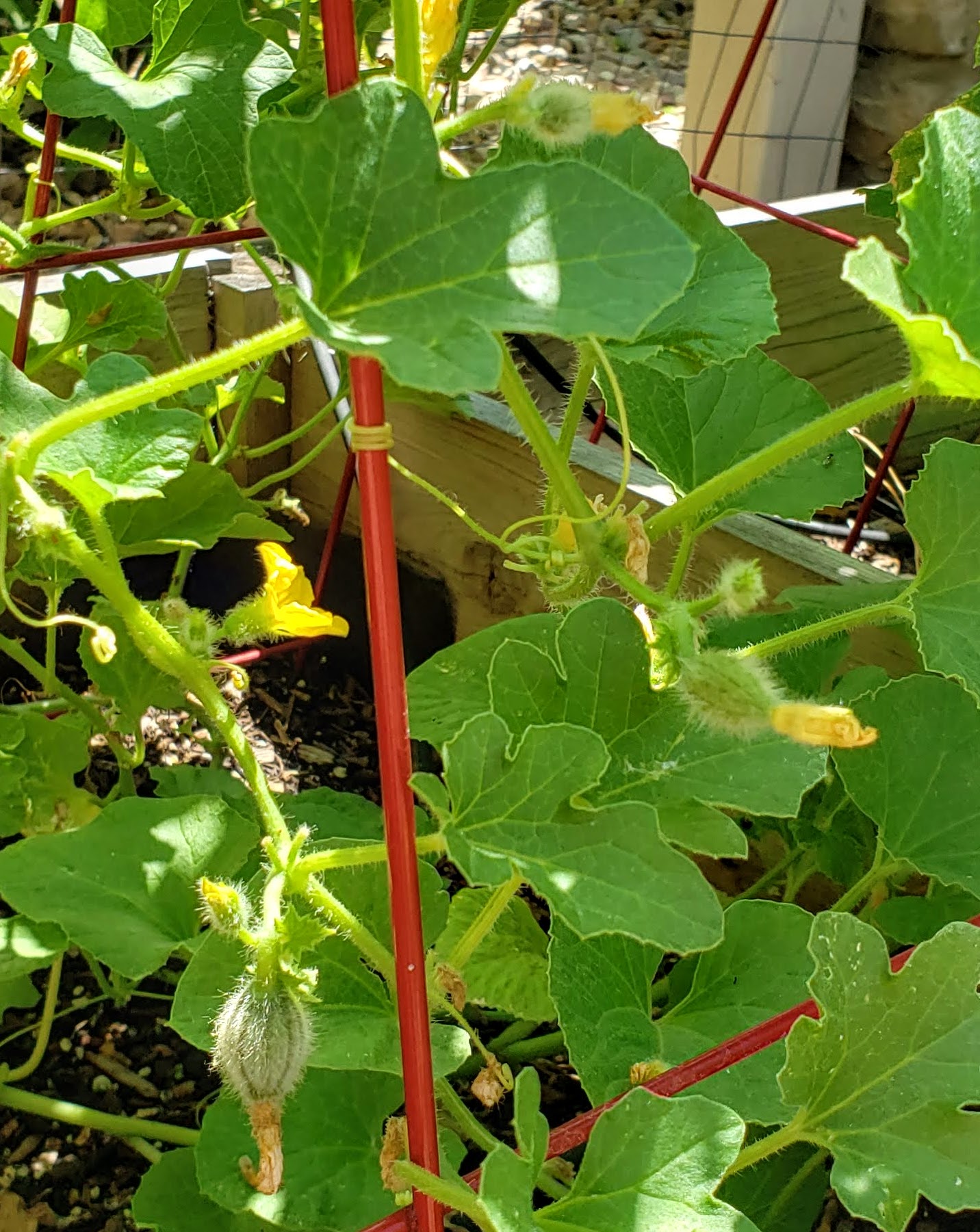
Melons!

My littlest daughter is madly in love with fruit, especially melons. She begged me for years grow watermelon or cantaloupe, and I resisted. Melons are cucurbits that generally grow on long thick vines, and need a lot of space. In my raised bed square foot garden, I had never really thought it was possible.

After watching my middle school students choose watermelon seeds over every other option during my Garden Lunch Bunch, and how quickly a watermelon seed turns into a giant plant that kids LOVE, I decided that I should definitely try them out at home. I attempted watermelon twice before this season without much success, although one year we did get one tiny little melon! It was about 3 inches in diameter when a wind storm plucked it off the vine. Admittedly, my watermelon attempts were half-hearted at best, thrown into an extra outdoor pot with a whatever happens, happens, attitude.

Last summer my littlest daughter was with me on a Lowe’s run when we inevitably found ourselves next to the seed racks, and she helped me pick out “Minnesota Midget”, a dwarf cantaloupe whose shorter, bushier vine would hopefully train up nicely in my square foot garden, and give us some yummy melons!

I started two of the plants in my basement greenhouse, but after hardening off, they never really grew after transplanting. One died completely and the other was stunted for a very long time. I went ahead and directly sowed a few seeds after my transplants failed to thrive, but it was too late in the season to make much progress. We got one melon by the end of the summer, but didn’t get to enjoy it because the “Dirty Eater” got to it first.

The “Dirty Eater” is the derogatory term my children applied to our property’s resident squirrel. In the squirrel’s defense, it was just doing what squirrels do, you know, “tryna get a nut”. Where a “nut” in this case was actually an egg. Or several. From the nest of some other backyard residents, the Sparrows. We watched through our upstairs windows as DJ Dirty E. climbed the tree, found the nest, and caused an all out airborne assault from the Sparrows and their extended family and friends. Tiny birdie bullets from several bird families dropping out of the sky and screaming straight into the boughs of the large evergreen. The ruckus was unbelievable as all involved screeched, chirped, squeaked, and squawked their way through the battle.

Sadly for the airborne assault team, Dirty Eater was the victor, and my children received a close-up lesson about the Circle of Life.

Shortly after the egg-cident, Dirty Eater cemented its name when it made off with the first of our baby melons. At only about 4 inches in diameter, the melon wasn’t ready for harvest, but we found it on the ground with suspicious little bite marks in the rind. By the next morning, the tiny melon had been broken open and was nothing but an empty rind, and Dirty Eater was spotted ranging on the fences nearby. There’s no other animal that could have gotten to the melon in the raised bed AND gotten it off of the vine. Plus the forensic analysis of the bite marks left little doubt.


This year, however, I really want to be successful with the cantaloupe, so I tried a couple in the green house that I transplanted after hardening off. I also directly sowed a couple of seeds in the same area so there’s still a solid chance if this years’ transplants didn’t make it, or were stunted again.

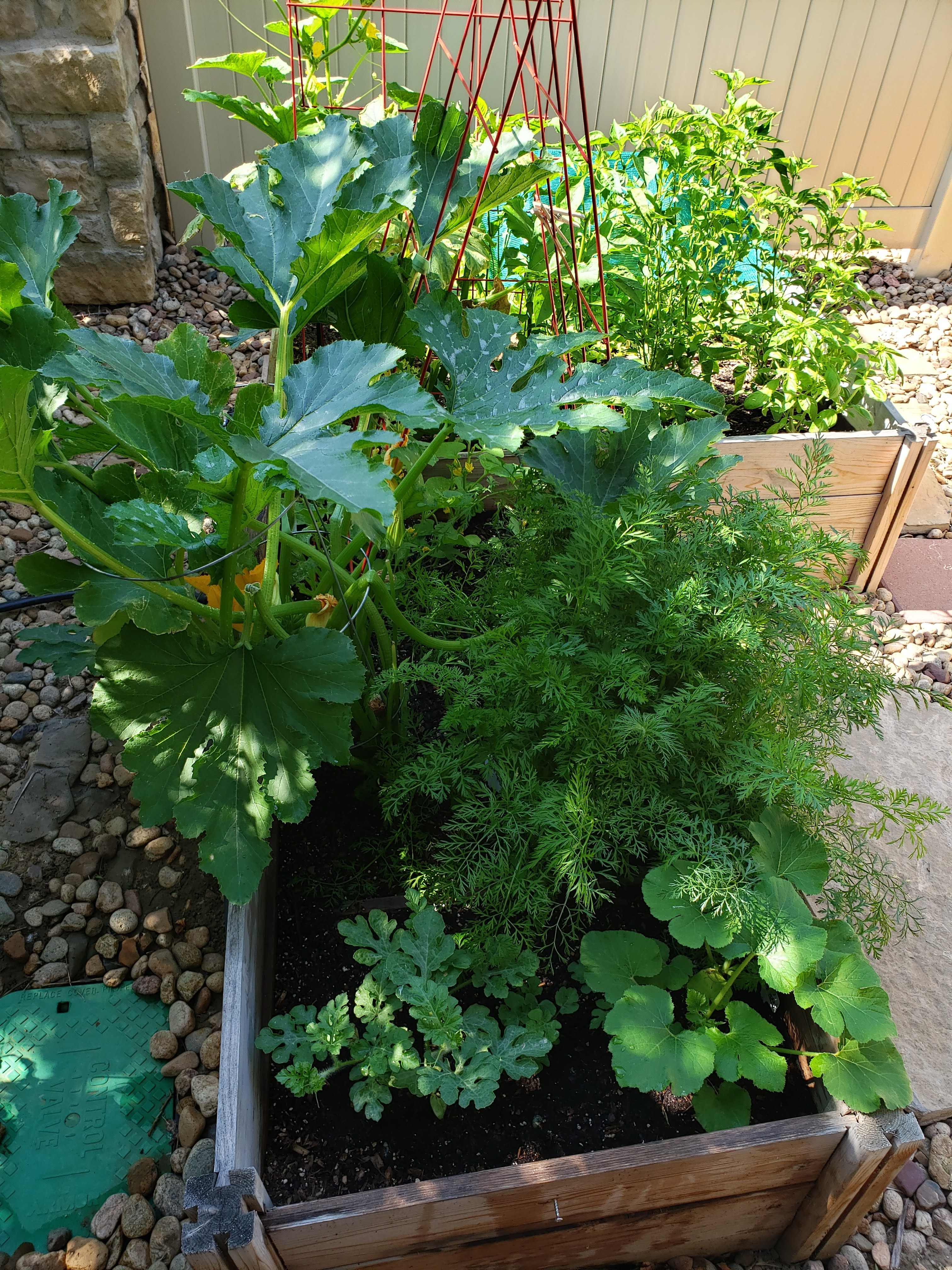
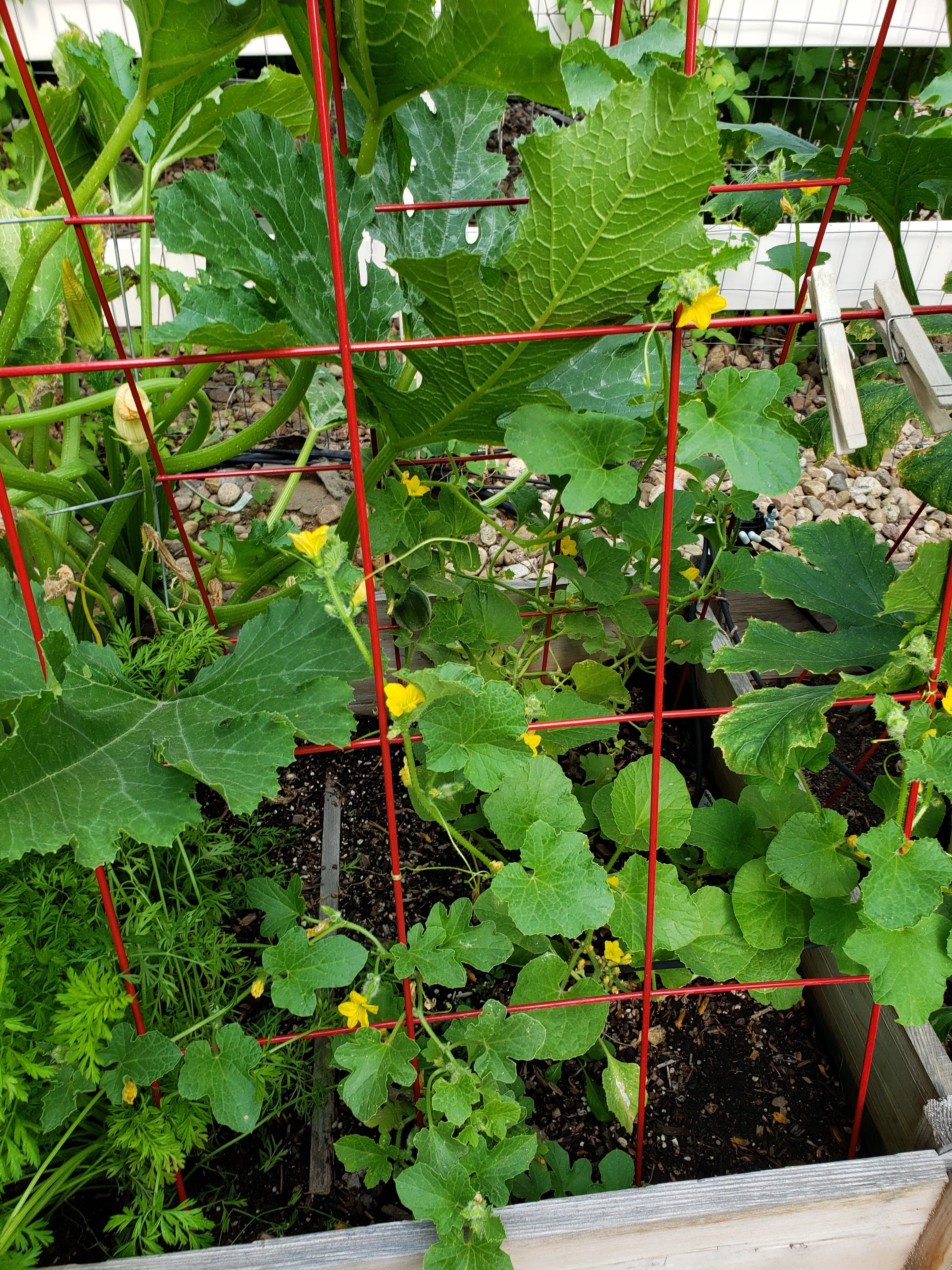
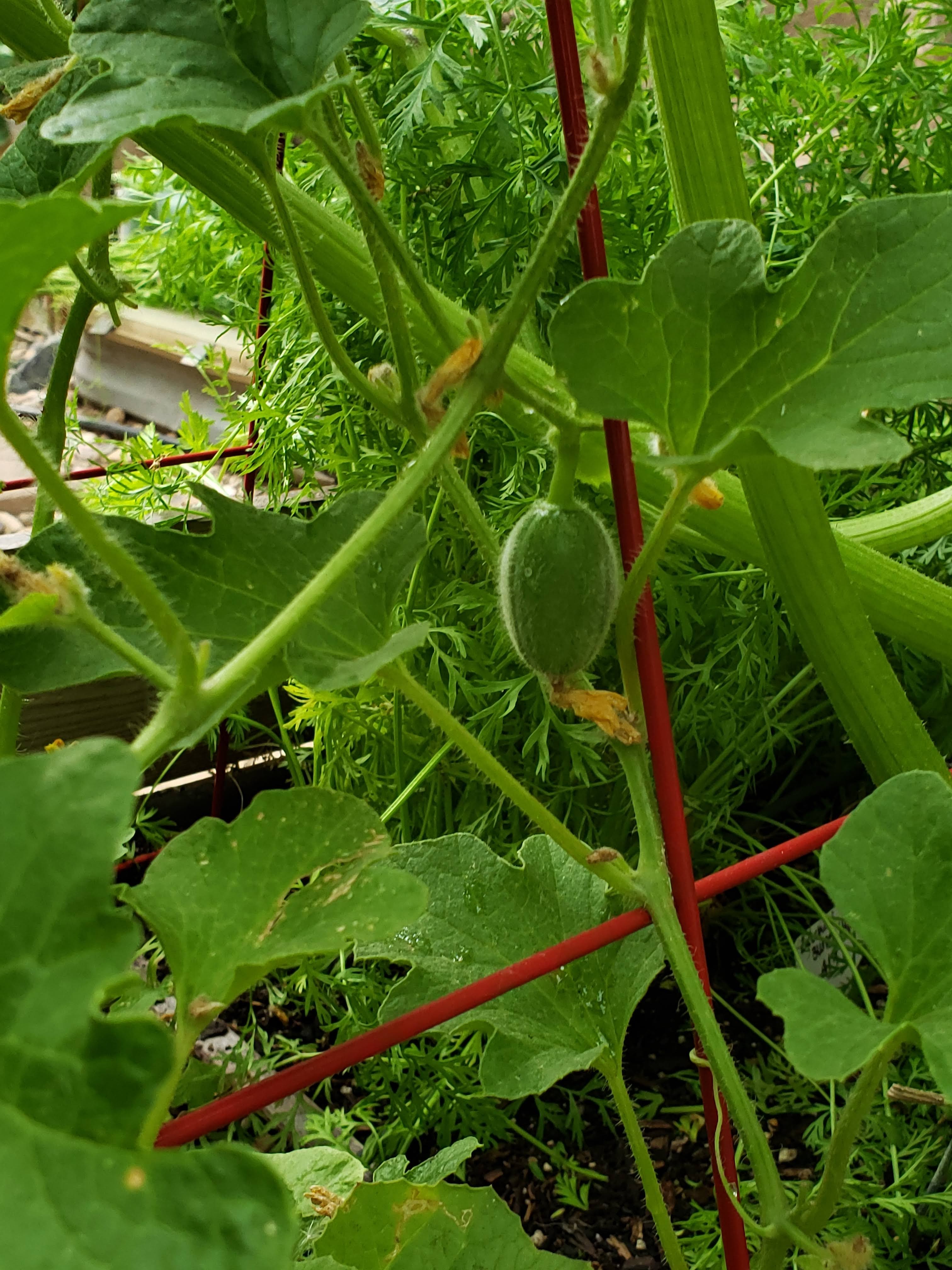
So far so good! Both the transplants AND the direct-sown plants are doing very well, and there are melons a-growin’! Our next job is to be craftier then Dirty E so it doesn’t eat them before we do. I’m eyeballing some carefully placed bird netting.

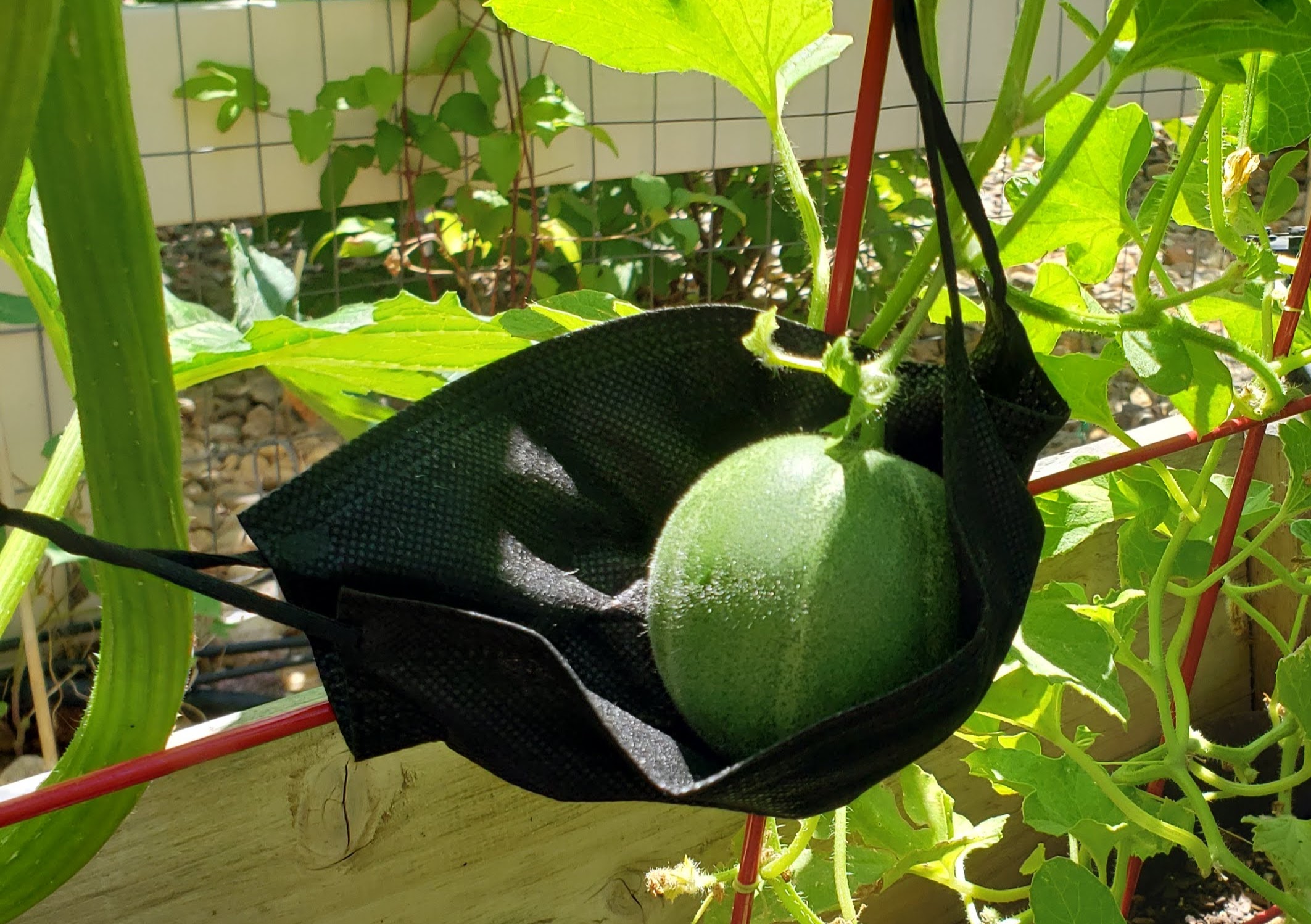
The other day I saw a cool picture of an upcycled mask as a melon hammock on a Reddit gardening board. What a brilliant idea that I had to try! I just tied the earloops onto the trellis under the little melon, and explained that the mask must remain over the nose. The traditional recommendation for a DIY melon hammock is a piece of nylon pantyhose.

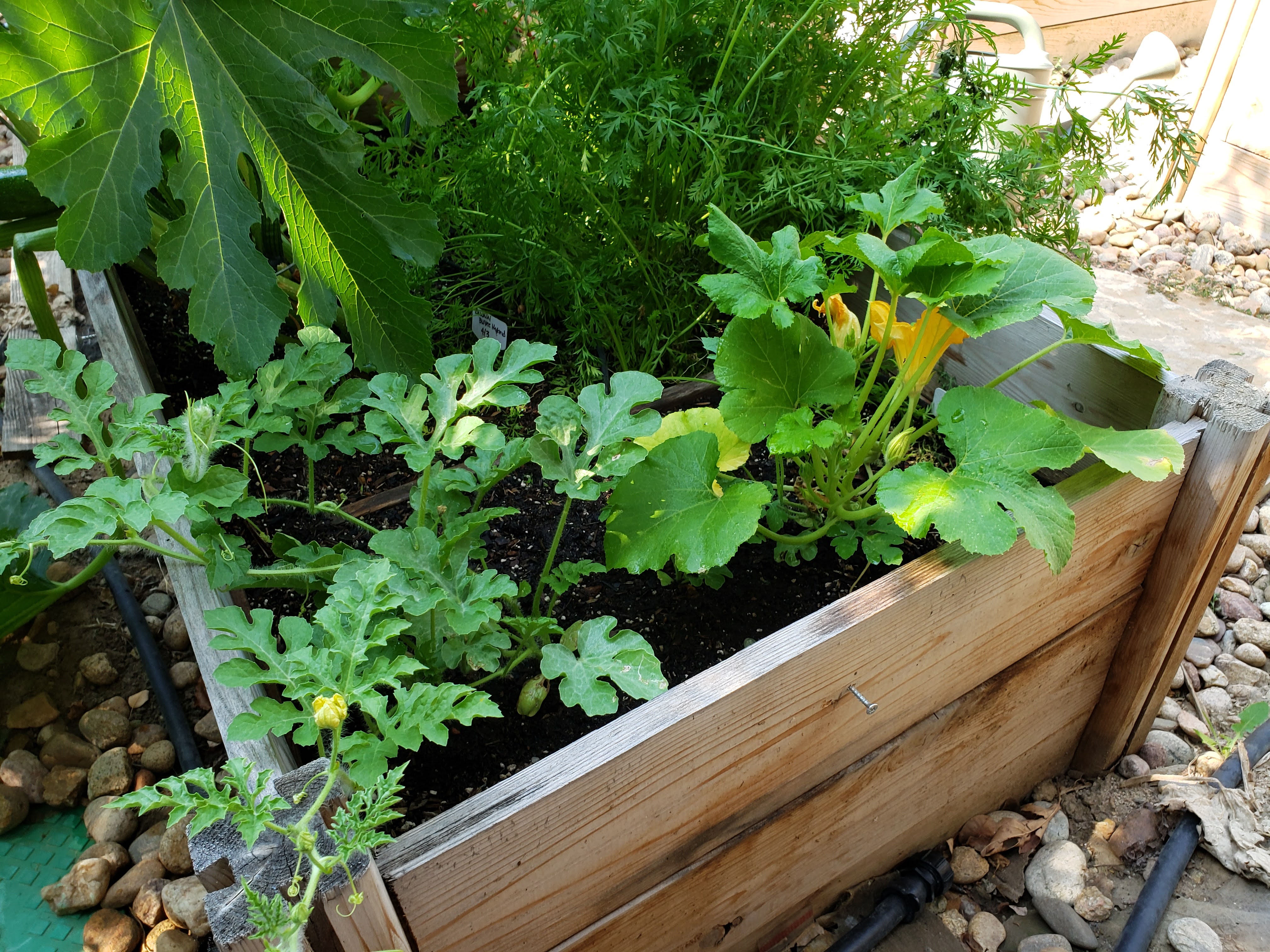
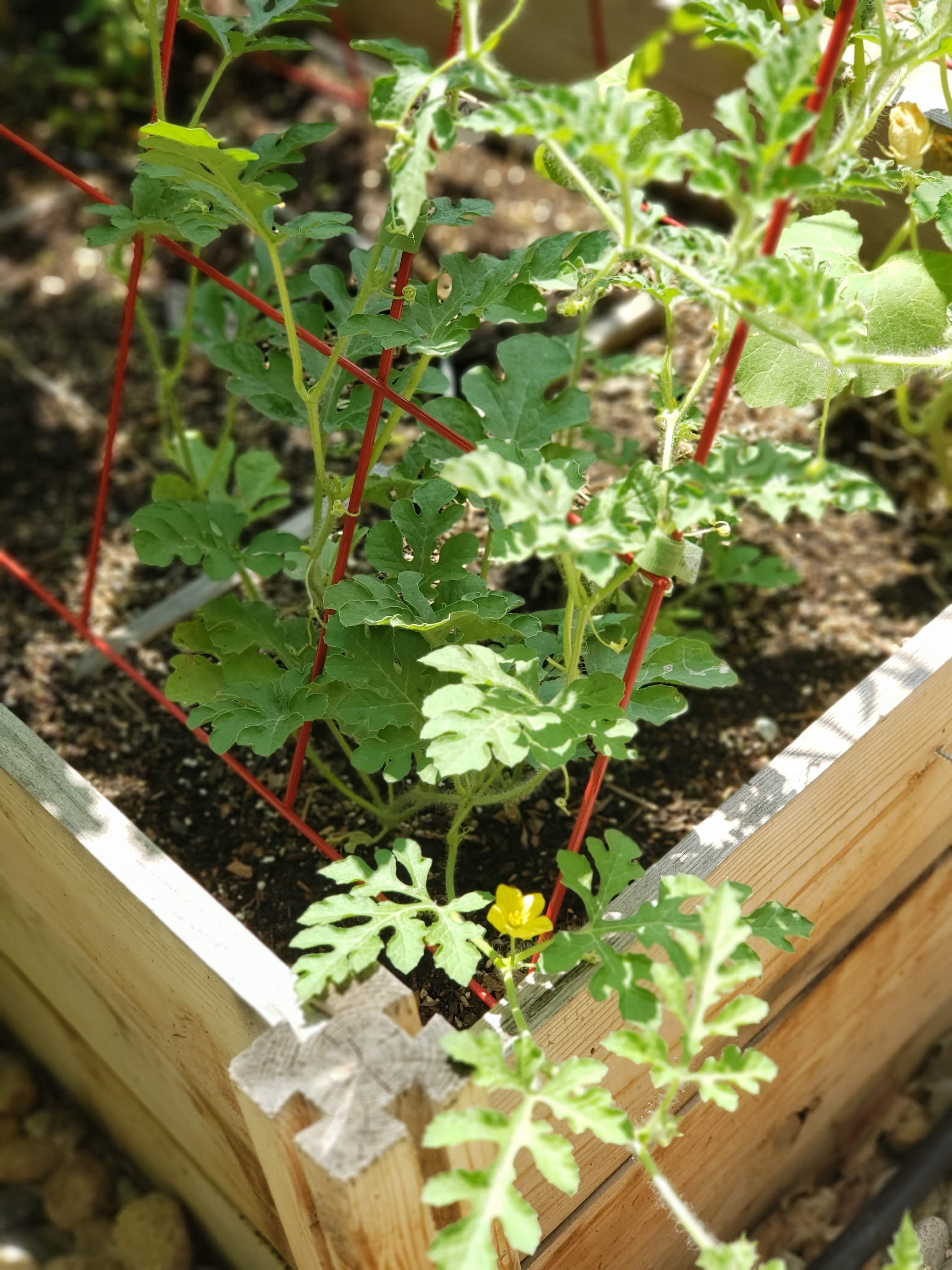
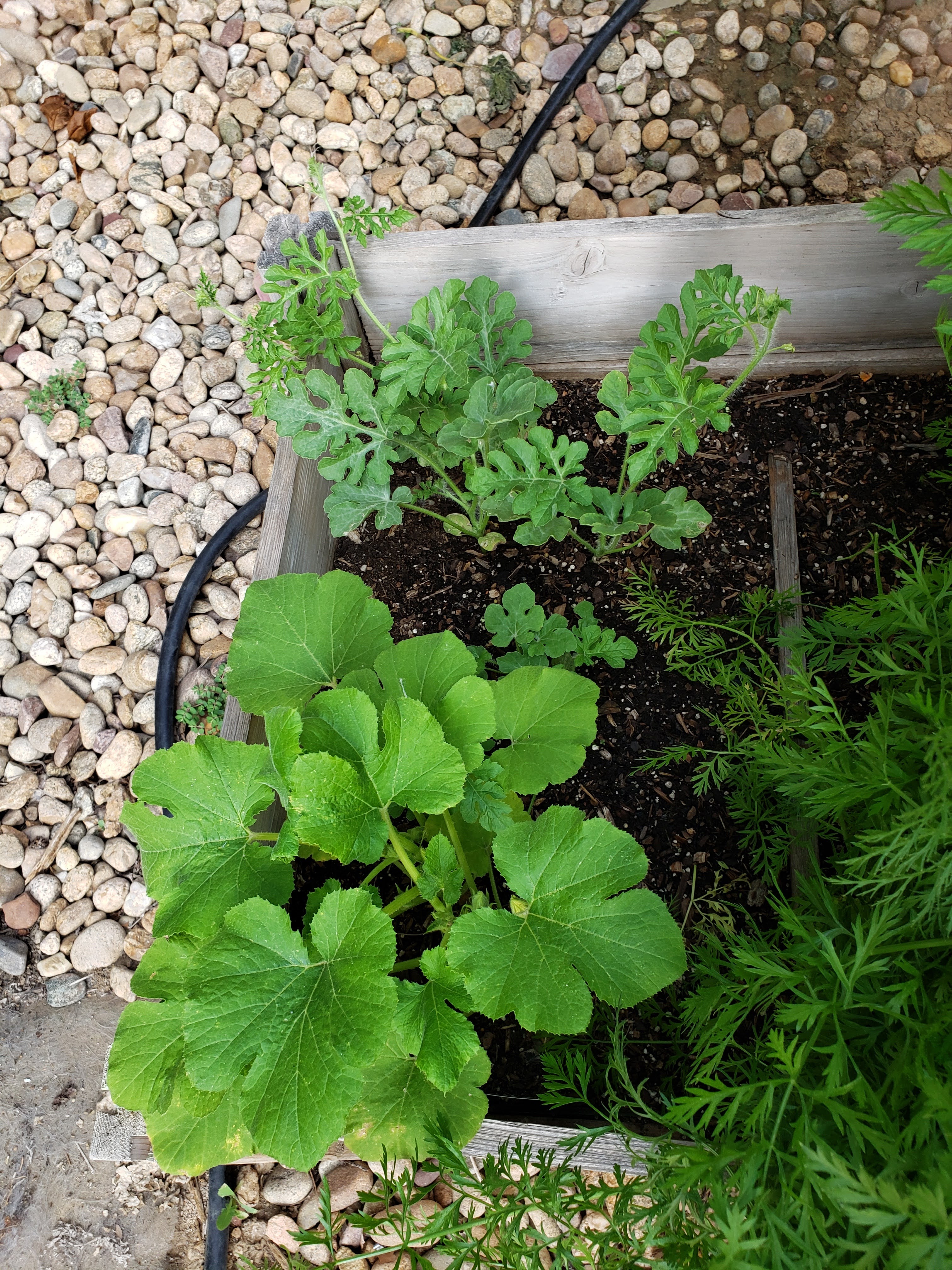
I did also plant a couple of watermelon seeds, but like the last few times I tried, they were more of an afterthought. The sprouts are doing well, though, and the vines are climbing their trellis. The two late freezes we had kept me from sowing outdoors until the end of May, so I don’t think there’s enough time to actually get any fruit. But we’re still hoping!

What’s wrong with the potatoes?

Grrrr. The bane of my gardening existence. Fucking pesticles. Which kind this time?

Last year, the Apocalypse made seed potatoes impossible for me to get ahold of, so I tried to grow from grocery potatoes. I’ve read that grocery potatoes have treatments to prevent the growth of root nodes, or eyes, so it’s hard to get them to grow in the garden. Plus, I read that you can risk blights and things that way. But it was the Apocalypse, so fuck it, I’m gonna have to make do.

In the end, it was just really poor performance. Only a few of them sprouted, and of those, only a handful flowered, but the flowers kept disappearing. I can’t prove it, but I had very active grasshoppers in the garden last year, and I think they ate the flowers from my potatoes and cucumbers.

Whatever the cause, I got no potatoes in 2020. None. No soft buttery new potatoes, no big ole fall brown love nuggets, none. Boo. But every spring is a new spring so…

This year I replaced my potato sacks because the others had fallen apart after several winters outdoors. I ordered seed potatoes from a seed company, then got lucky and found a few more seed potatoes at Lowe’s. I put in new soil, and Voila! Potatoes a-growin’ like mad. Purple ones and yukon golds, if I remember correctly.

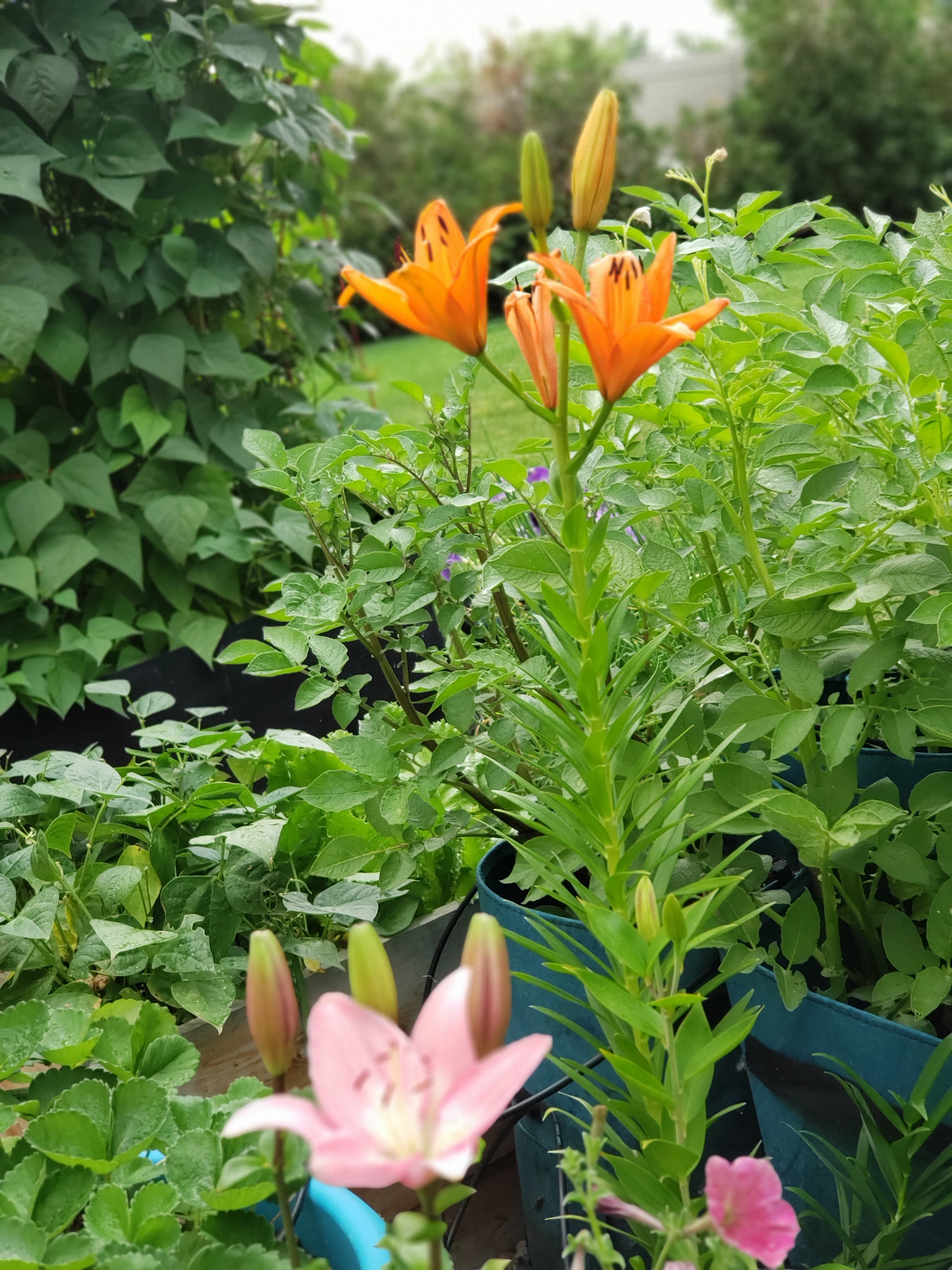
They’ve looked wonderful this year, their beautiful flowers are actually the photo on my home page.

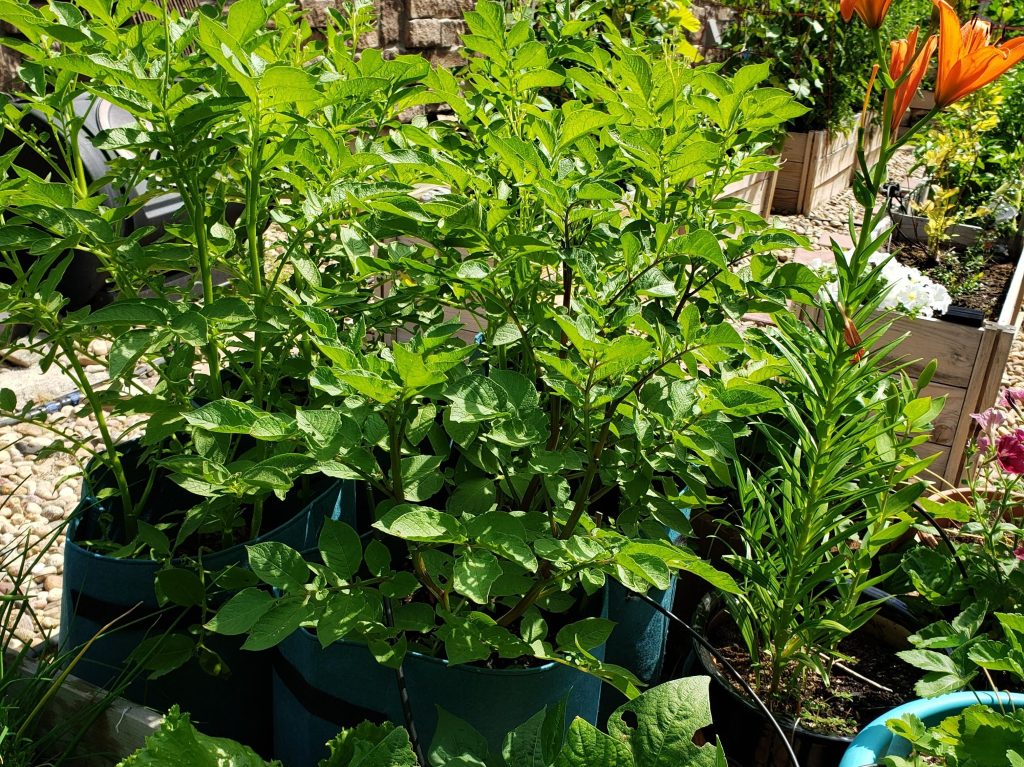
Lovely green potato foliage and flowers.

Until now.

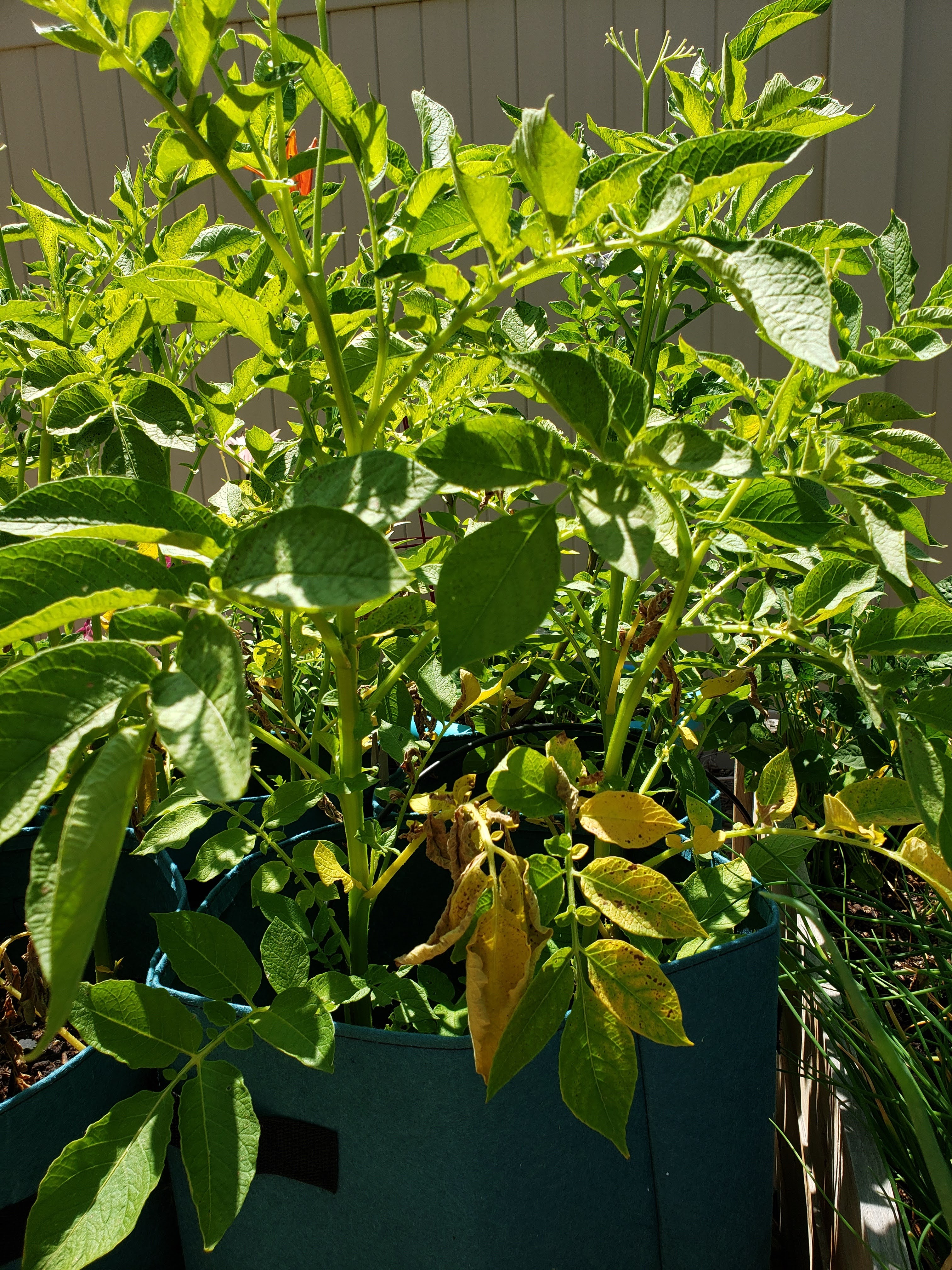
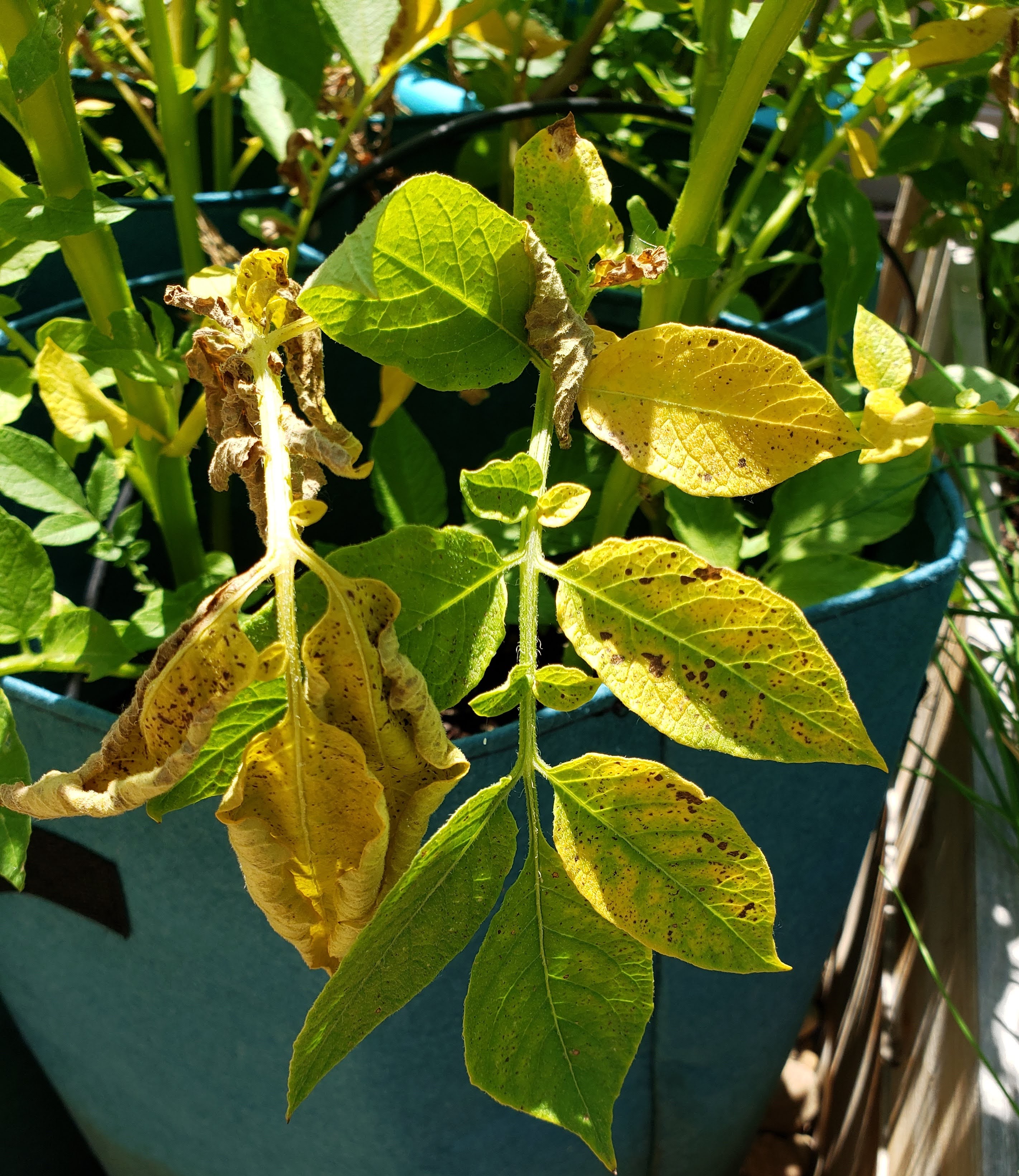
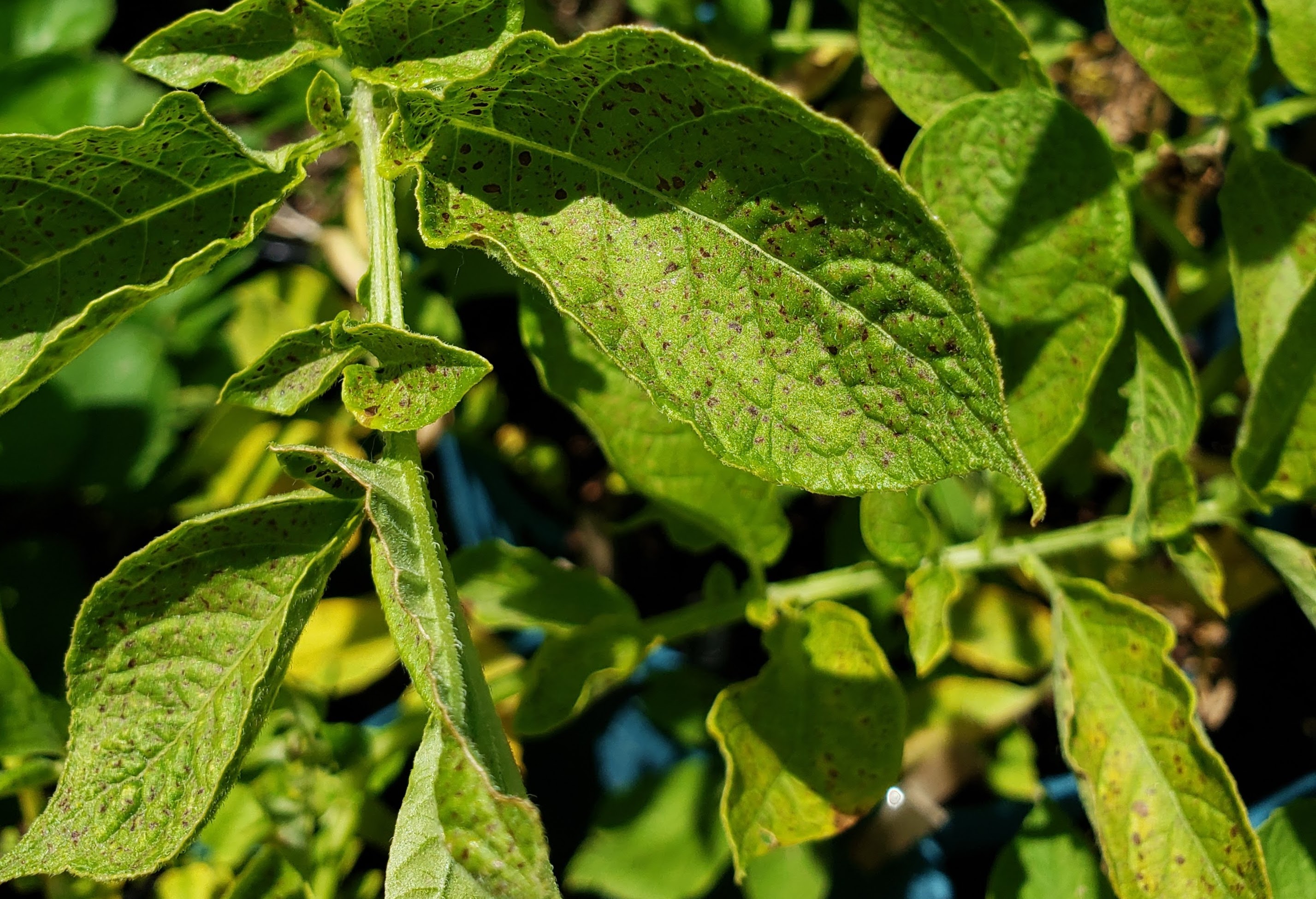
Now happening very quickly, is yellowing and speckling of the leaves, from the oldest leaves working up. And the lowest branches have yellowed and browned so much they’re falling off! Sonofabitch!!

First things, first. I got up close and personal, looking on top and under the leaves for little beasties. Bugs are the first pesticle I look for. In previous years, my potatoes have been pest-free except for hungry grasshoppers, so I wasn’t expecting insects and I didn’t find any.

Next I checked the moisture of the soil. I stuck my finger down into the dirt where the stalk meets the soil, and it’s appropriately moist just under the surface. I also checked moisture down lower, by lifting up the little root flap and touching the soil. It was mostly dry. For bagged potatoes, you don’t want the soil way down in the bag retaining much moisture because it can cause root rot and wreck your whole crop. Here in Colorado, the air is so dry, and we get so little rain, that everything dries out pretty well. Having the taters on a drip line helps find the right balance. So watering looks okay.

Bugs and moisture are the easy checks, from here it gets harder to diagnose. Is the problem viral, fungal, bacterial, or nutritional? The first three can be very hard to diagnose because so many of those issues look so similar, and require a lot of research and specialized knowledge. Also, because my garden is small and I grew from official seed potatoes from a reputable seed company (either Burpee, Territorial, or Gurney, I can’t remember), I’m not too worried about blight. So I’m looking at nutritional first.

Earlier this season, after doing the same tests on my zucchini plants – see Something’s Going on with the Zucchini – I discovered that a Magnesium (Mg) deficiency was the problem. Because the potatoes are presenting similarly, I’m going to try Epsom salt. I’ve learned a lot about Mg, specifically that it is a “mobile” nutrient, which means that it moves around within the plants’ vascular system as needed. This presents as the older leaves having a deficiency as the newer leaves use what’s available. New leaves are greener, older leaves yellow and die. That’s what I’ve got, so I went ahead and treated the potatoes with a 3 TBSP per 2 gallons of water mixture, applied to soil at the base of the plant. I went ahead and a hit all the tomatoes, too.

I’m also going to treat the taters with a general veggie fertilizer (yes, you can do both together) because it has occurred to me that I haven’t fertilized the potatoes at all yet this season. I’ll update with results!

Potatoes in grow sacks during greener days (2 weeks ago).

Vertical Square Foot Gardening

Suburbia-land is a wonderful place for a plethora of reasons, but gardening is not one of them. Our backyard – like every other I know – does not have the space for a traditional in-ground row garden.

Additionally, here in the Denver metro area, we are in a semi-arid climate on the edge of both the plains and the mountains: the air and weather are super dry and our soil is either clay or sand. The weather doesn’t provide enough moisture: during the summer, we simply must water every day or the garden will be dried up dead in about 48 hours. Missing even one day of watering in July or August can fry a veggie plant so bad it won’t recover.

The way I make gardening happen here is through vertical Square Foot Gardening using raised beds and drip irrigation. My sweet hubs set me up with a drip irrigation system, but you don’t need a plumbing-inclined partner to do it. The local big box home improvement store has super easy drip systems for very affordable prices and easy-to-understand instructions.

The raised beds require a little more heavy lifting, but you can find affordable and super easy-to-build setups all over the place these days. Or you can use an old tire, or an old wheel barrow, or even grow your garden right in the bag of garden soil. Just lay the bag flat, cut out the top of the bag leaving the sides in tact, and plant your sprouts! Boom! Instant raised bed!

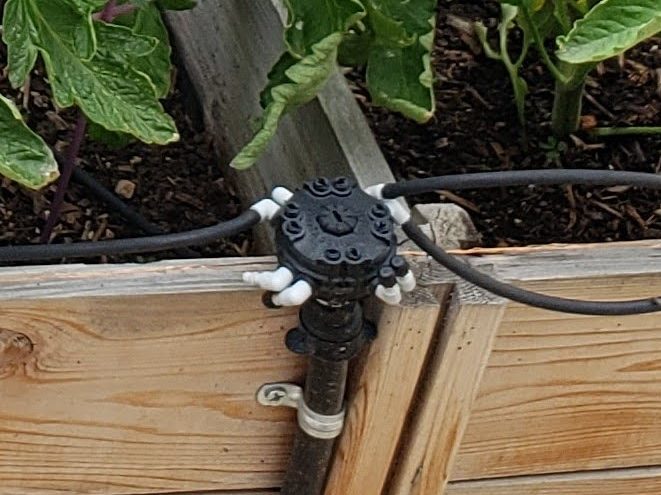
Drip irrigation hub servicing the tomatoes.

What is vertical gardening, you ask? It’s growing UP. Traditional gardens are rows of plants growing directly out of the ground, like a farm. The rows on the ground take up a lot of space, and so do a great many of the plants. But in vertical gardening you preserve ground space, and train the plants to grow and spread up – vertically – instead of horizontally.

It’s a perfect compliment to the other urban low-impact gardening technique I use: Square Foot gardening (SFG). The SFG method teaches you to make use of every inch of space around and under your plant. It turns out that most annual veggies have root systems considerably smaller than the part above ground, and SFG helps you maximize and optimize the use of every square inch of the soil under the plant, by breaking your garden into square feet, and then planting each square foot full, using knowledge about how much space a plant actually needs.

For instance, in one square foot, you can successfully grow one whole tomato or zucchini plant. In that same space you could instead grow 16 carrots, nine spinach, or four leaf lettuce plants.

(Image from https://squarefootgardening.org/2019/06/succession-planting-in-the-square-foot-garden/)

The above image is from the Square Foot Gardening website, and shows the classic recommended 4 x 4 foot raised bed with a square foot grid. My garden (below) only has one 4 x 4 square, the rest are 2 x 4, allowing for walkways and maintenance throughout and from both sides. In addition, over the years I stopped using the physical grids. I still draw or mark the spaces during planting and sowing, but I’m pretty comfortable with how much space everybody needs, even without markers.

Square Foot Gardening also depends on having the right soil blend to fill in a raised bed. In this way your garden soil is set up for success right from the start, even if you are brand new to gardening or live in partial desert like me. In addition, it’s a terrific way to start small and grow as you gain experience. It’s easy to add another raised bed. But I’ll leave it to Mel and company over at Square Foot Gardening to explain all that.

So back to vertical gardening. I am a researcher by nature and profession, so before I put any time into anything, I do a fuck-tonne of research to make sure I’m set up for success. And when I was ready to grow more than tomatoes in my raised beds, I had to figure out how to make room.

Cages

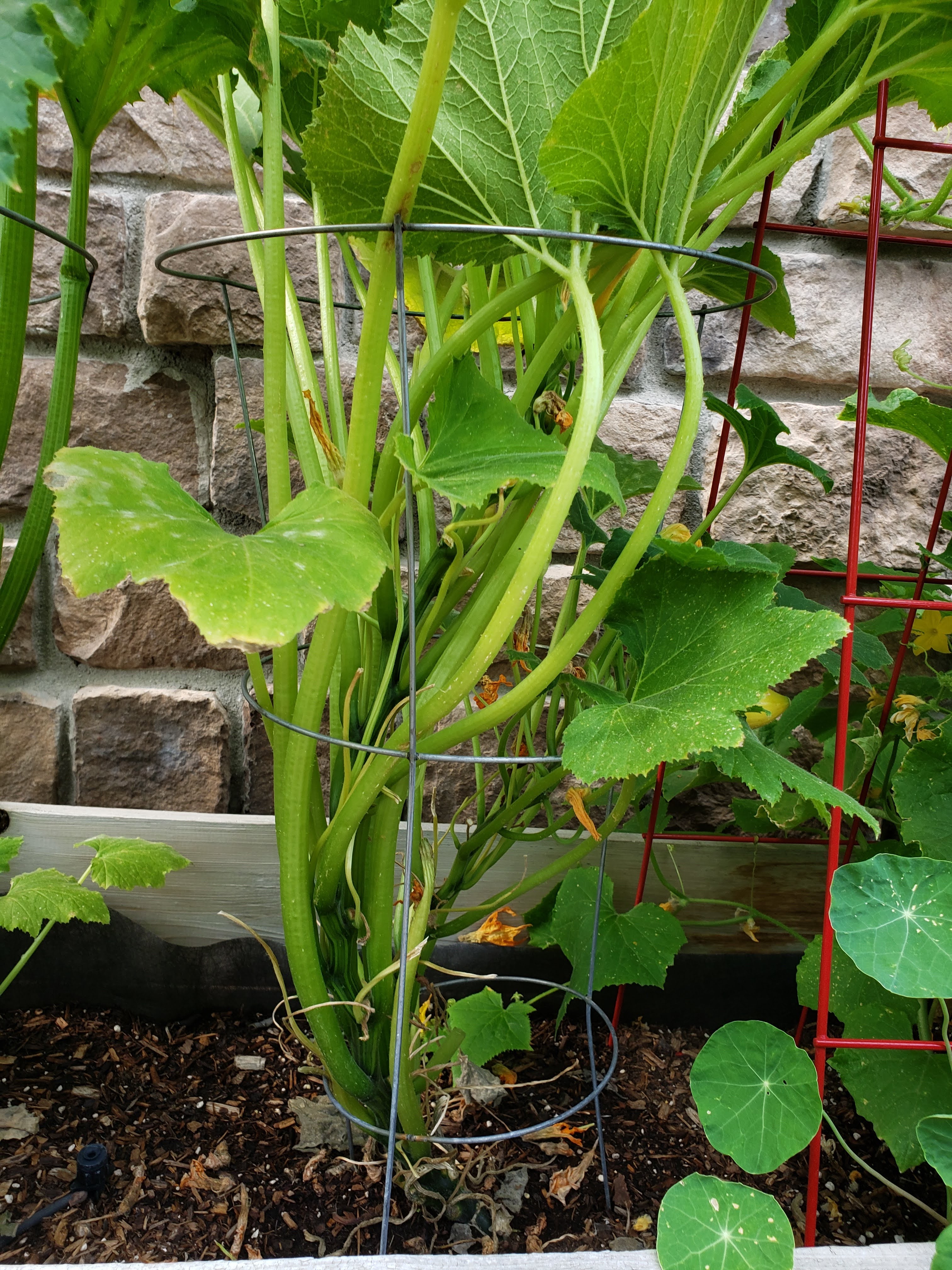
A ton of Googling got me lots of Pinterest pics, but mostly I had to figure it out for myself. So I started with traditional tomato cages, since I already had some. And that was a great place to start. Turns out, with a tomato cage and some soft Velcro garden tape, you can train up just about anything. To this day, I use tomato cages for all my tomatoes (duh) and most of my zucchini and summer squash. But last year I used one for blackberries and one for Morning Glories, and I’ve also used them for cucumbers. Oh yeah, and I sometimes use them for strawberries.

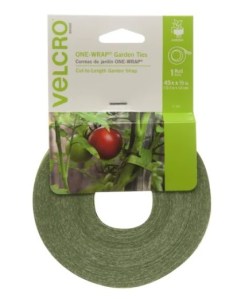
The Velcro garden tape makes it easy and gentle on the plants to tape them up a cage or trellis. And even better for the greenies out there, this stuff is reusable year after year. I collect it all into a roll when I break down the garden in the fall, and use it again in the spring/summer.

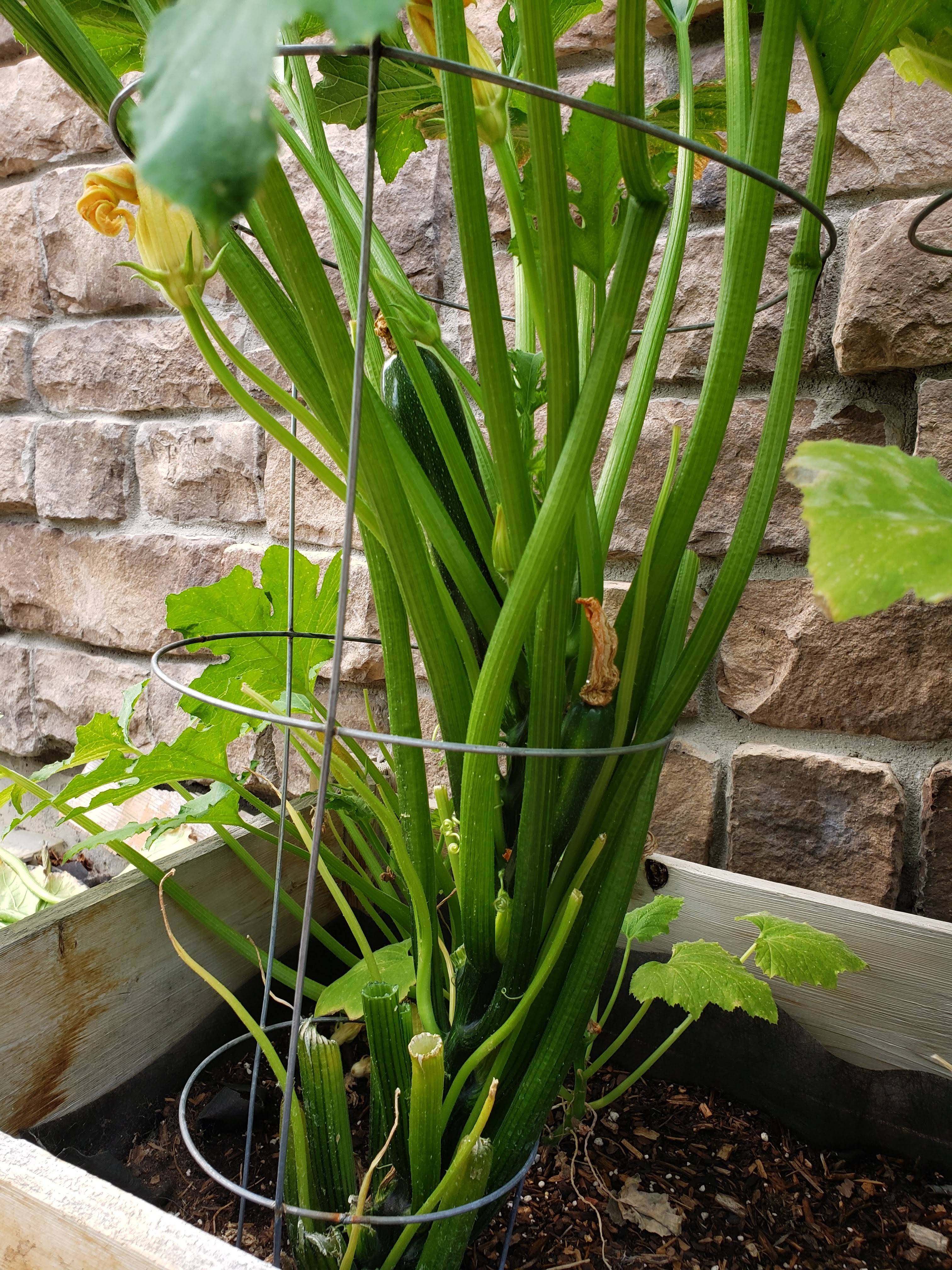
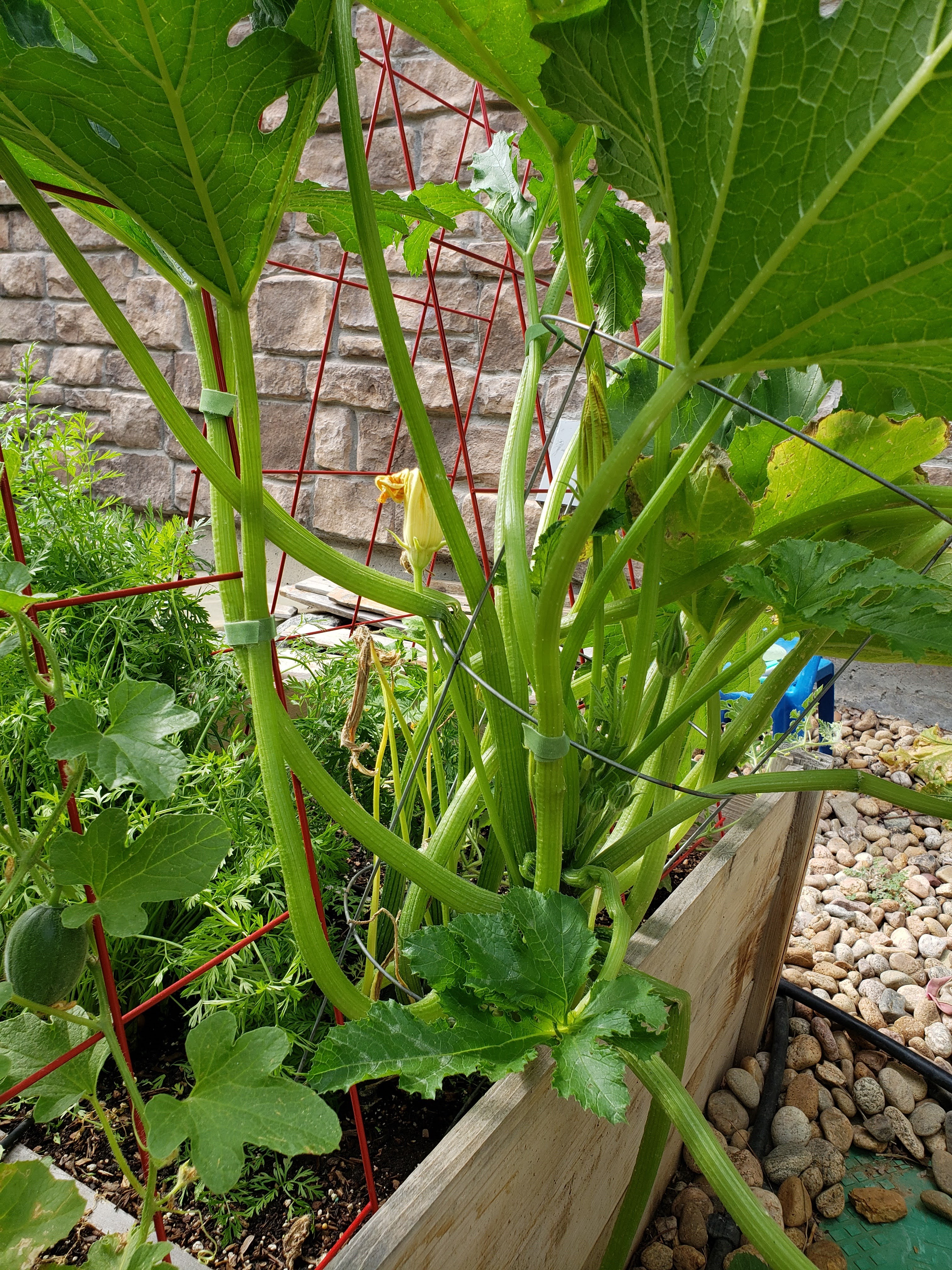
The above pics show two of my zucchini and one of my yellow squash plants trained up tomato cages. In the far right photo you can see the Velcro tape that I used to hold the leaf stalks to the cage. The zuke in that cage totally grew out of control while I wasn’t watching, and several of the leaves were too huge to get inside the cage by the time I noticed. But they’ll shade out and crowd out everything else nearby if I don’t force them up. So some of those leaves are trained up the outside of the cage. Yay Velcro!

Obviously, the better way to train them up the tomato cage is to monitor them daily, and as soon as the leaves are tall enough, simply tuck them under the cage rings. The hollow stalks of zuke and squash leaves break pretty easily, so getting them in and up when they’re young and skinny is the ticket. (I swear there’s something pervy about that last sentence, but I can’t quite put my finger on it). And the Velcro tape is your friend. You can cut it to any length, and, as long as it’s loose enough to allow for the stalk, vine, or leaf to grow in diameter a bit, you can attach them to anything. You can also remove and reattach as necessary.

Trellises

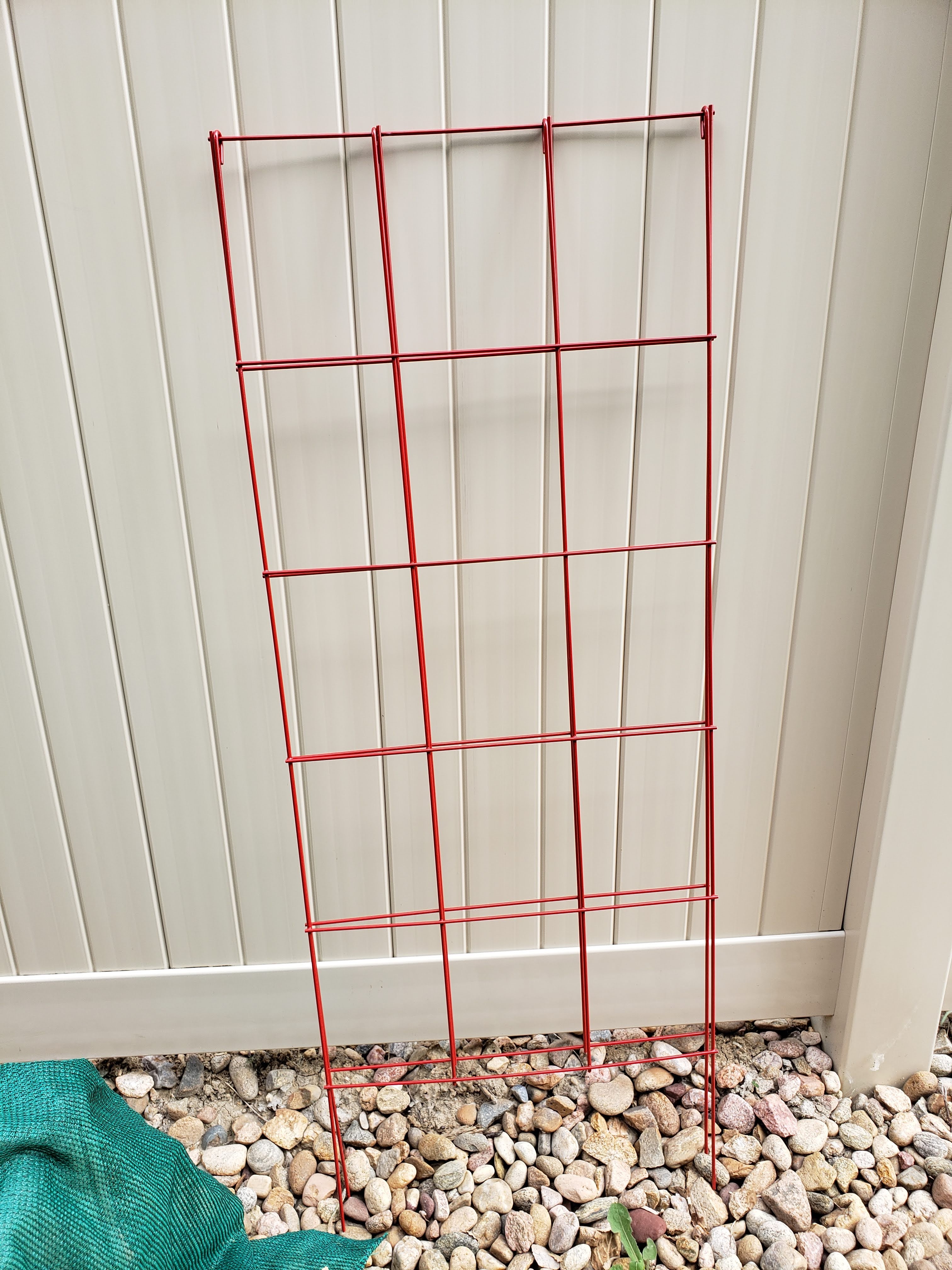
Another structure that’s great for vertical gardening is a trellis. There’s a lot of different kinds out there, and it’s taken me a while to find some I really like. I’m also always on a budget, so I like affordable garden accessories, and you can find some pretty affordable trellises with a little digging.

Combine your trellis with Velcro garden tape, and there’s nothing you can’t train up.

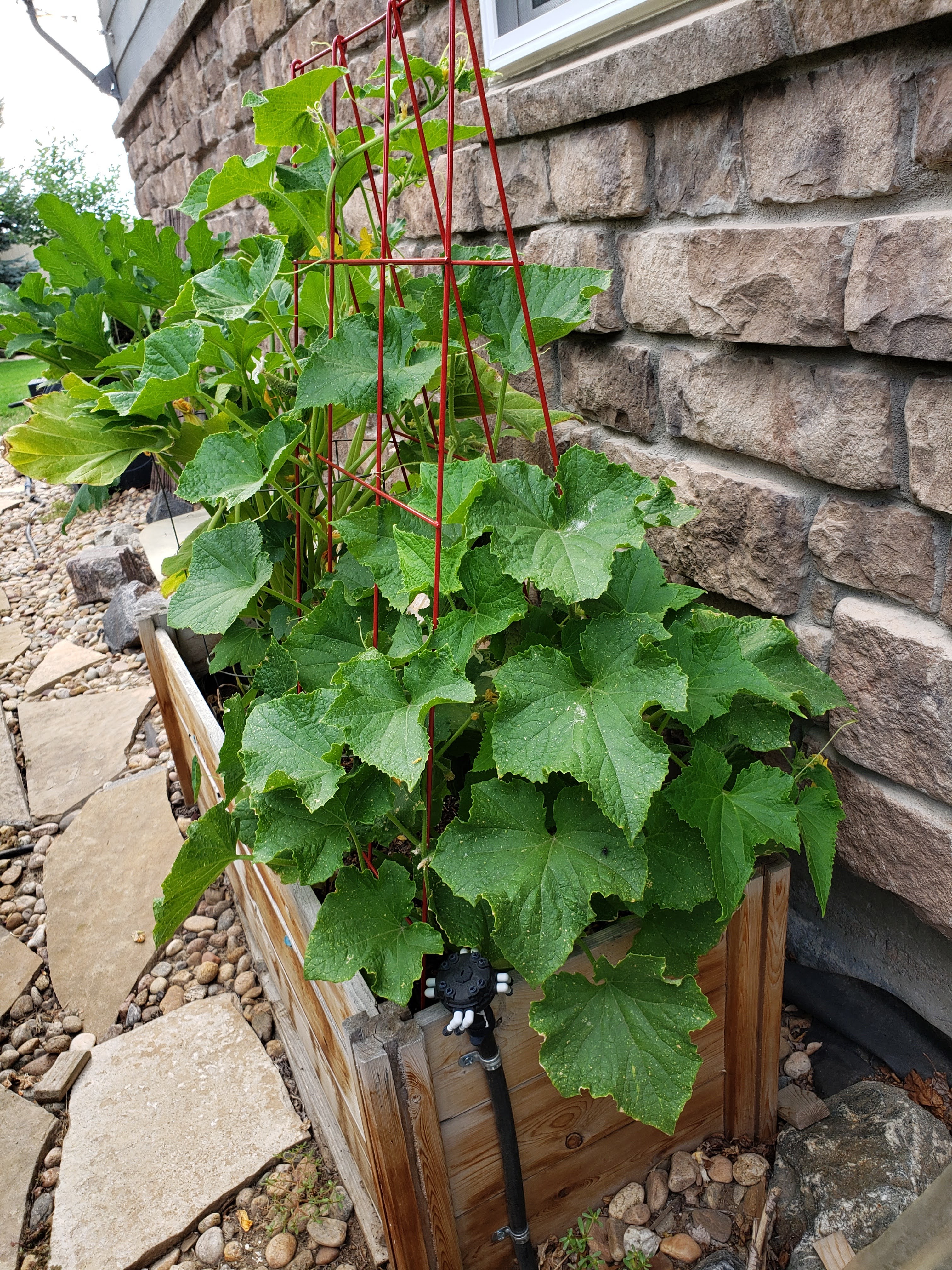
Winter squashes, melons, and cucumbers pretty much have to have a trellis to climb if you are growing them in a raised bed. Melons and squashes can have massive vines that are several feet long. That could take up an entire raised bed, even if the root system is only in the square foot or two where the stalk goes into the ground. Therefore, maximize your space. Grow up! Also, look for dwarf and bush-style varieties of your favorite vining veggie, they’re selectively bred to be smaller plants.

When I first started vertical gardening, I was really paranoid that I was going to do it wrong. I searched endlessly online trying to find some instructions for how to do it and what to use. Eventually, after getting tired of looking at cute Pinterest pics of fairy gardens and wedding arbors, I decided to just try stuff. Turns out, if you’re gentle with them and make sure they get nutrition and love, your veggies can be pretty tolerant of even some rough handling. And if you get your vertical wrong, the worst that can happen is that your plant may die. But guess what? They will die in a few months anyway because winter is coming. So just try stuff, don’t be afraid!

Like this silly bastard:

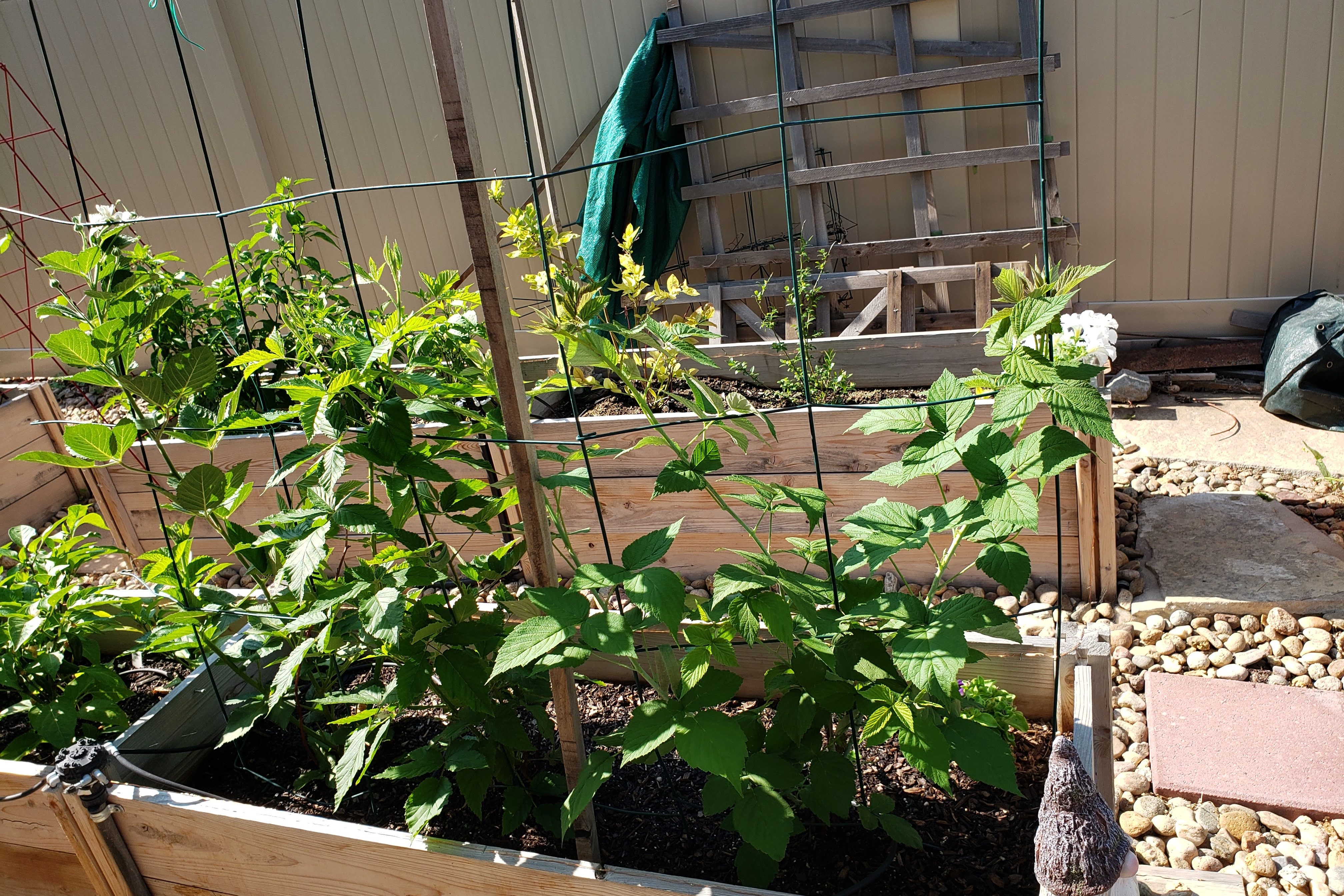
Three blackberry canes climbing up an unfolded square tomato cage that is held upright in the box by a big ole wooden stake.

I’ve never grown blackberries before, but I had a cane I picked up at the end of last summer that somehow made it through the winter, so I picked up two more canes early this season and plopped them into a box. I have no idea if this will work. I don’t know how many square feet a blackberry cane needs, but they’re growing like pole beans, so they must like it so far. It’s fun to experiment.

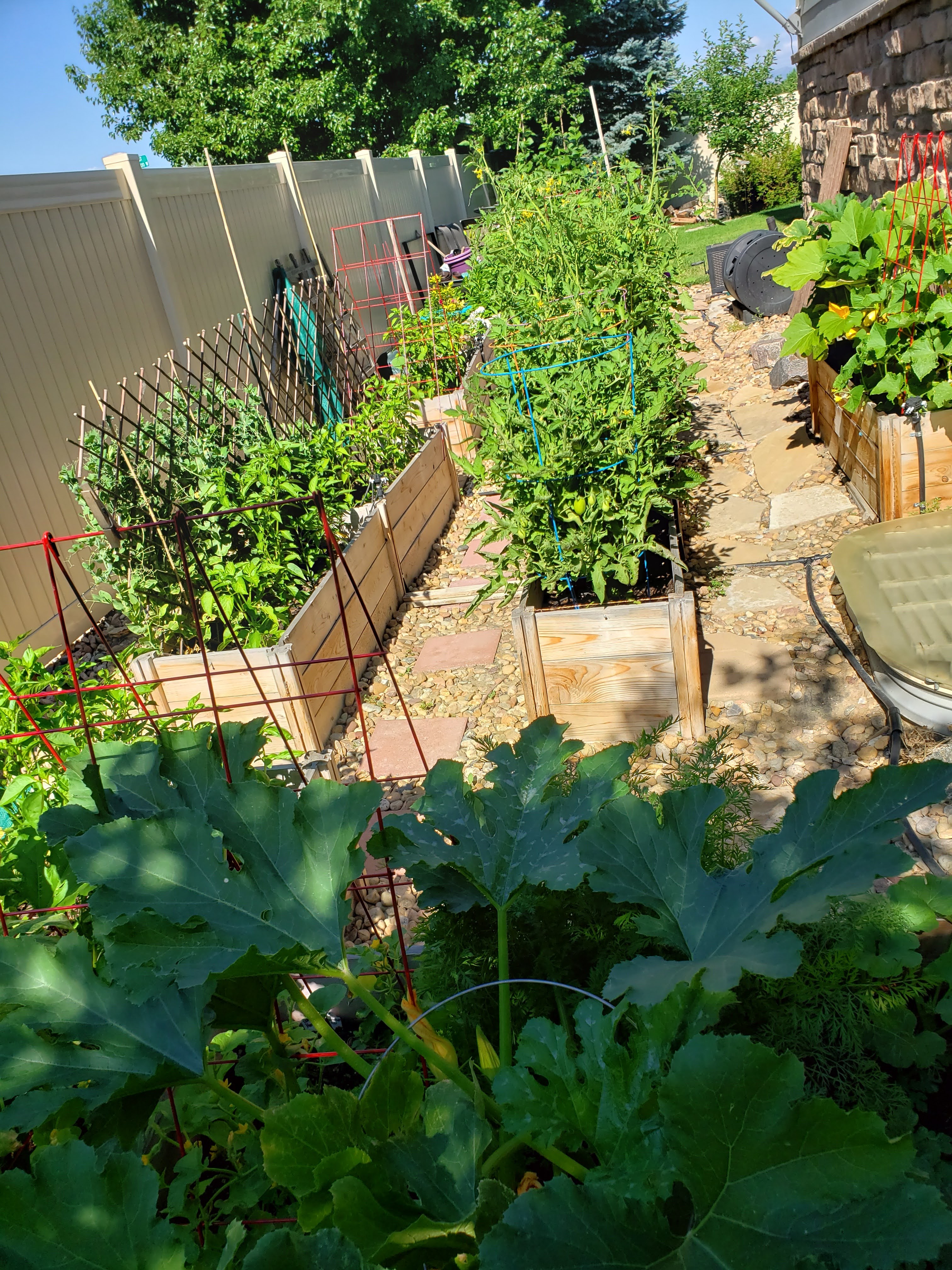
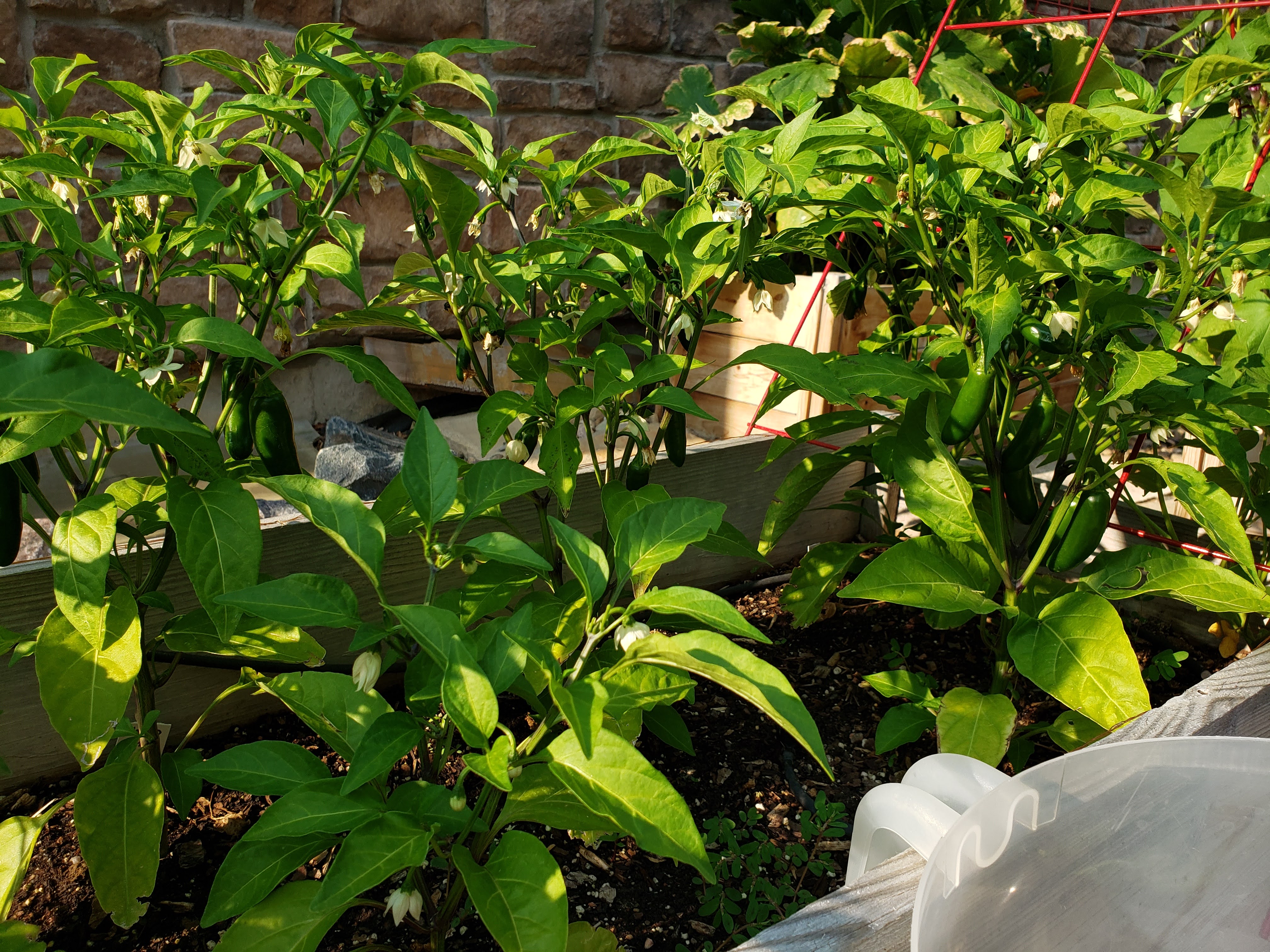
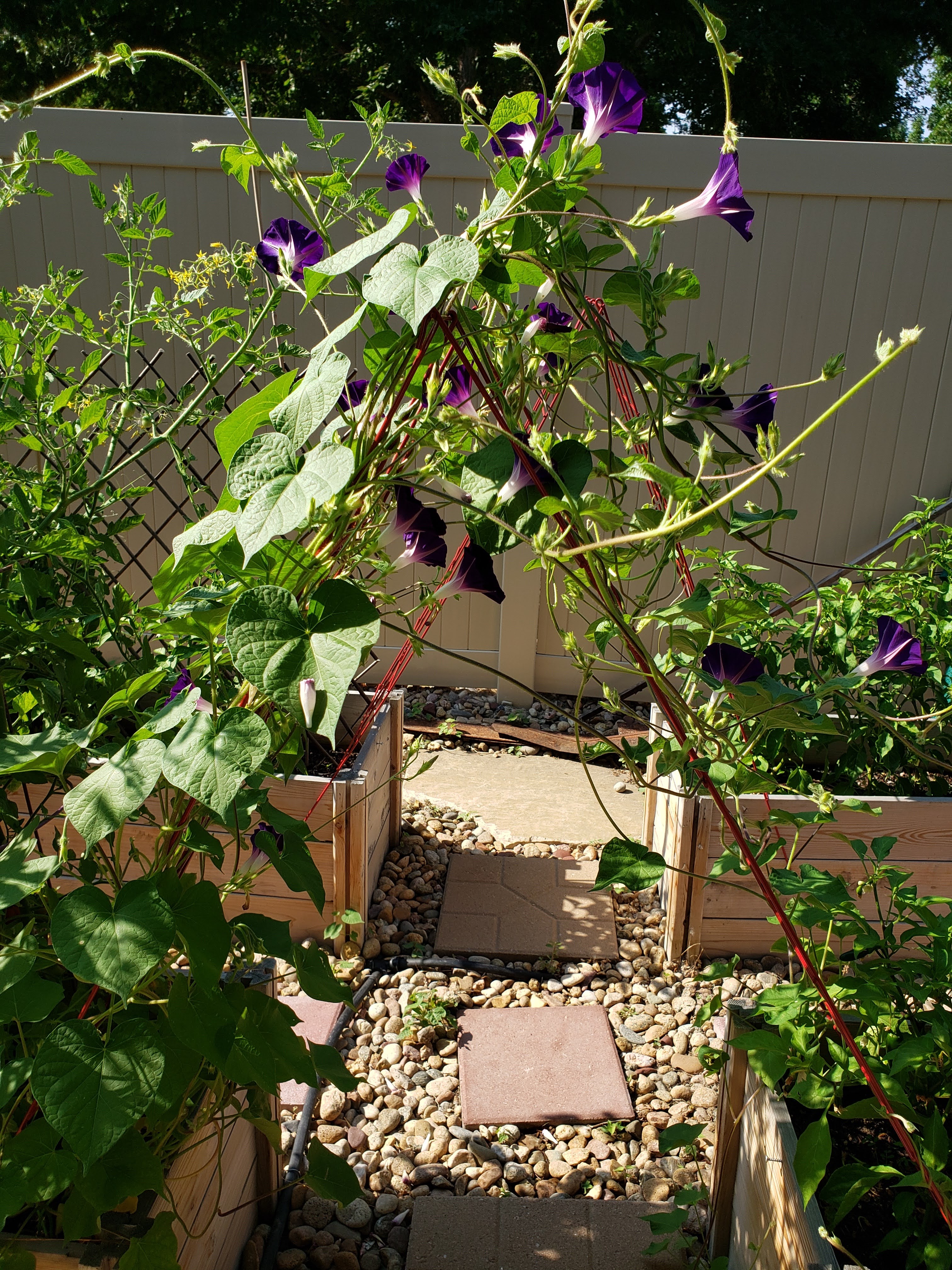
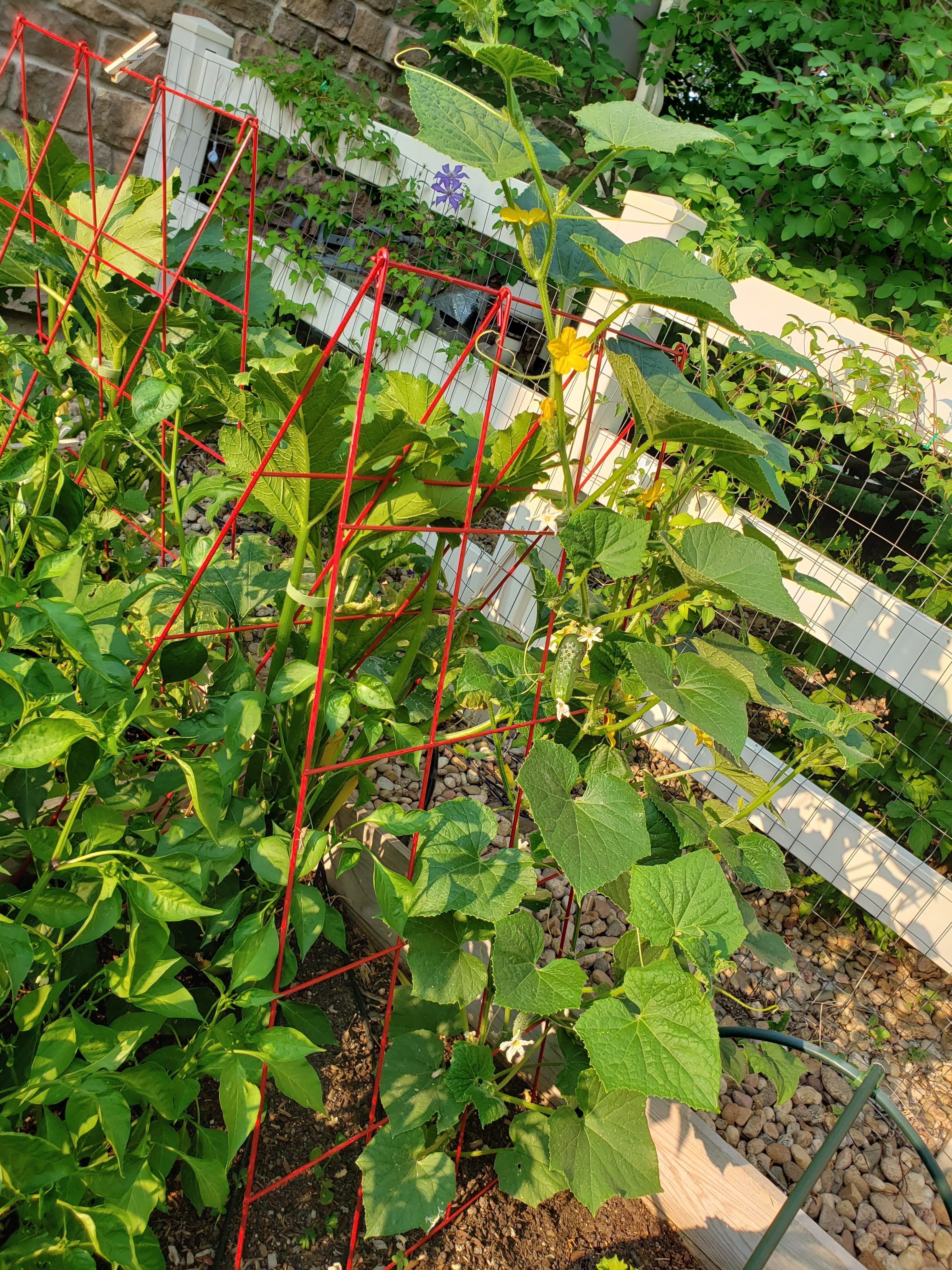
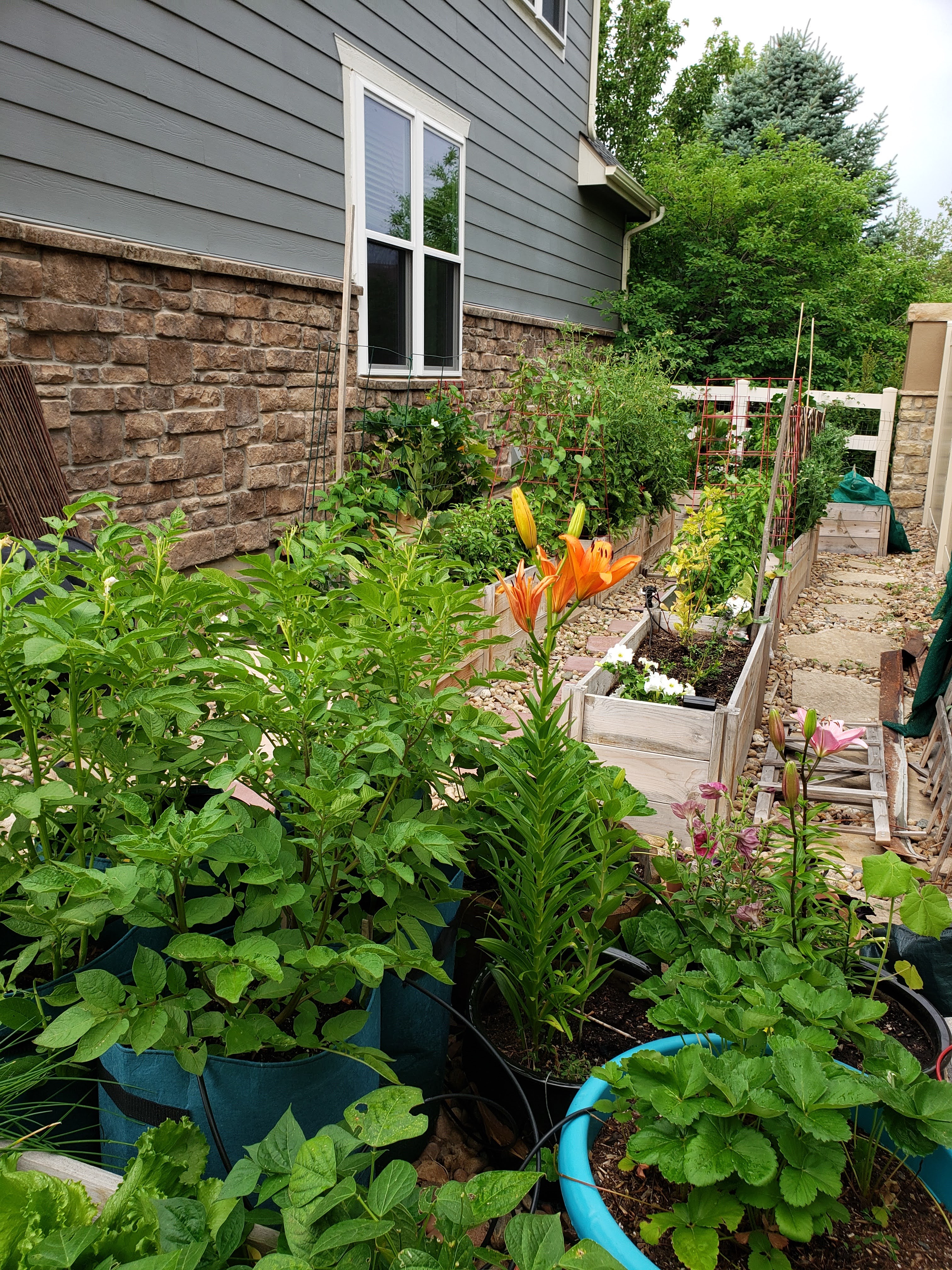
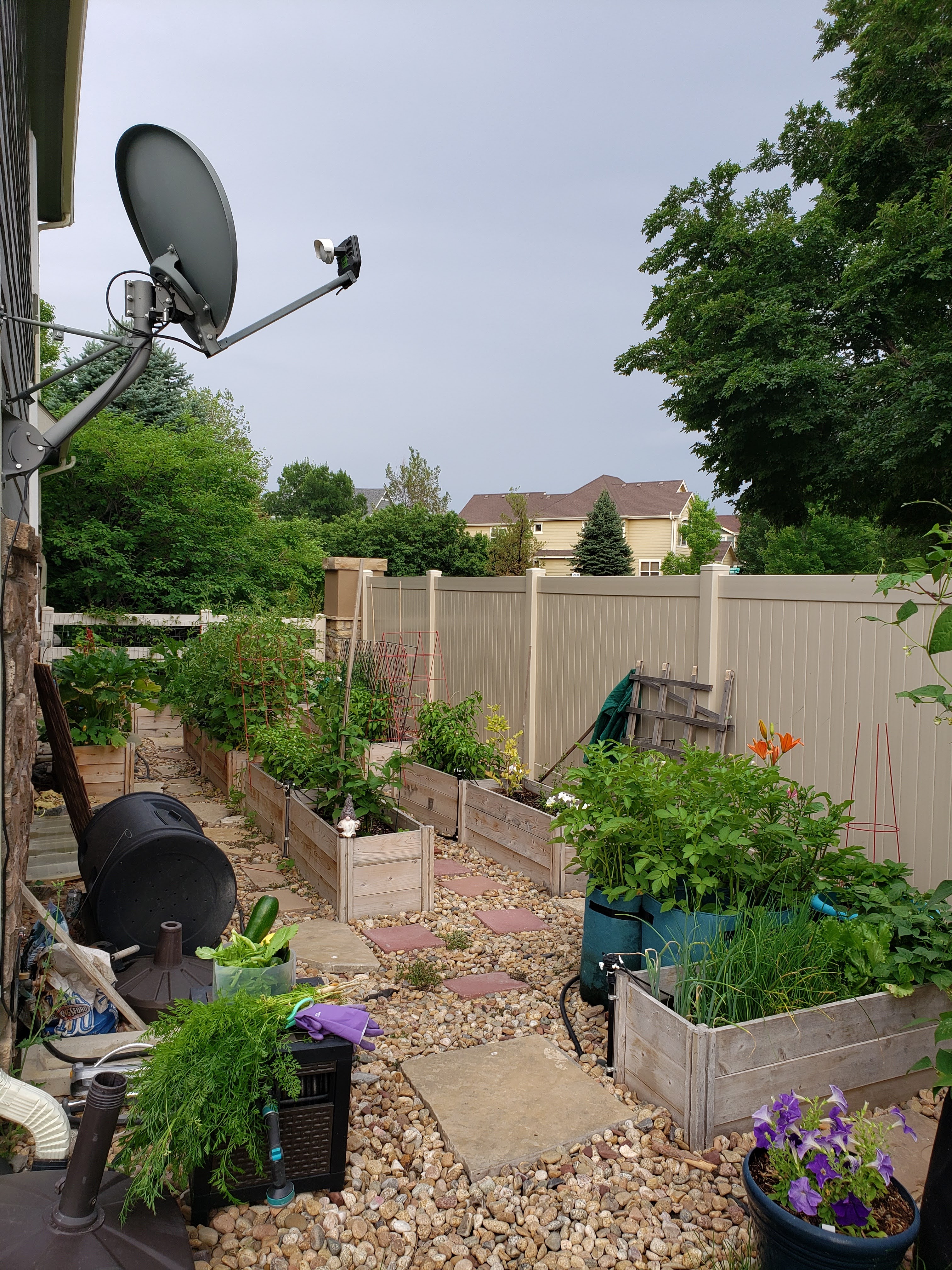
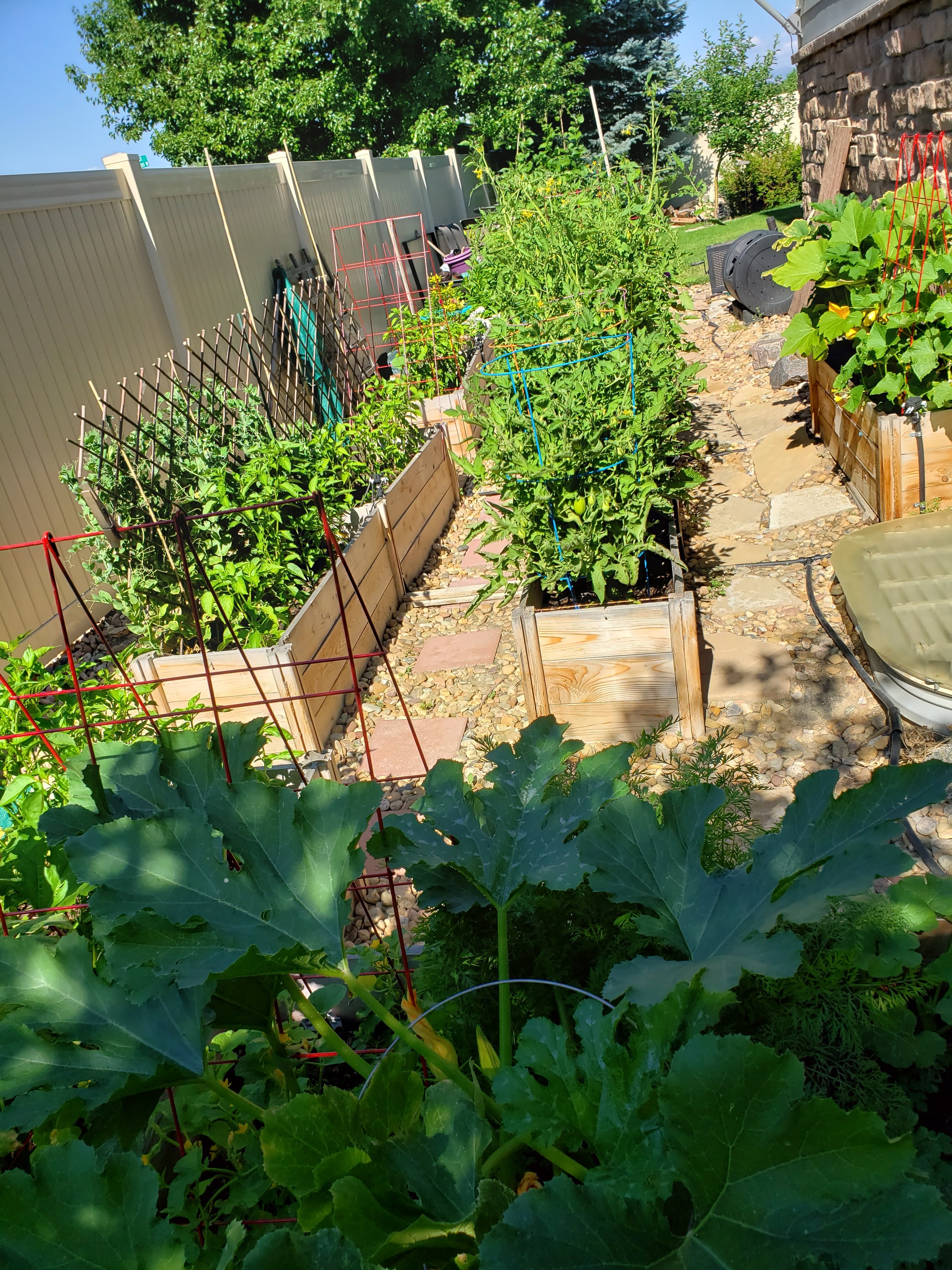
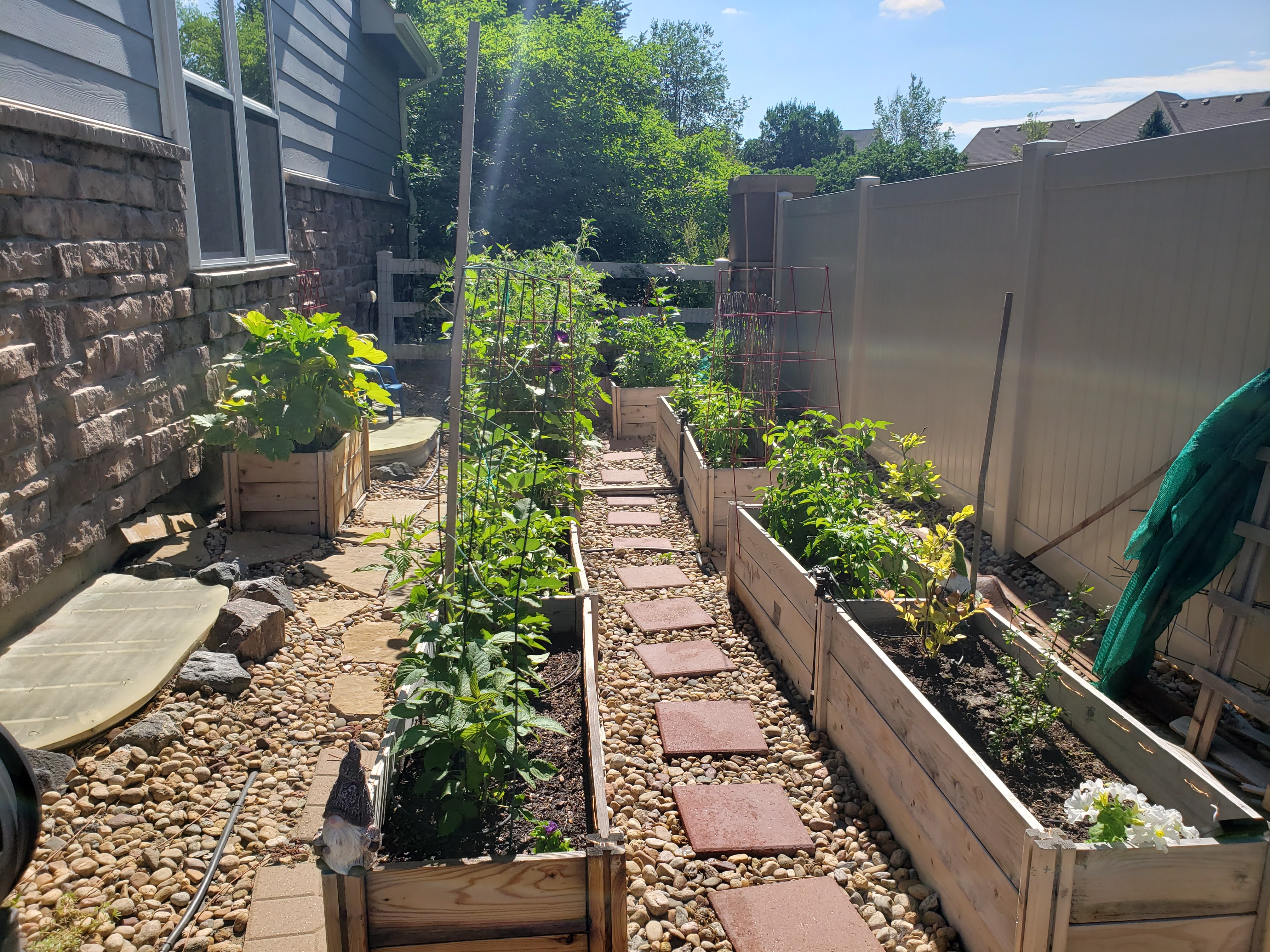
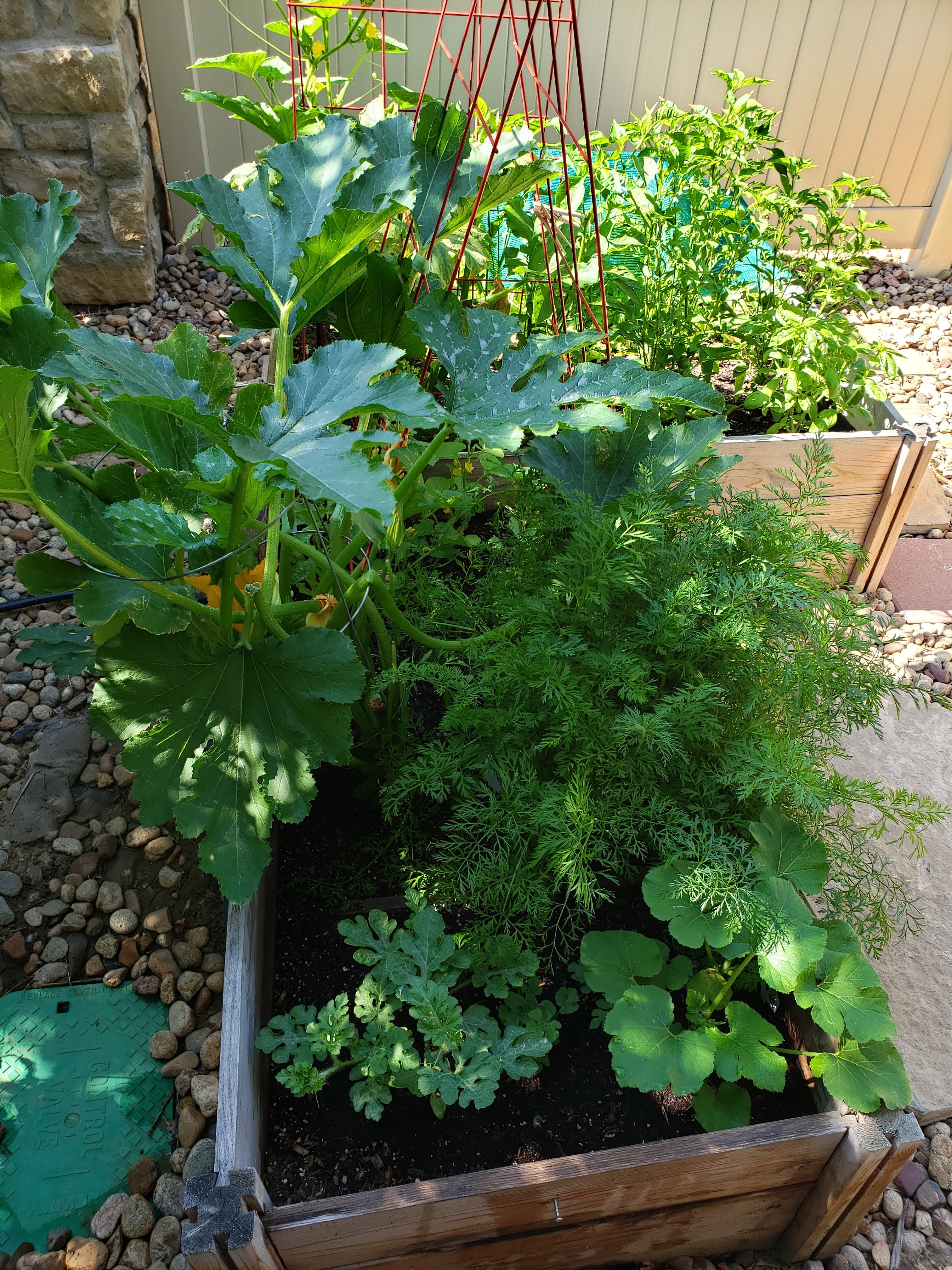
I’ll close this post with some nice pics of my bastardized vertical raised bed square foot garden:

Fucking Japanese Beetles!!

I knew it! I knew they’d be back! Little fuckers!! Sonofabitch! Fucking Japanese Beetles. Grrr.

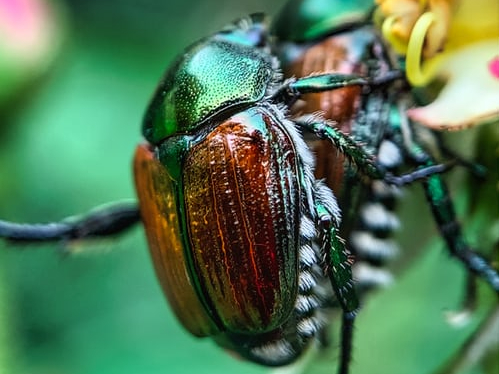
These little assholes are beautiful. I mean, really. Look at it. So shimmery and glittery, and fuzzy with stripes! If it wasn’t such a beastly torment to my (and everyone else’s) garden, I might could find it beautiful without being disgusted, like I do for the 350,000 other beautiful and fascinating beetle species.

Fucking Japanese Beetles
by Leslie Saunders on Unsplash
(No really. They’re fucking. Which I only noticed when I was checking attribution for this photo that I’d already captioned. I’m still laughing.)

But these little shitters rain destruction on your garden, and for me, that’s crossing the LINE. I don’t mind sharing a bit with wildlife, but these guys aren’t interested in sharing. They want to OWN my green beans.

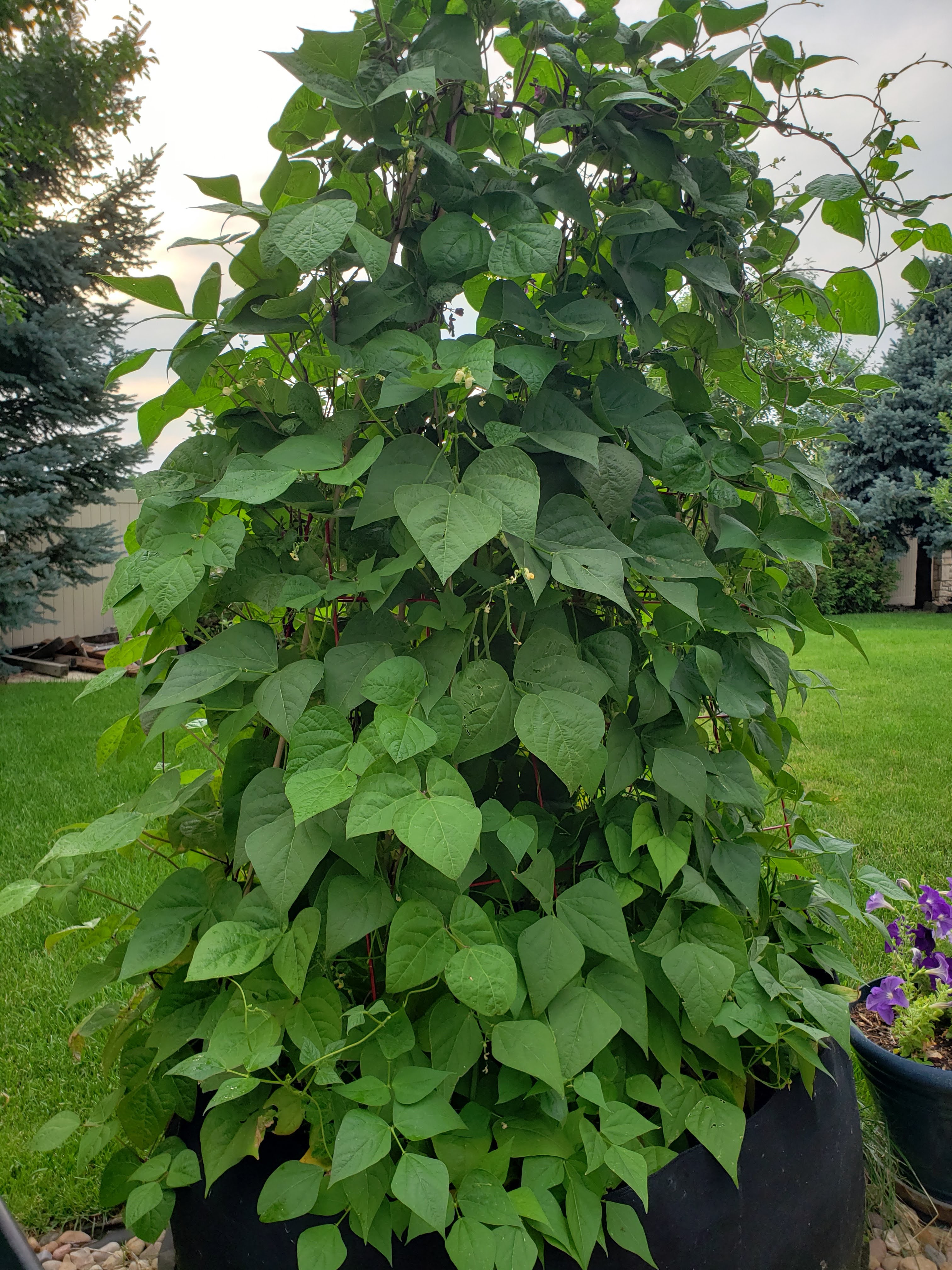
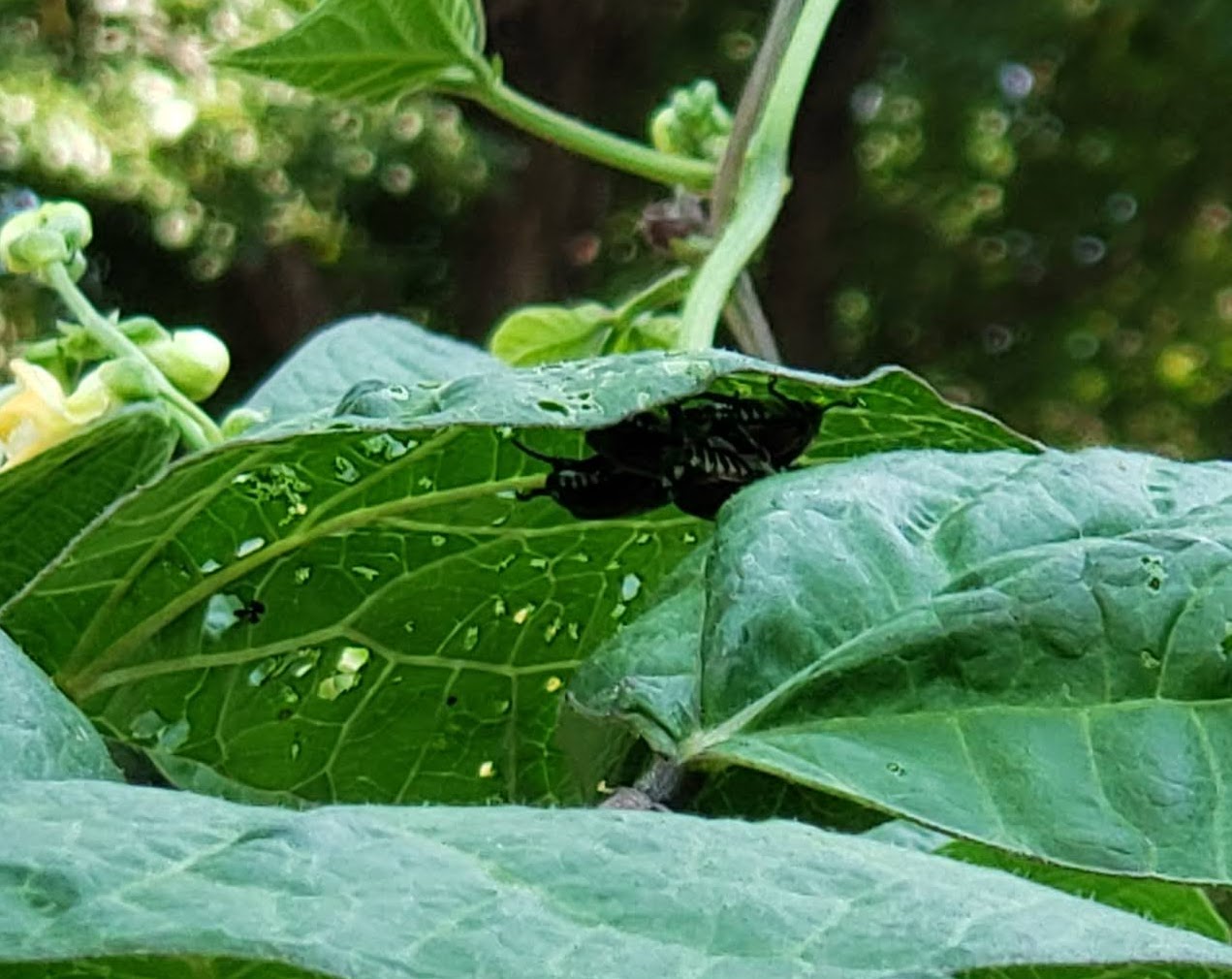
I had my first round of these bloody wankers last summer, when after only a few days, the top crown of leaves on my pole bean teepee was laced through (like that far right pic above) and dying. When I started looking carefully at the leaves, I screamed like the geeky guy in a horror flick.

Cuz eeeewwwwwww. They bunch all up. So you flip over a leaf and KABLAM! A whole facefull of beetles! And as if that’s not bad enough, the little pigfuckers fly, too!! So I’m not even exaggerating!

Ugg.

So I did what I do (research) and discovered that Japanese Beetles are lovely little invaders from another country. Bet you’ll never guess where. In their defense, it is probably not their fault they ended up here (in the U.S.); our two countries have been trading for ages, and these guys could easily have hitchhiked on all kinds of traveling vegetation.

They are an invasive species in Colorado, and they don’t have much predation in my suburban garden. In addition, they don’t respond to most insect repellants, deterrents, or insecticidal soap. As in, your weekly Neem oil ain’t gonna cut it. Plus, they can fly. So they can get away from you when you’re trying to pick them off and drop them into soapy water – which is the organic way to remove the little shits. And they’re big; at least as far as most garden pests go. They are easily half an inch long, which, combined with chowing together in a herd, makes them truly dangerous to the health of your plant. But at least they’re harmless to humans. Assuming you can ever sleep again after seeing your bean leaves covered in them.

They WILL, however, eat your veggies to death. Munching through leaves faster than you can pick them off. They don’t hurt the fruit, but without leaves, plants die.

AND. They overwinter right in your soil, so if you had a few this year, you’ll have even more next year!! Hooray!

The sucky part is that if you use a trap for them, you can actually make the problem worse because the traps attract the beetles from all around, potentially bringing your neighbor’s infestation into your garden, too. But, no pressure, if you have them and don’t get rid of them, they will keep spreading, right over into your neighbors’ gardens. Sigh.

Last summer, as I learned all about them, I chose to drown my Japanese Beetles in soapy water. I went out with my dead sexy purple rubber gloves and a big bowl of sudsy Dawn and warm water. Then I held the bowl under the leaf, and knocked those motherfuckers right in. And once they’re in the soapy water, they can’t fly out. Bummer. But sometimes they would fly away when I shook the leaf, so it was sometimes more effective to pick them off and commit insecticide manually. Barf.

But. Every time I picked them off into the soapy water, I’d find another one or two the next day.

And I’m really tired of fighting the pest fest. I’ve had an undue burden of pests in the last three years, and it’s affecting my garden joy. So this year, fuck the soapy water. I’m nuking the little bastards.

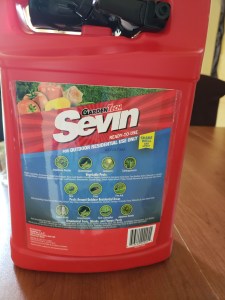
Say hello to my little friend:

Oh Yeah!! I did it. I sprayed those little shits. And I felt kinda bad about it. I felt worse knowing that I need to wait three days to harvest any of the beans because Sevin is the real deal. No snowflake-crunchy-granola-OMRI-certified-suggestion of an alternative living arrangement. Nope. This is garden napalm. Those buggers fell right off. And I’m leaving the carcasses wherever they land in the bean box, as a warning to others.

Muhuhahahaha!!!

SUCCESS!! So THAT’S what’s wrong with the zucchini!

I have been trying to figure out what’s wrong with my fucking zucchini. Two of the three plants I’m growing had yellowing, browning, and eventually, dying leaves. This is not a new problem, I’ve never had great production from my zukes, and never understood how folks have enough to make bread or to give away. Hence my fucking zucchini frustration. This summer has certainly been the worst so far. See my previous post for pics and descriptions: Something is Going on with the Zucchini.

That being said, this summer I’ve focused on solving this issue, and have finally made some progress. As explained in my earlier post, I used a generic vegetable fertilizer and didn’t see any results after a week; the leaves actually got worse. So I tried the other suggestion I’d found through some research: magnesium. Using a solution of Epsom salt and water, I treated the base of each of my cucurbits, and then left for a camping trip.

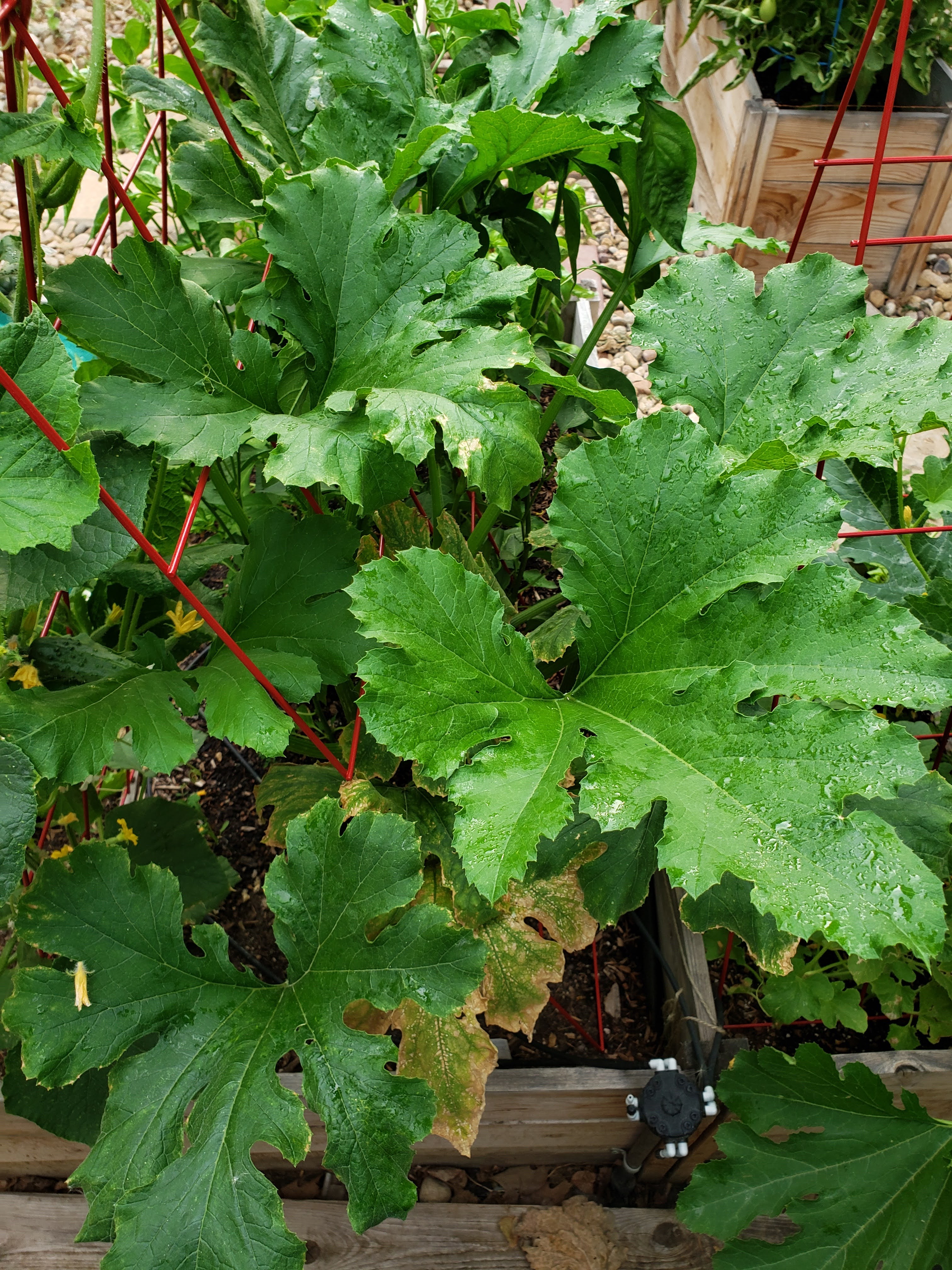
And SURPRISE!!! When I returned after several days, the results are significant and positive!

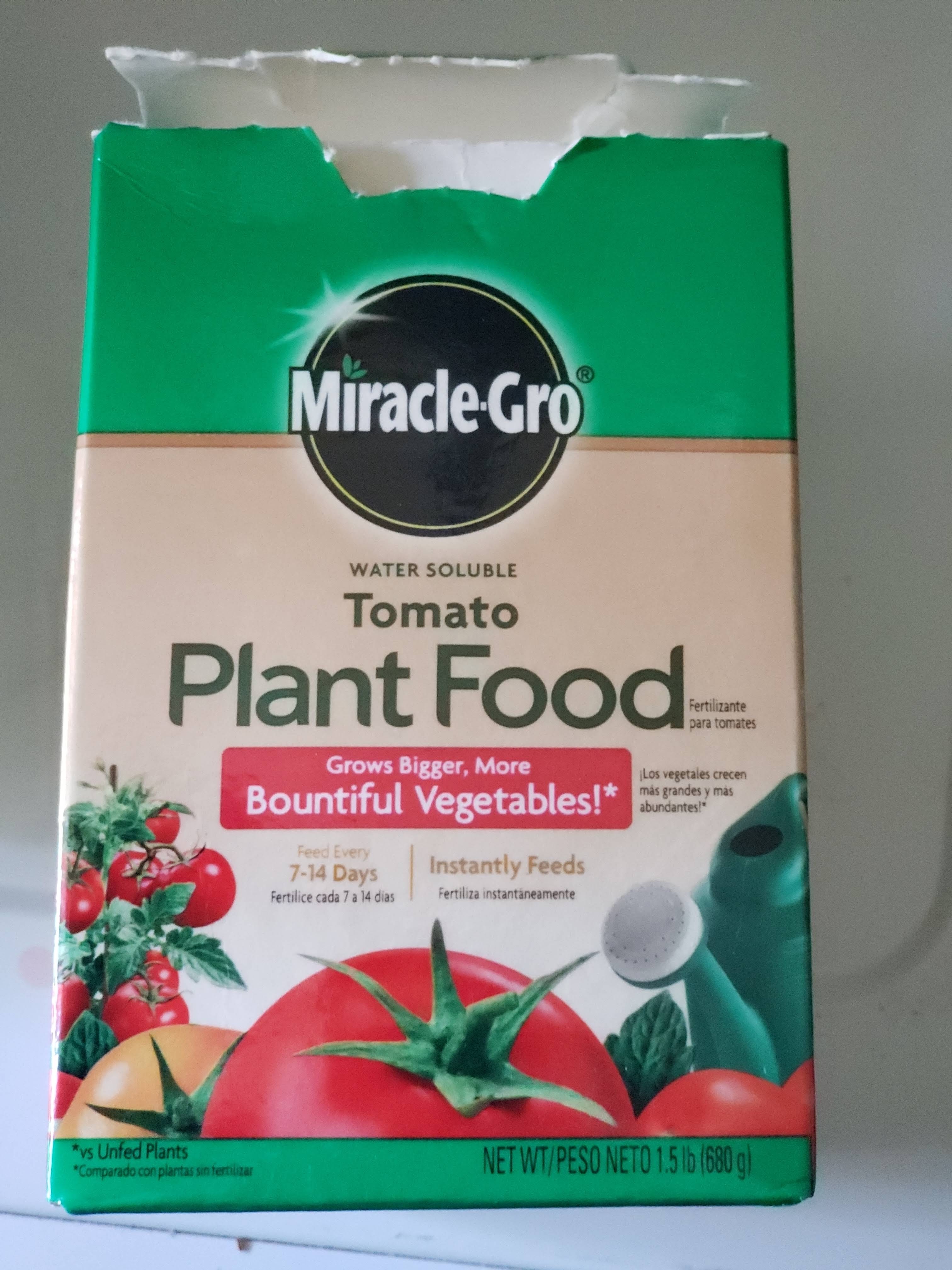
I feel pretty confident that the Epsom salt made the difference. A week before the Epsom salt treatment I used a generic vegetable fertilizer (Miracle-Gro Tomato Plant Food 18-18-21) on all the veggie plants, and while everybody definitely got a little greener and bigger and healthier looking, the fertilizer didn’t even make a dent in the zucchini leaf problem. One week post Epsom salt treatment, however, and the results are clear and definitive.

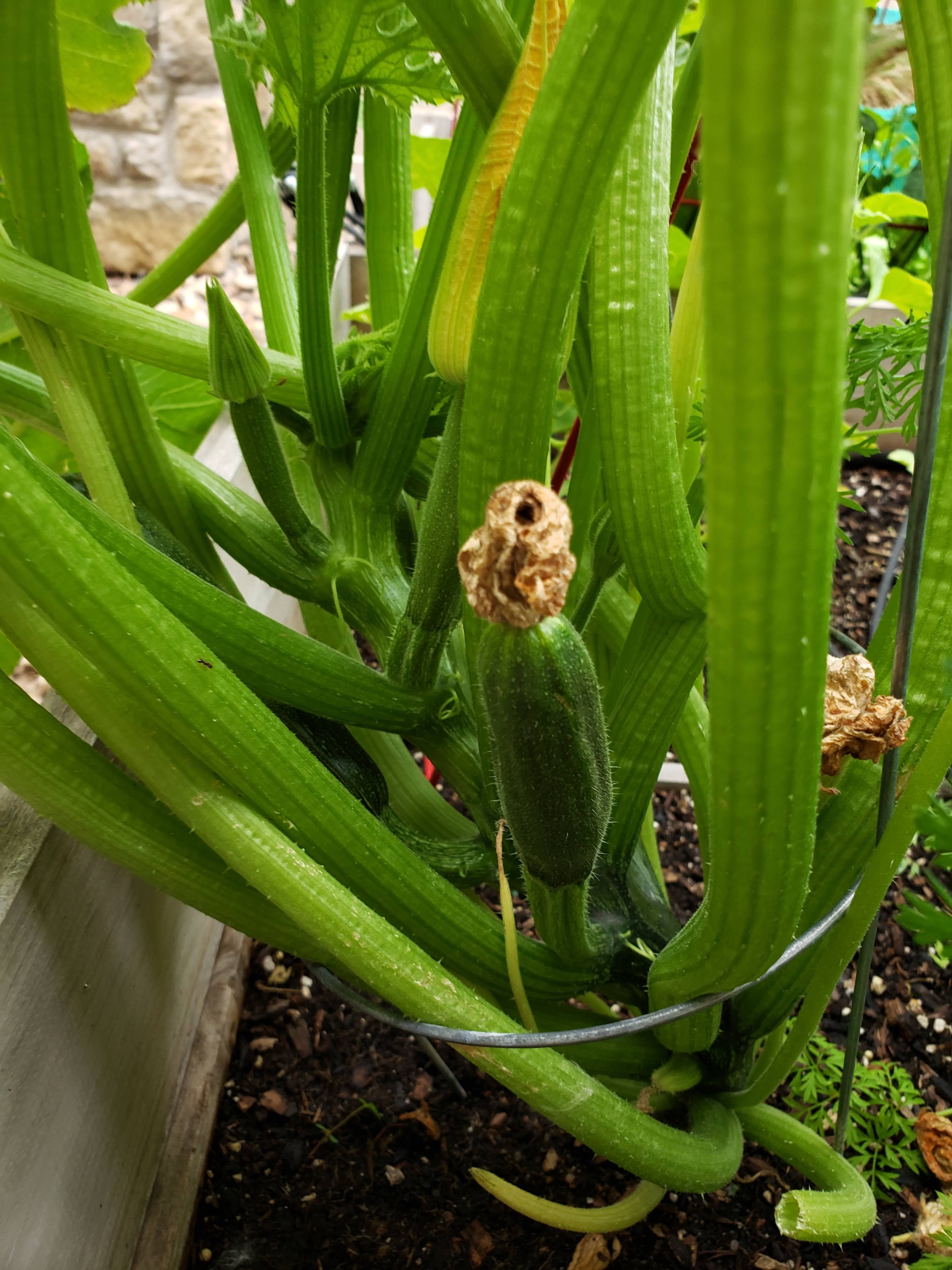
There have been other improvements as well. I read that the magnesium is required for uptake of nutrition, so an Mg deficiency prevents the roots from taking in the necessary good stuff. Since I did the fertilizer a week before the Mg, I was able to see that the fertilizer didn’t really do much to improve the zukes. Besides the yellowing and browning leaves, I had also noticed that the plants were producing very small and slow growing fruit. I even noticed some end rot:

My previous experience with summer squash is that once pollinated, the fruit grow to harvest size in just a few days. So a zuke this tiny three weeks after pollination is an indication of something wrong.

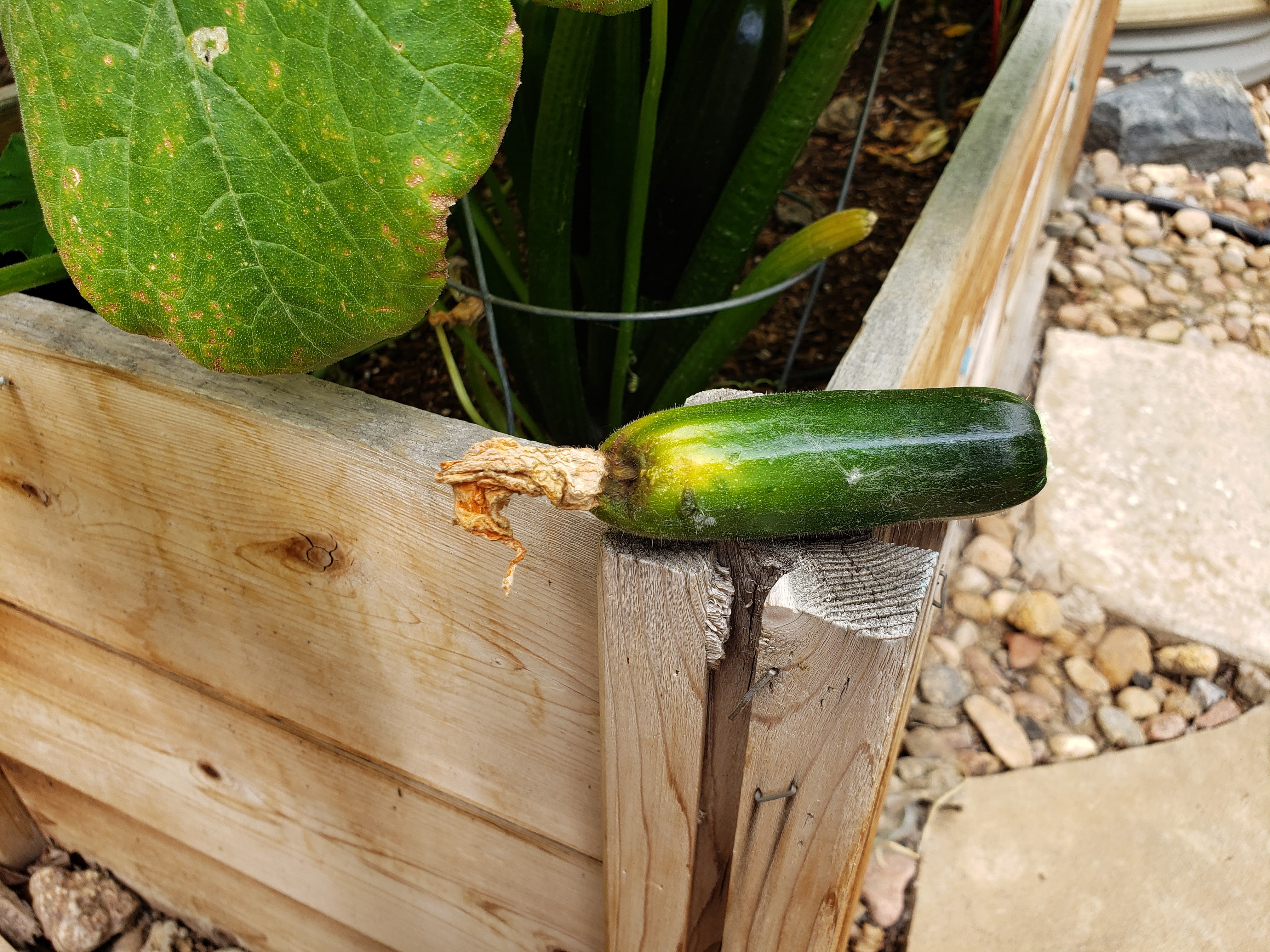
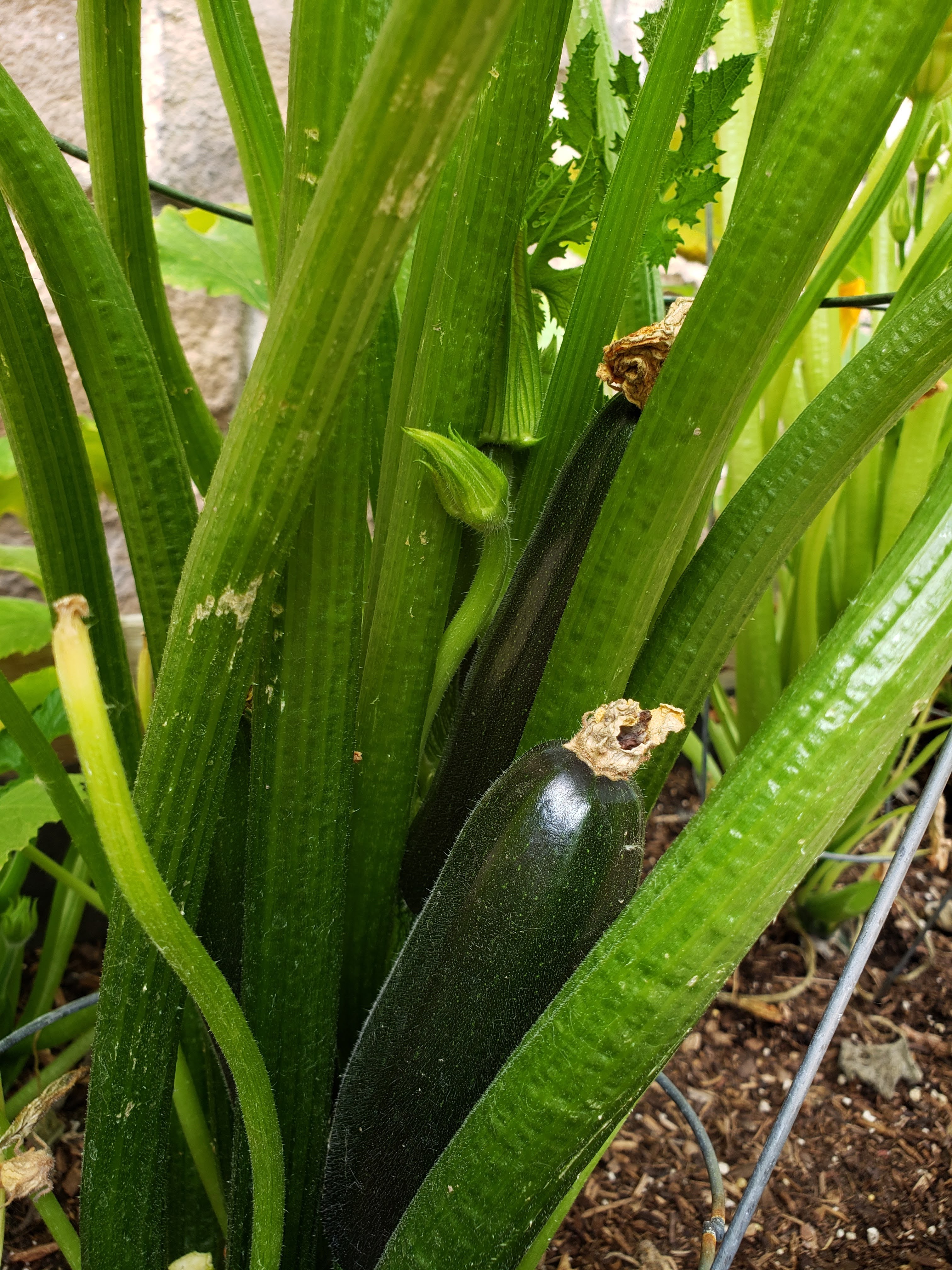
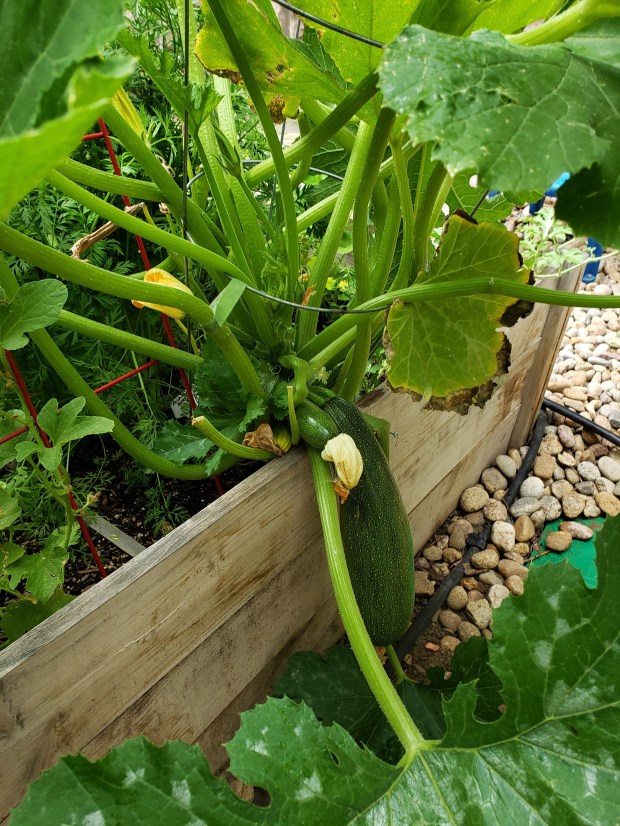
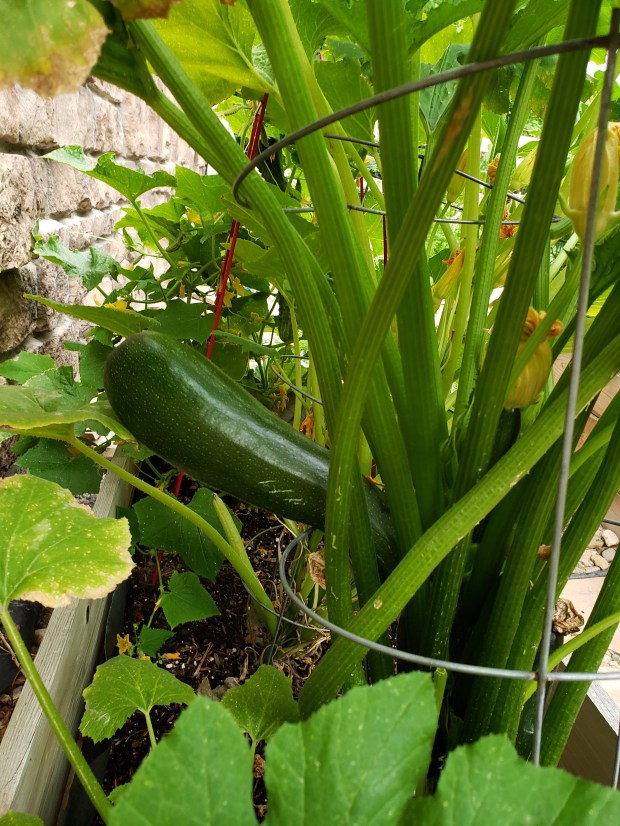
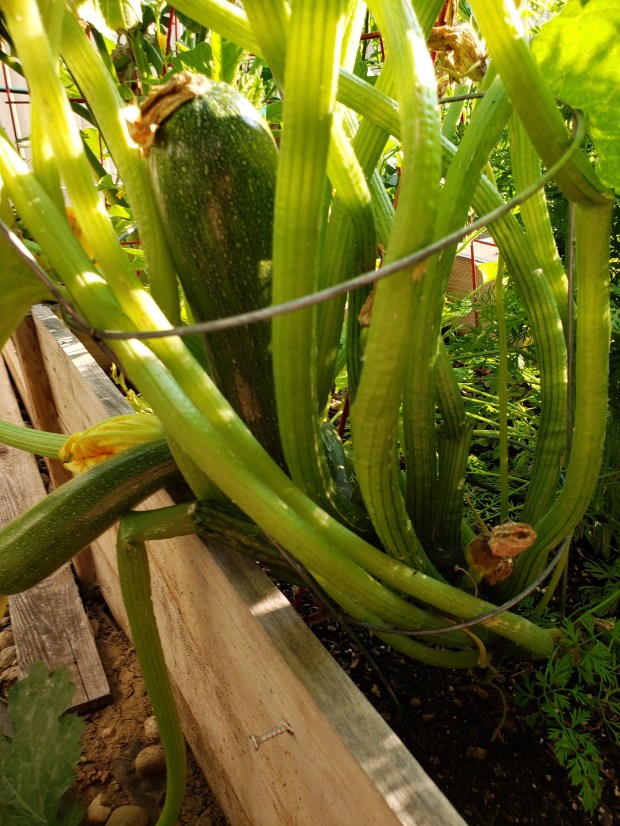
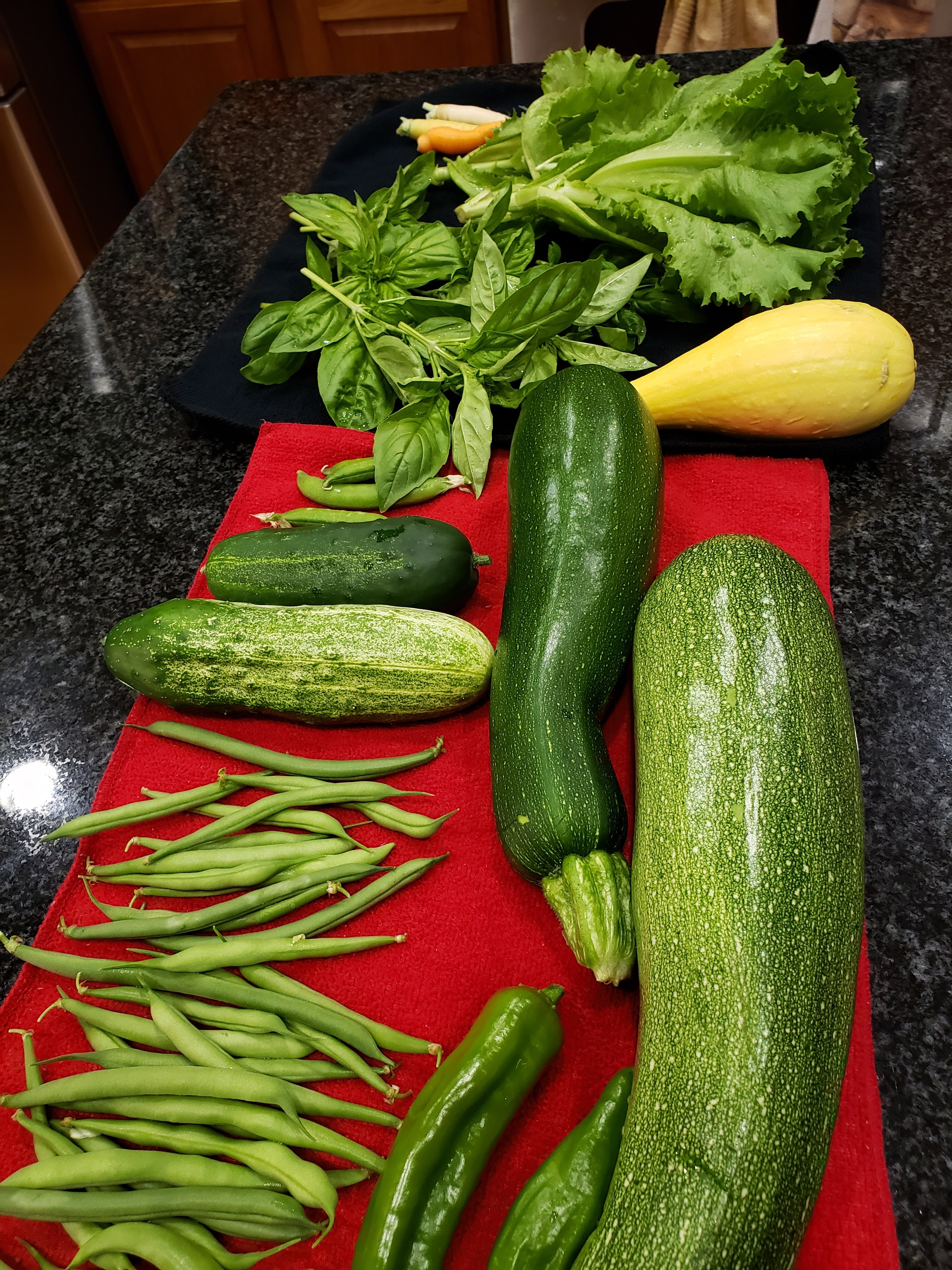
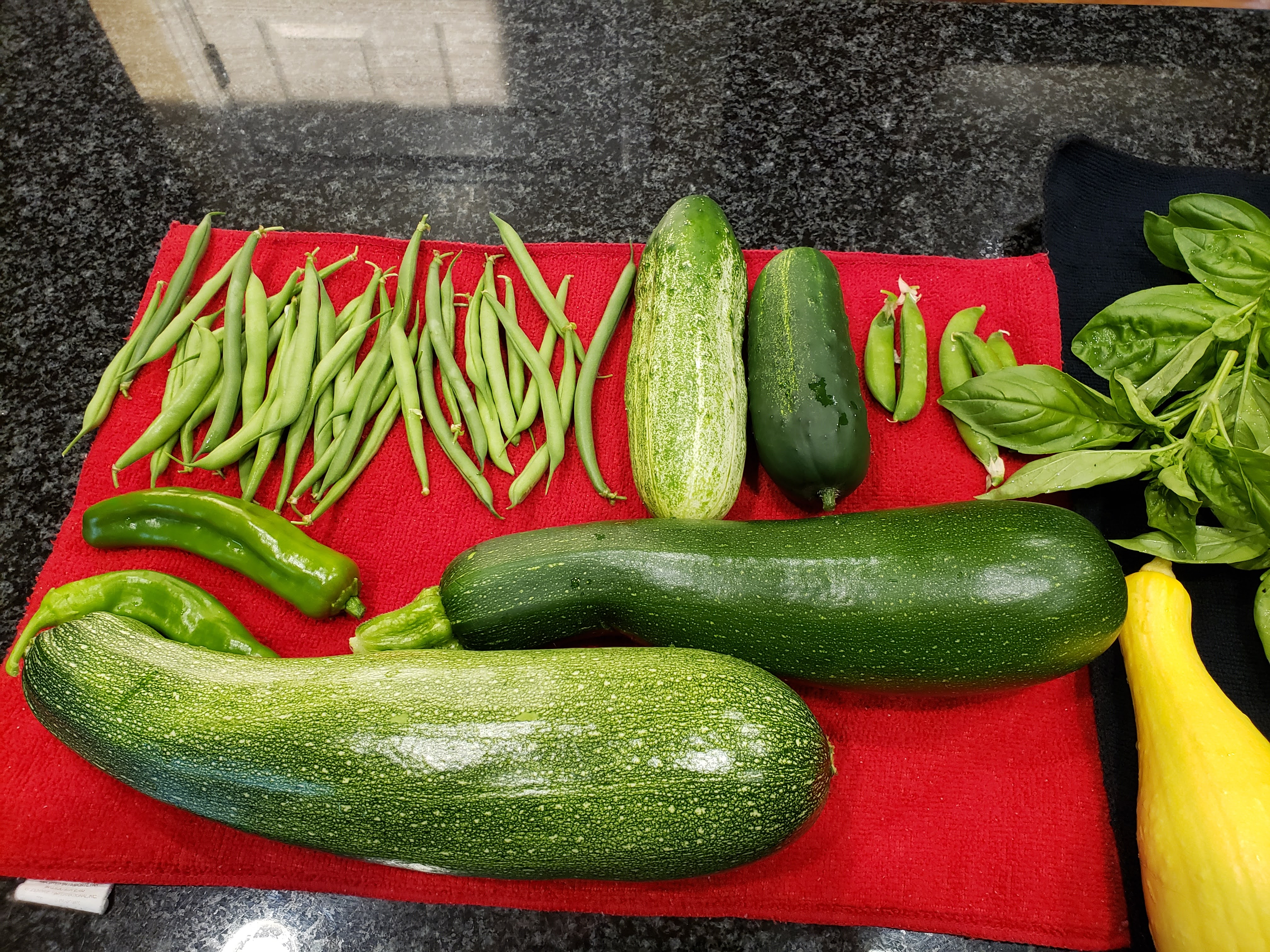
The great news is that this problem seems to be fixed as well! One week after Mg treatment, and check out these stupendously phallic bad boys:

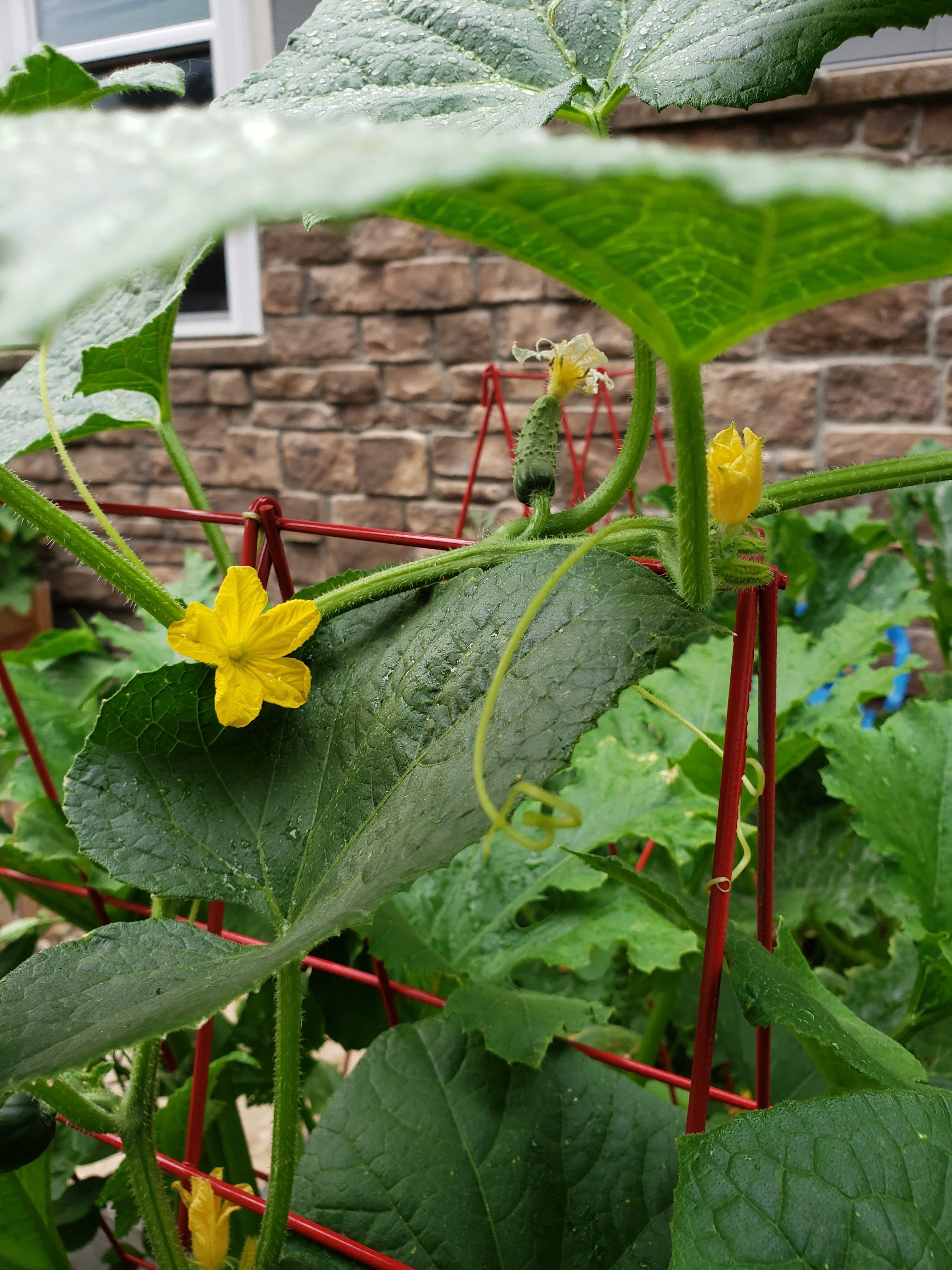
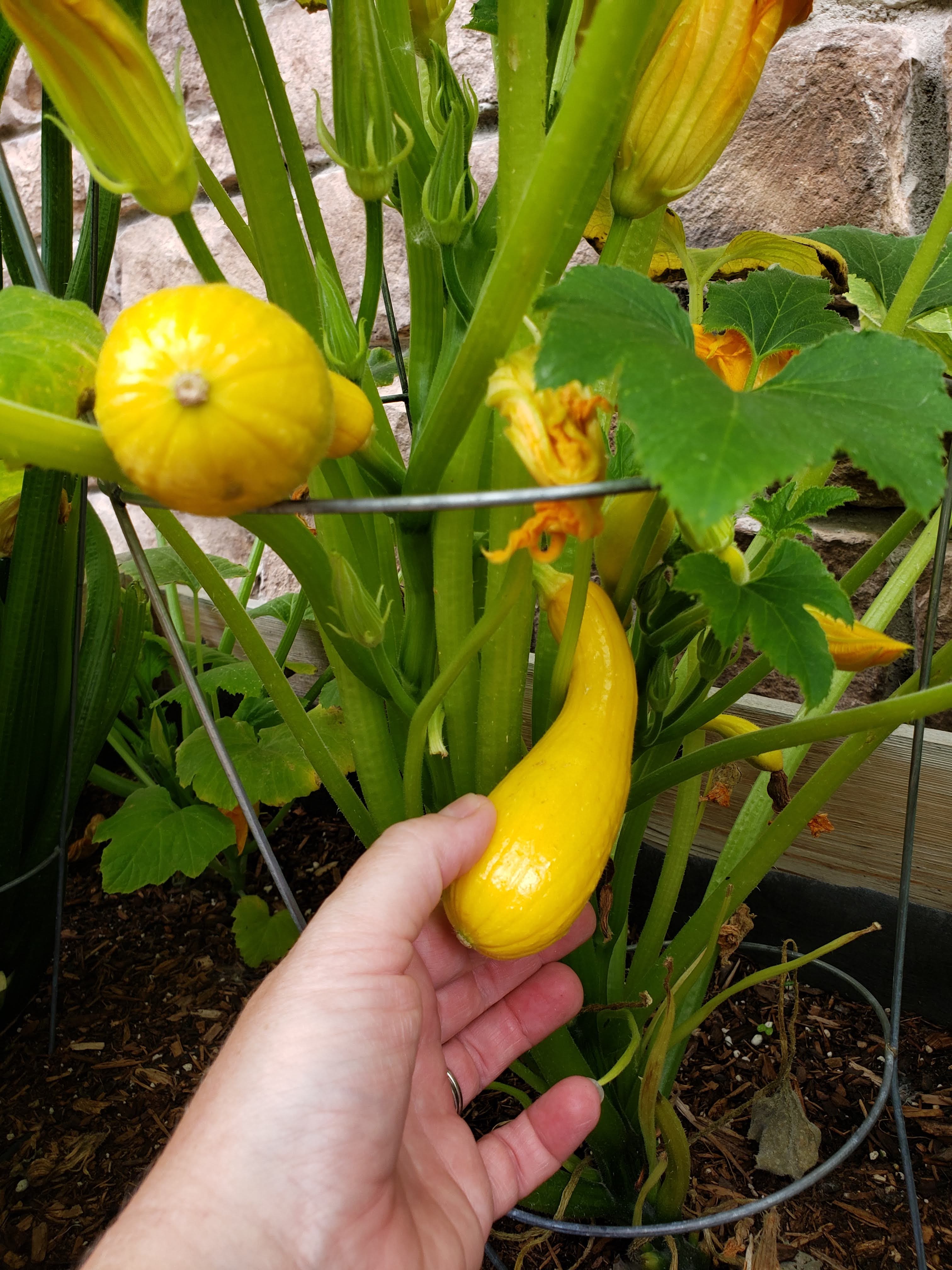
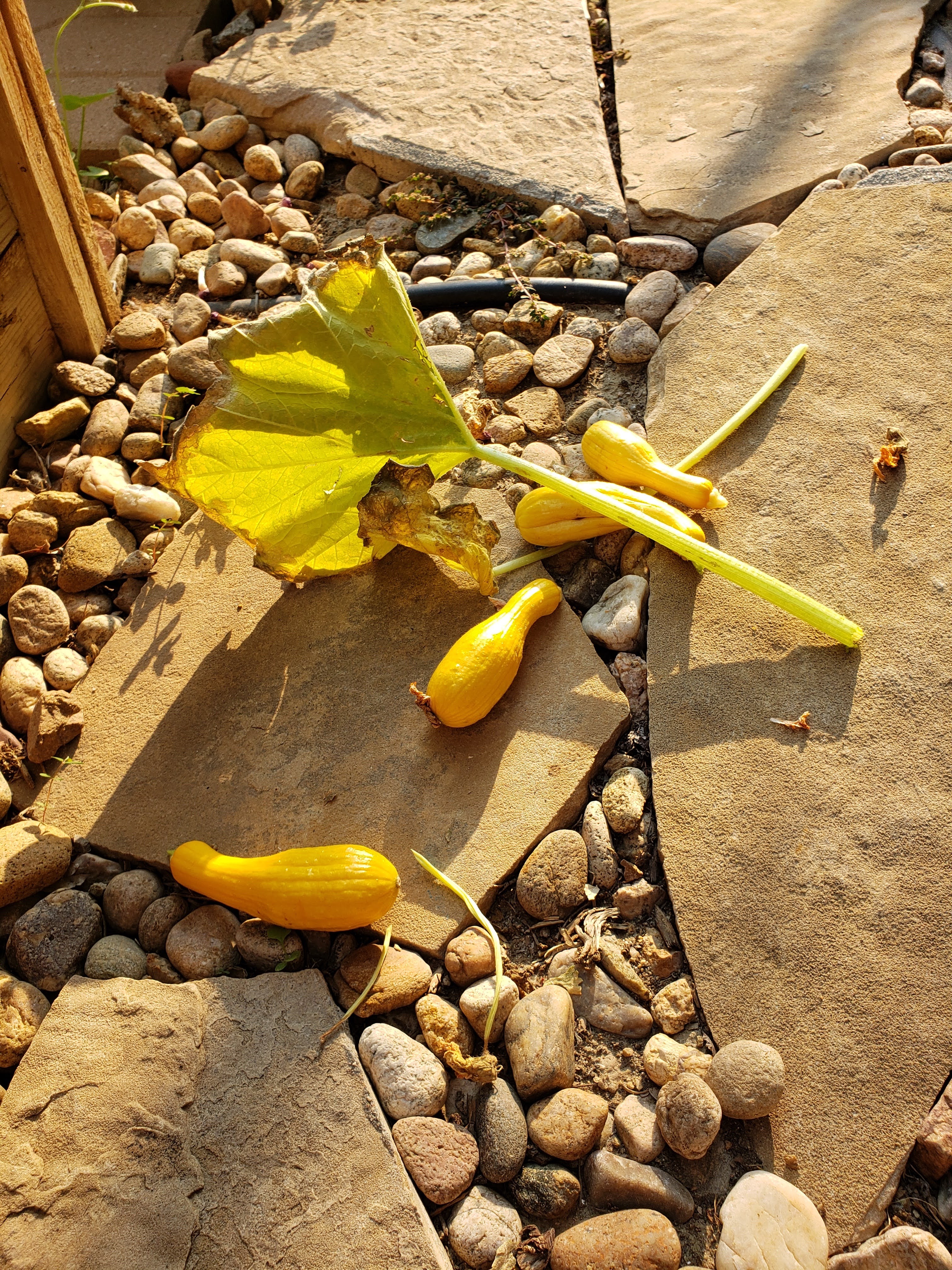
More good news came from the yellow squash and the cucumbers. My cukes and crooknecks had been growing, but slowly. I had a gazillion flowers, suspiciously few fruit, and the tiny little potential squashes were pollinating but not setting. A squash that didn’t pollinate completely will stay very tiny (tinier than in these pics below), but will also become soft. These squash obviously pollinated, were firm, and even grew a little bit, but they never got any bigger than this, even two to three weeks after the bees knees did their sex magic.

But one week post Mg treatment, and voila!! Cucumbers AND squash!!

In past years I’ve always had lame harvests of squash and zucchini, and always wondered how others got so much! Now I know why. I suspect I’ve had this magnesium problem for a while, but never carefully and intentionally tried to fix it. Partially, that is because in previous years I’ve had massive pest infestations, and have usually associated these issues with pests. This year, however, I’ve had few pests, so have had the time and brainspace to do some goddam sciencing!!

A little tour of my happy place

Please enjoy this neck-crooking video tour of my 2021 garden from right after planting, back in May. I’m not much of a photographer, and I clearly had some camera orientation problems, but if you can tolerate the turning and neck pain…

A quick tour of my garden from May, right after transplanting. I am not responsible for any spinal injuries incurred from watching this video.

Something’s Going on with the Zucchini

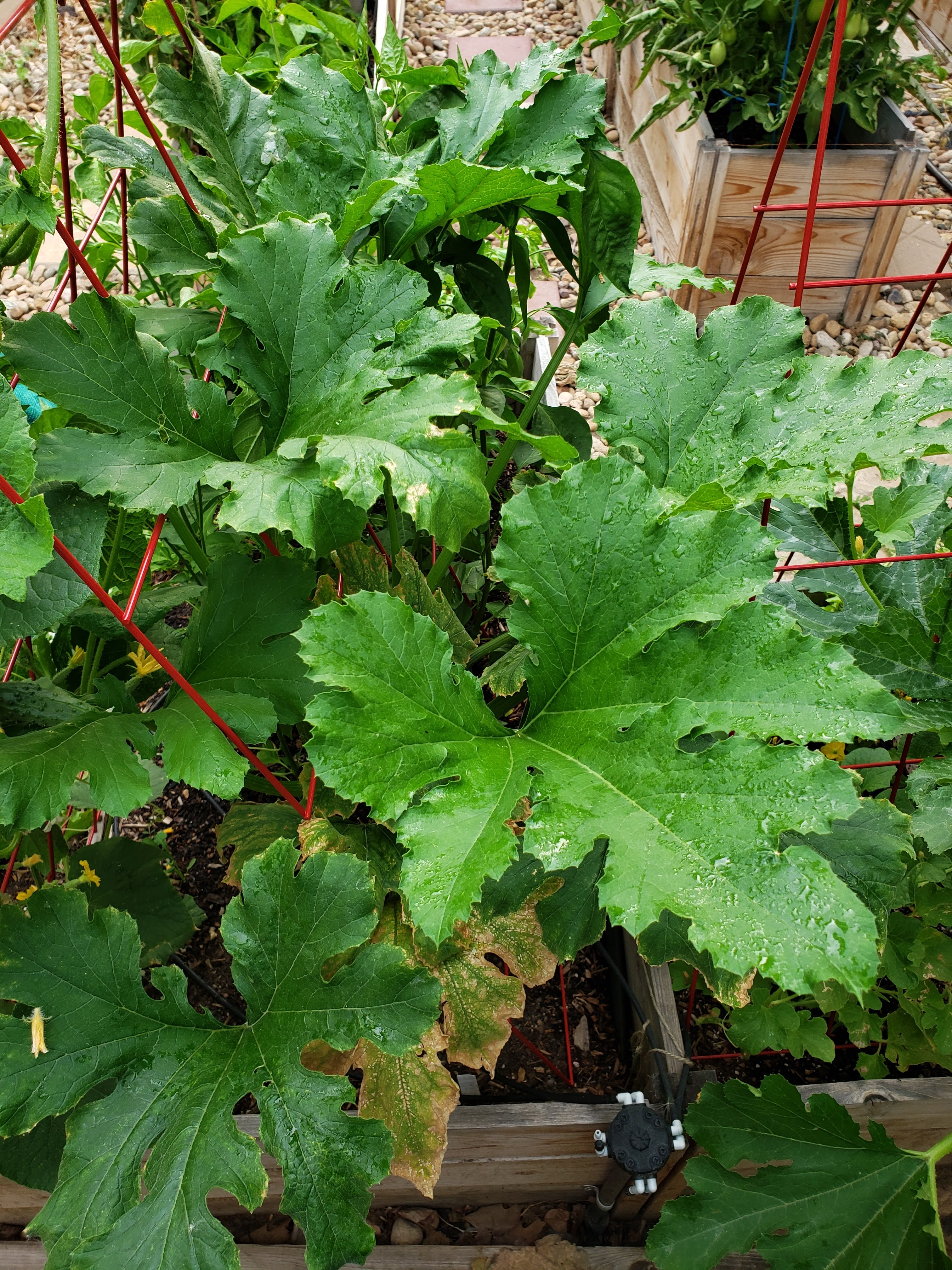
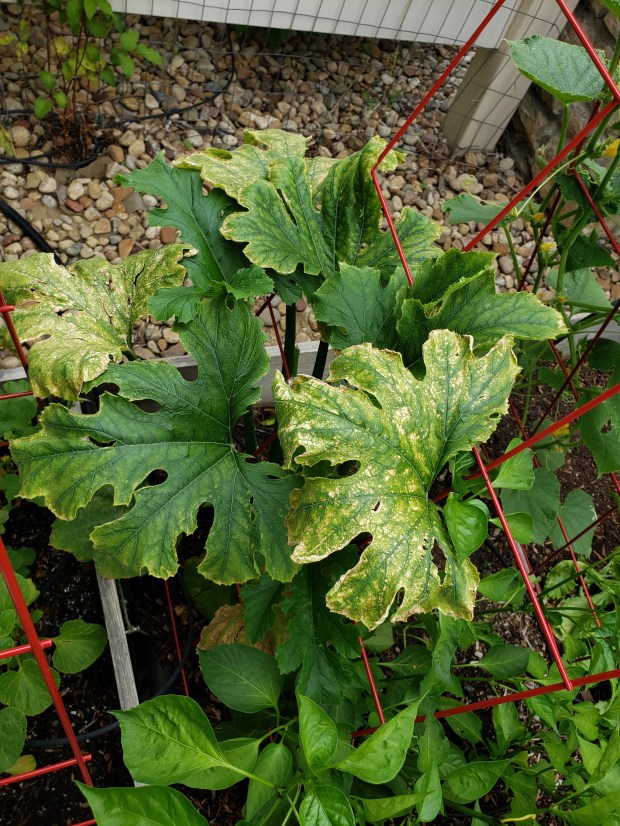
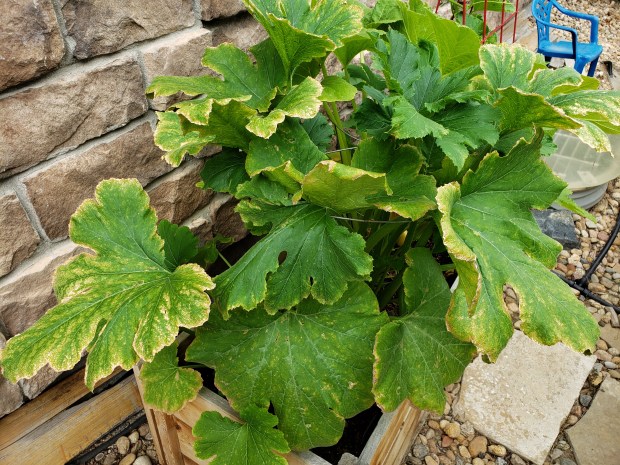
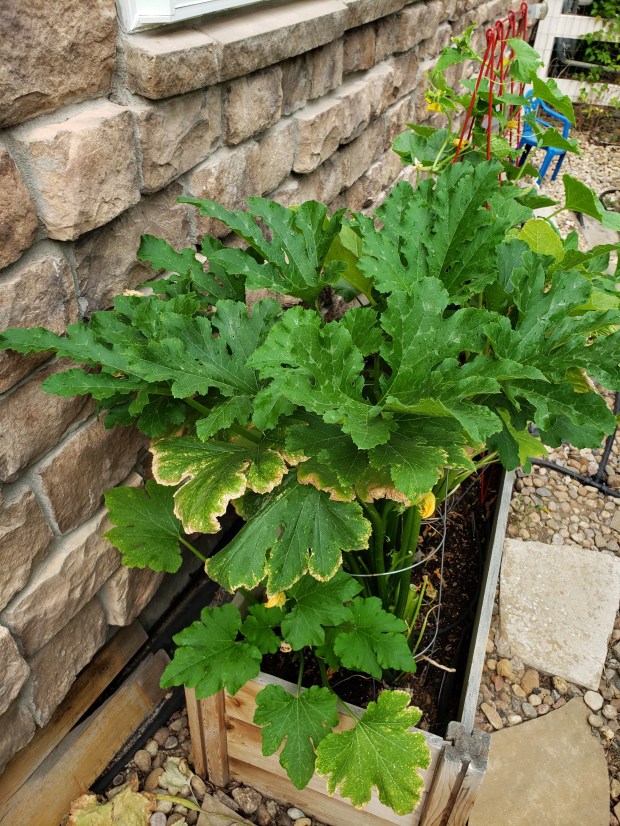
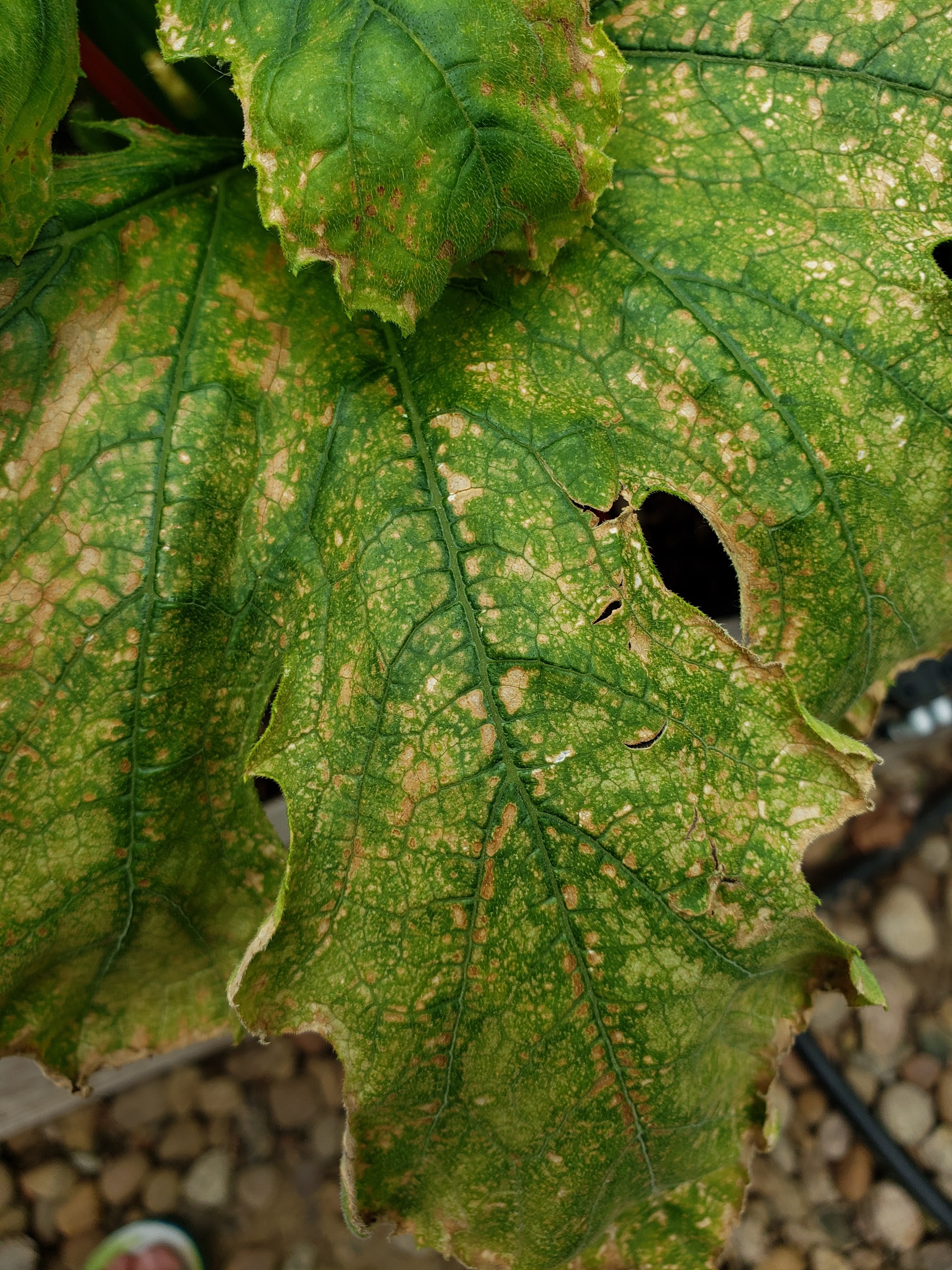
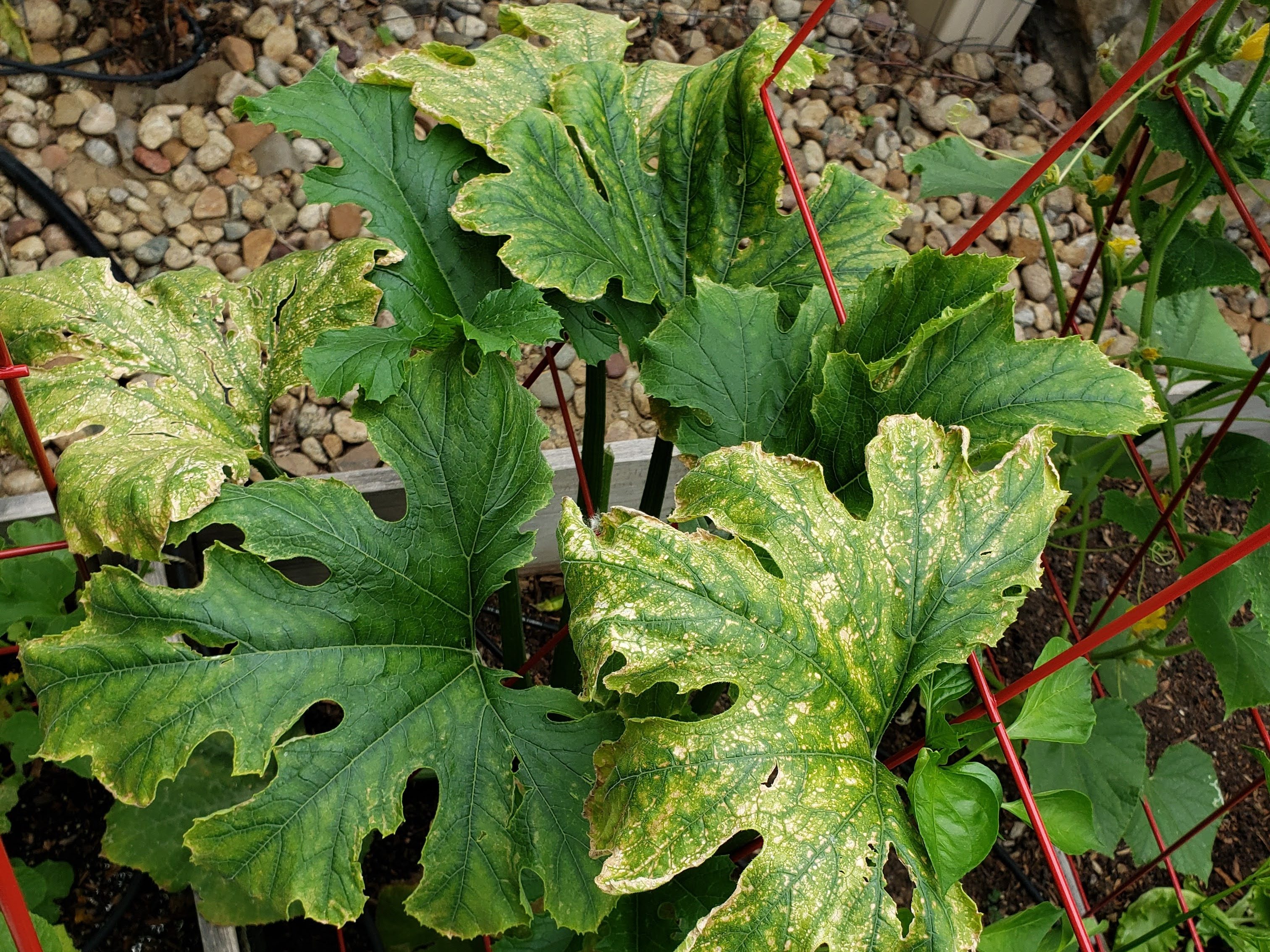
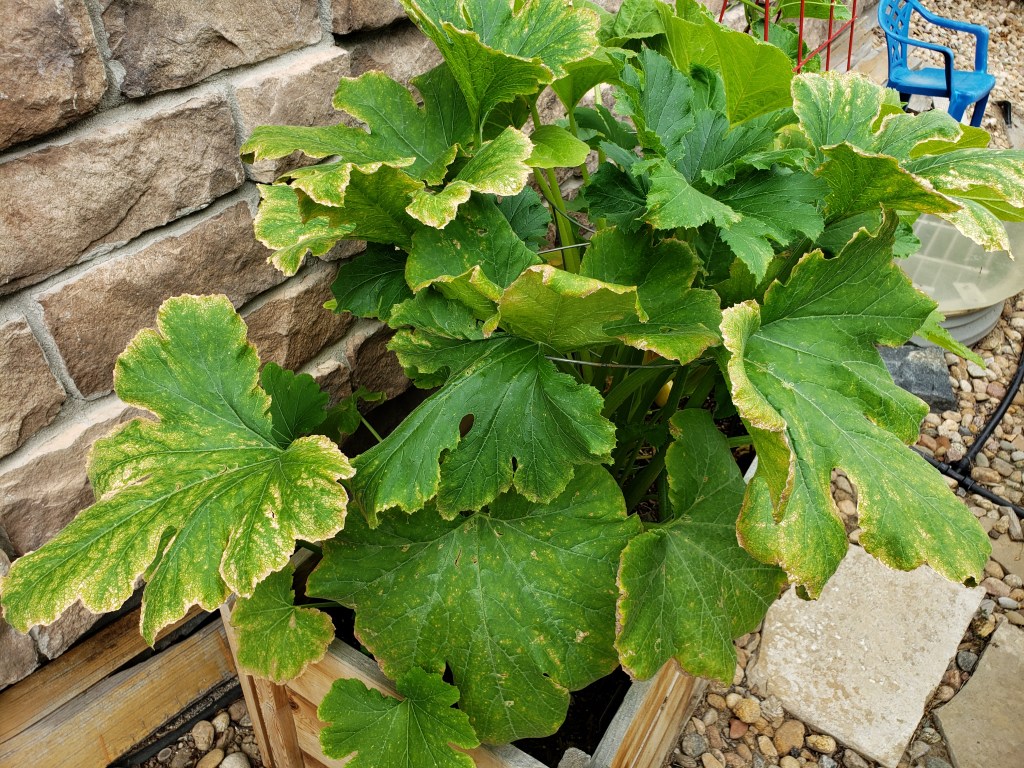
The leaves on two of my three zucchini plants are doing this! It happened very rapidly, and doesn’t appear to be affecting the plants next to it. This picture was taken AFTER I removed several of the leaves that had turned crumbly brown and dead.

Both of the affected plants are producing fruit, but the fruit is growing much more slowly than in previous years.

Some Googling offered very few answers, as I found only two similar-looking leaves offered in photos on discussion boards asking the same question I am: What’s wrong with it? And neither of the boards had an actual diagnosis. I’m going to have to science the shit out of this.

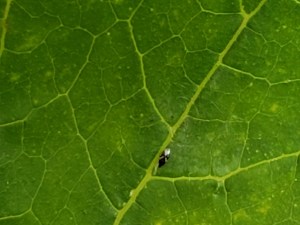
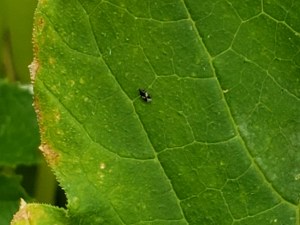
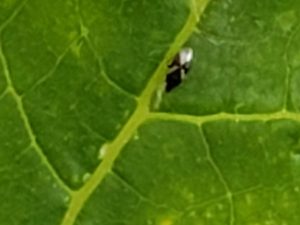
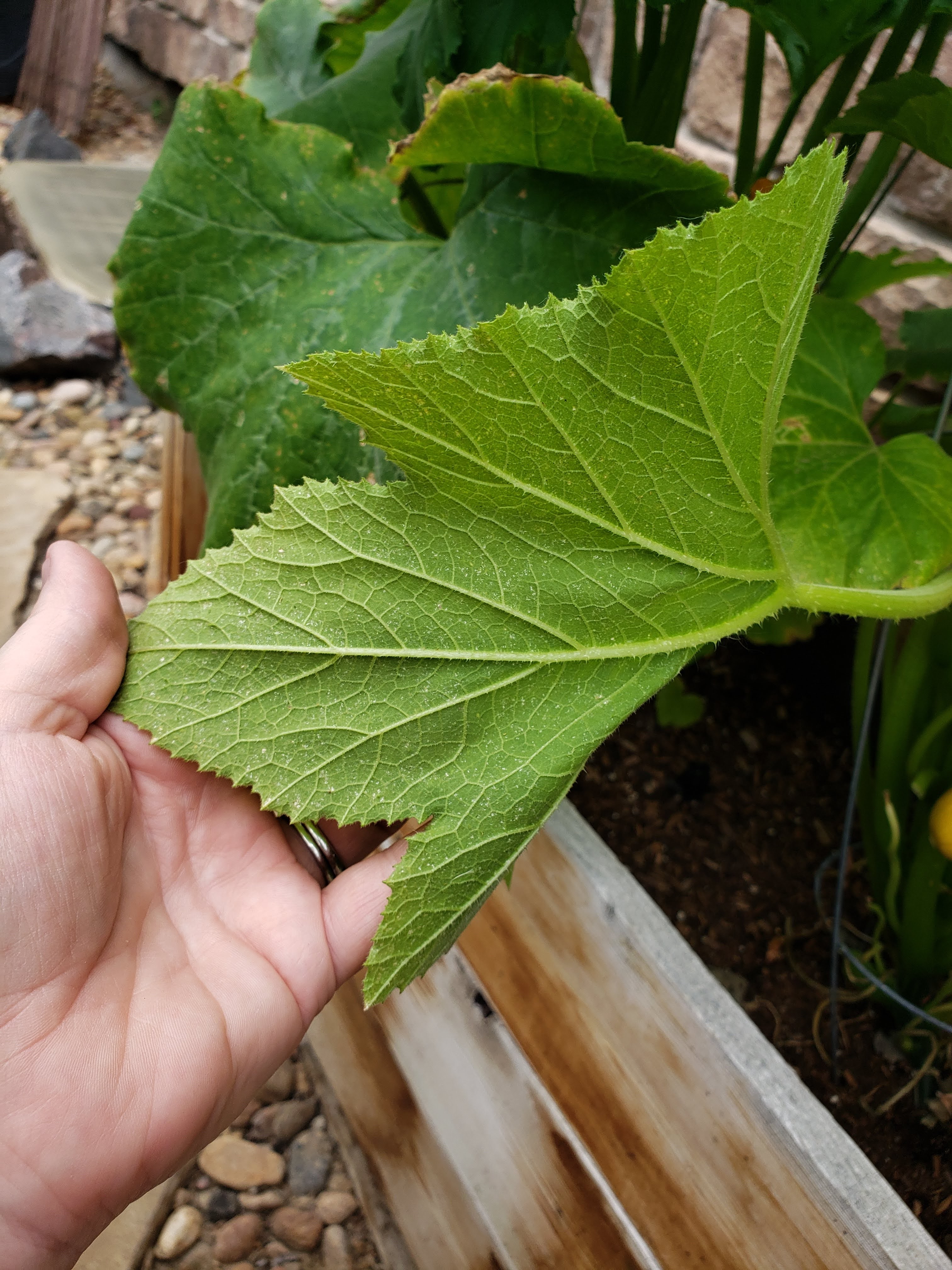
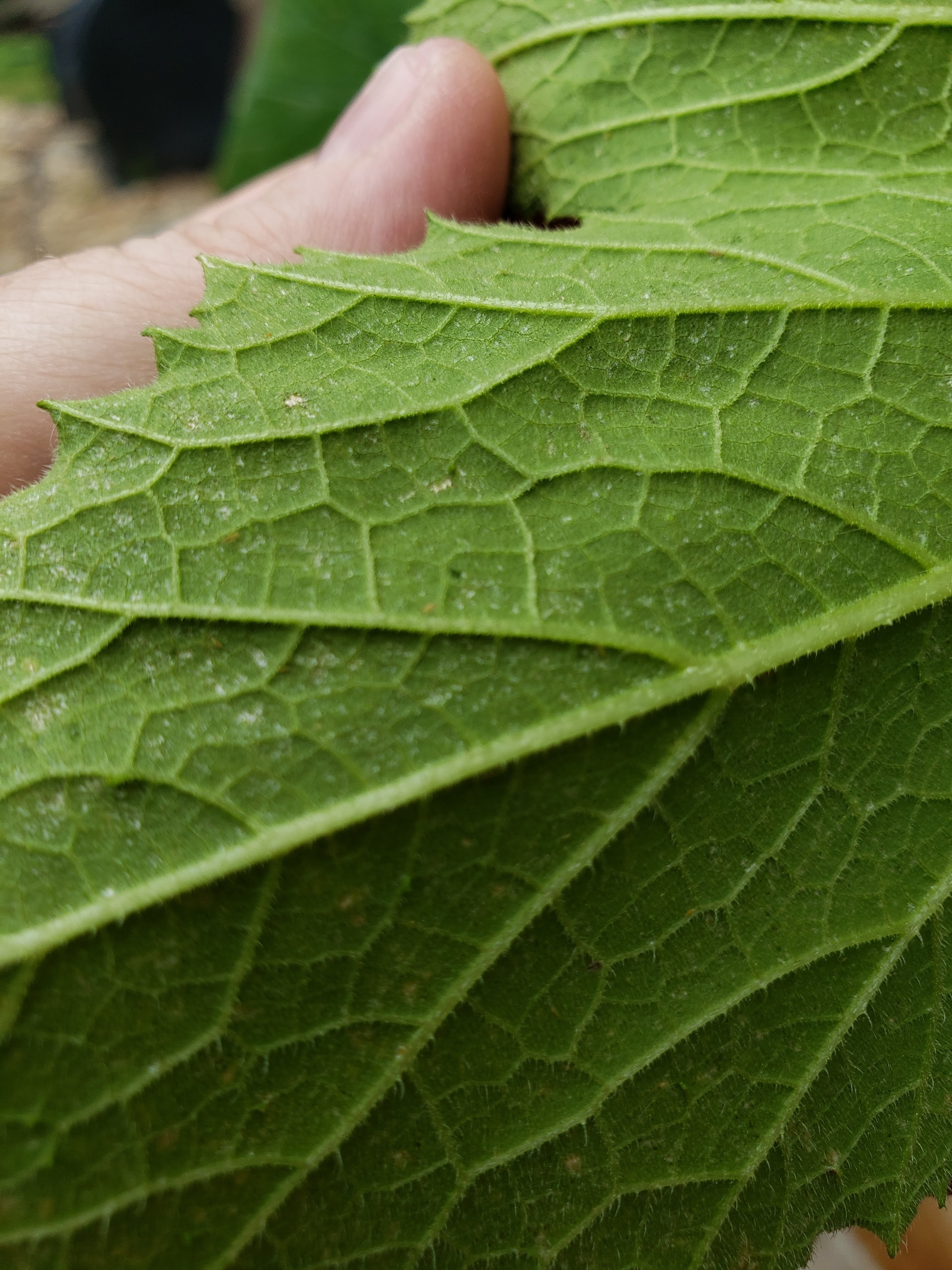
First, I have to rule out some things. The most obvious: FUCKING INSECTS. I’ll get another post going soon that includes my garden-acquired amateur entomology knowledge, but for now it’s enough to say that I did not find any usual culprits like squash bugs or aphids. No real insect activity that I can see. The only insects I could find on them are these fun little fuckers:

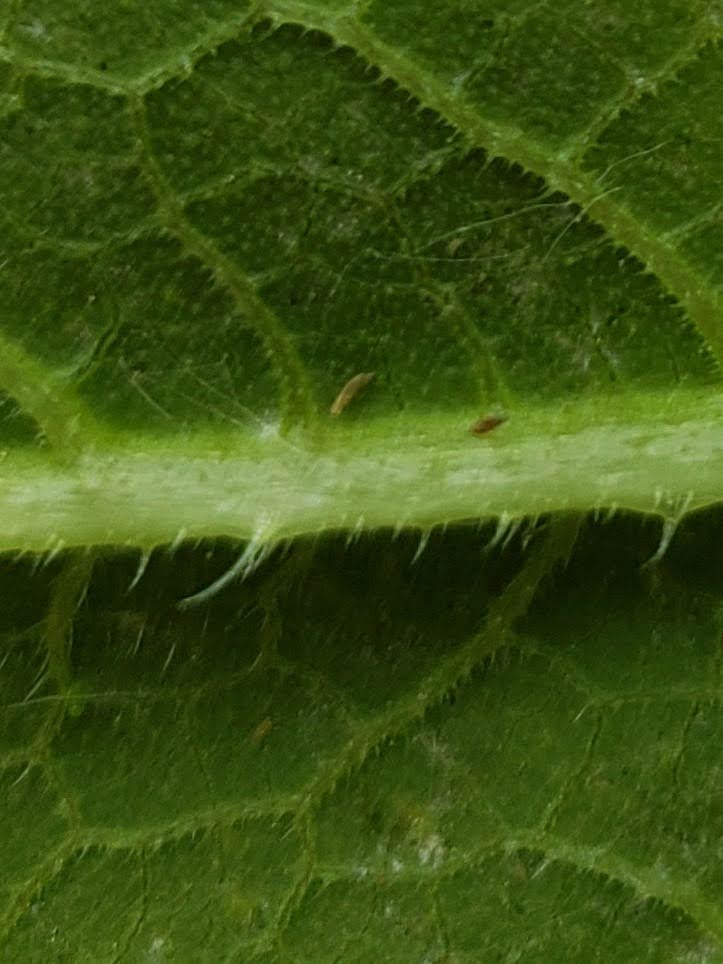
And when I say fun LITTLE fuckers, I’m not kidding. These little dudes are tiny! Miniscule! Those are the veins of the leaf next to it. I couldn’t get a clear shot with my fancy-cam because it’s so small. AND, there’s only a couple on any one plant. I also checked the underside of the leaves, and thought I could make out a tiny little light brown grub, but there were only a couple, and so small I couldn’t make out any details to search on. My best guess is that the little brown grubs might be the babies of the black and white guy from the front, but I can’t be sure.

I did a pretty heavy Google search, including an image search, and I could not find any articles or images that identify this guy. It did not come up on any searches for “teeny little garden fuckers that are ruining my zukes”, although I admit, that search term may be a little too specific.

I find it difficult to believe that these little dudes, even if they’re sucking sap, are causing this level of damage. Additionally, I am staying regular with my organic pest killer, and have no infestations anywhere in the garden at the moment. So I’m ruling this guy out as the cause.


The other possibility is scald from pesticide or herbicide, or maybe a magnesium deficiency. But I couldn’t find anything definitive. I had used an organic pesticide a few days before, but was careful to do it according to the instructions, and on a cloudy evening as the sun was going down- the scald idea just didn’t make sense to me.

So my first experiment was to fertilize.

Zucchini leaves, yellowing from the outside edge in. Turning brown and dead.

I chose a basic fertilizer that should be good for everybody in the garden. I’m new to fertilizer, so am starting at the beginning, since I don’t actually know what’s wrong with these zucchini.


I am a full week out that fertilizer application and have seen no discernable difference or improvement. Actually, the first of the plants to show symptoms, has it spreading to the newer leaves, too.

While I still haven’t found any real insect activity on these zucchini plants, I have noticed that my yellow squash and cucumber leaves are also yellowing around the edges. Many websites and extension programs mention that this could be a nutrient uptake issue, and might be helped with a treatment of magnesium: Epsom salt. So today, I’ve applied a solution of 3 Tbsp Epsom salt in 2 gallons of water to all of the curcurbits in the garden.

I’m hoping that this will make an appreciable difference, because I’m running out of options, and with three zuke plants, I should be looking forward to fuck-tonne of squash. I have visions of piles of sweet green zukes for zoodles, roasted veggies, veggie kabobs, and so much more! We’re also heading to the hills for a camping trip, and the garden will be on autopilot for several days. Here’s hoping that when we return, I’ll come home to beautiful GREEN and healthy-looking zucchini.

I’ll update when we return!